Christ Bruno, Brückner Sandra
Applied Molecular Hepatology Laboratory, Department of Visceral, Transplantation, Thoracic and Vascular Surgery, University Hospital Leipzig Leipzig, Germany.
Front Physiol. 2012 Apr 2;3:78. doi: 10.3389/fphys.2012.00078. eCollection 2012.
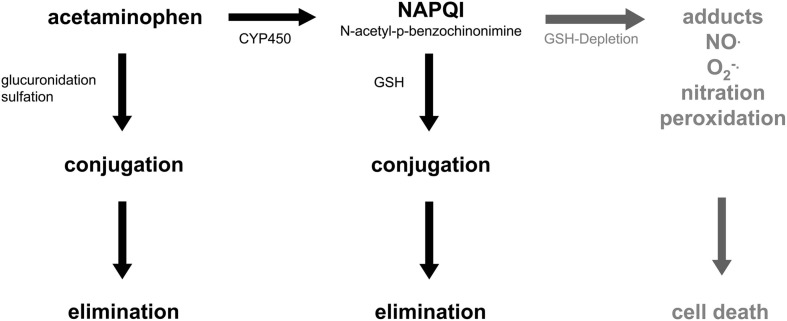
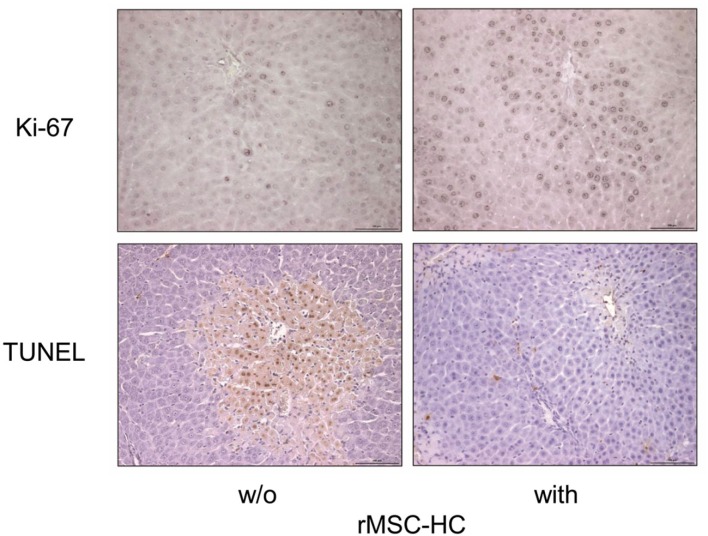
Without therapeutic intervention acute liver failure (ALF) is the consequence of a progredient destruction of the liver parenchyma due to metabolic exhaustion of the hepatocytes. Perivenous hepatocytes are responsible for the detoxification of noxious compounds via the cytochrome P450 enzyme system. Liver transplantation is the only remaining therapeutic option in the end-stage of the disease. Assuming that metabolic capacity could be provided by healthy hepatocytes and thus substitute for the genuine parenchymal cells hepatocyte transplantation since quite some time is considered to be an alternative to whole liver transplantation. While this hypothesis achieved proof-of-concept in animal trials clinical breakthrough is still awaiting success, the reasons of which are ongoing matter of debate. In recent times mesenchymal stem cells (MSC) came into focus as a transplantable cell source to treat ALF. Interestingly, as demonstrated in various rodent animal models their mode of action is rather based on trophic support of hepatocytes remaining in the damaged host parenchyma rather than substitution of tissue loss. Mechanistically, either direct or indirect paracrine effects from the transplanted cells acting pro-proliferative, anti-apoptotic, and anti-inflammatory seem to trigger the regenerative response of the residual healthy hepatocytes in the otherwise lethally injured liver parenchyma. Thus, allogeneic MSC may be the best choice for the treatment of ALF taking advantage of their short-term benefit to sustain the critical phase of the acute insult avoiding long-term immunosuppression.
若无治疗干预,急性肝衰竭(ALF)是由于肝细胞代谢耗竭导致肝实质进行性破坏的结果。肝小叶中央静脉周围的肝细胞负责通过细胞色素P450酶系统对有毒化合物进行解毒。肝移植是该疾病终末期唯一剩下的治疗选择。假设健康肝细胞能够提供代谢能力,从而替代真正的实质细胞,那么一段时间以来,肝细胞移植一直被认为是全肝移植的一种替代方法。虽然这一假说在动物试验中已得到概念验证,但临床突破仍有待成功,其原因仍是一个持续争论的问题。近年来,间充质干细胞(MSC)作为一种可移植的细胞来源用于治疗ALF受到关注。有趣的是,正如在各种啮齿动物模型中所证明的那样,它们的作用方式更多地是基于对受损宿主实质中残留肝细胞的营养支持,而不是替代组织损失。从机制上讲,移植细胞的直接或间接旁分泌作用通过促增殖、抗凋亡和抗炎作用,似乎触发了原本致命损伤的肝实质中残留健康肝细胞的再生反应。因此,同种异体MSC可能是治疗ALF的最佳选择,因为它们具有短期益处,能够维持急性损伤的关键阶段,同时避免长期免疫抑制。