Department of Bioinformatics and Molecular Neuropathology, Meiji Pharmaceutical University, 2-522-1 Noshio, Kiyose, Tokyo, 204-8588, Japan.
Cancer Cell Int. 2012 Apr 11;12(1):14. doi: 10.1186/1475-2867-12-14.
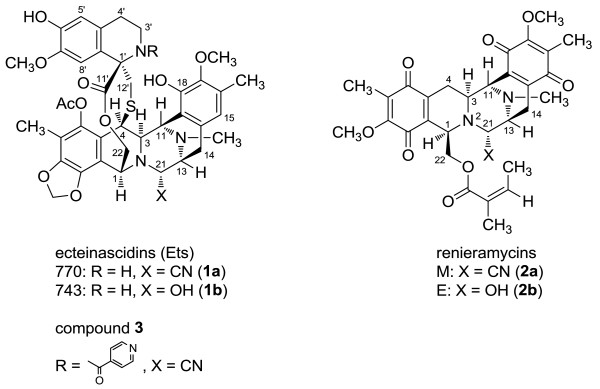
Glioblastoma is the most aggressive form of brain tumors showing resistance to treatment with various chemotherapeutic agents. The most effective way to eradicate glioblastoma requires the concurrent inhibition of multiple signaling pathways and target molecules involved in the progression of glioblastoma. Recently, we obtained a series of 1,2,3,4-tetrahydroisoquinoline alkaloids with potent anti-cancer activities, including ecteinascidin-770 (ET-770; the compound 1a) and renieramycin M (RM; the compound 2a) from Thai marine invertebrates, together with a 2'-N-4"-pyridinecarbonyl derivative of ET-770 (the compound 3). We attempted to characterize the molecular pathways responsible for cytotoxic effects of these compounds on a human glioblastoma cell line U373MG.
We studied the genome-wide gene expression profile on microarrays and molecular networks by using pathway analysis tools of bioinformatics.
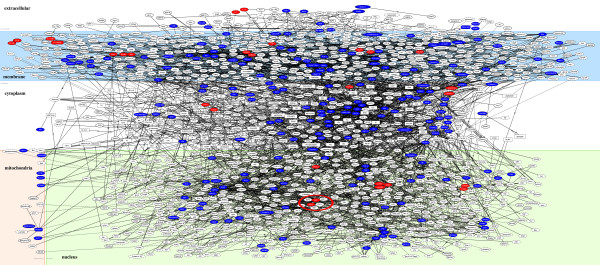
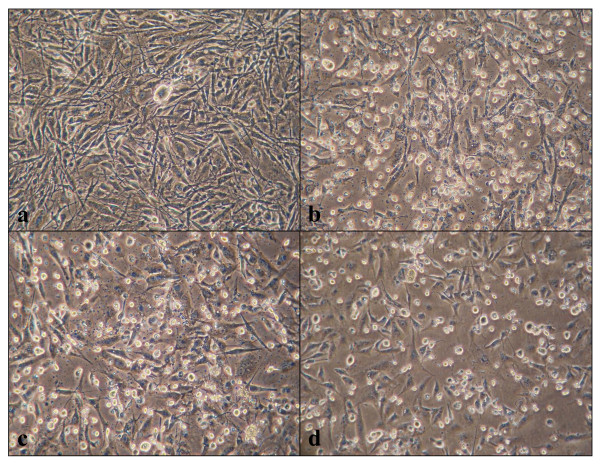
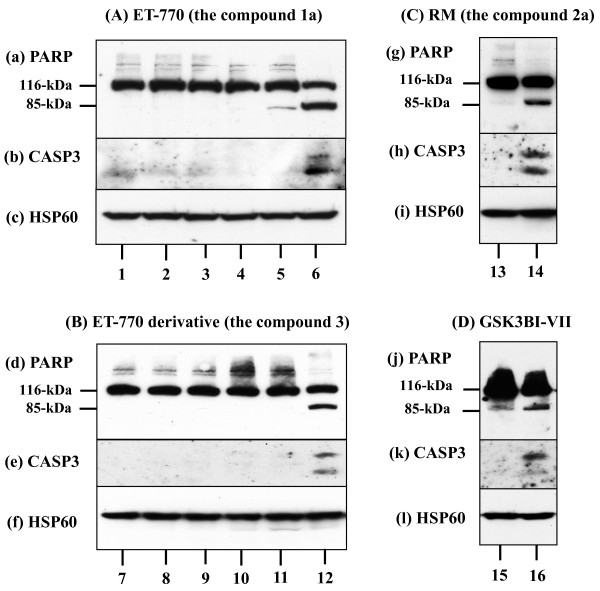
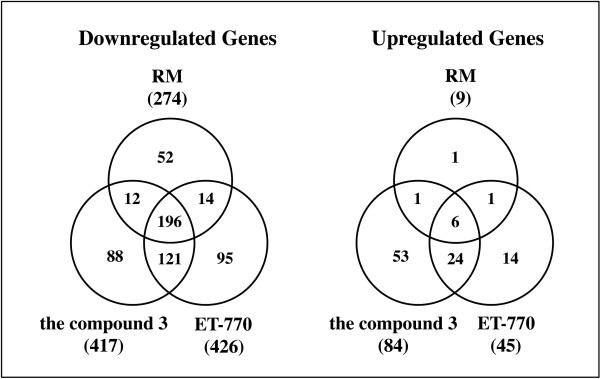
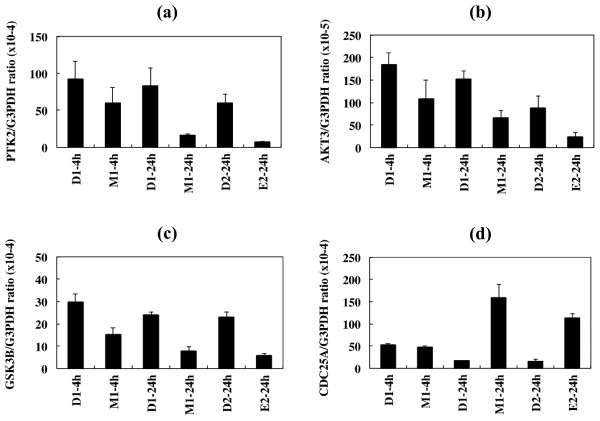
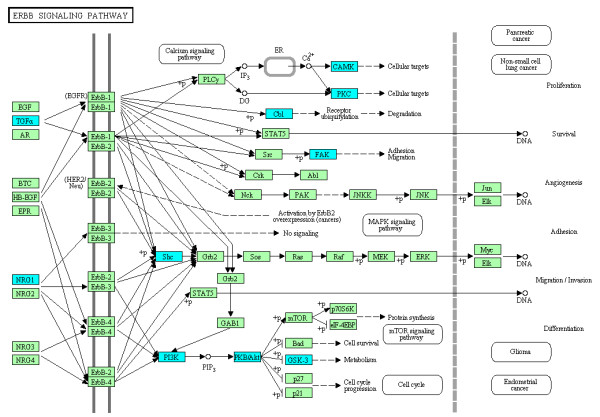
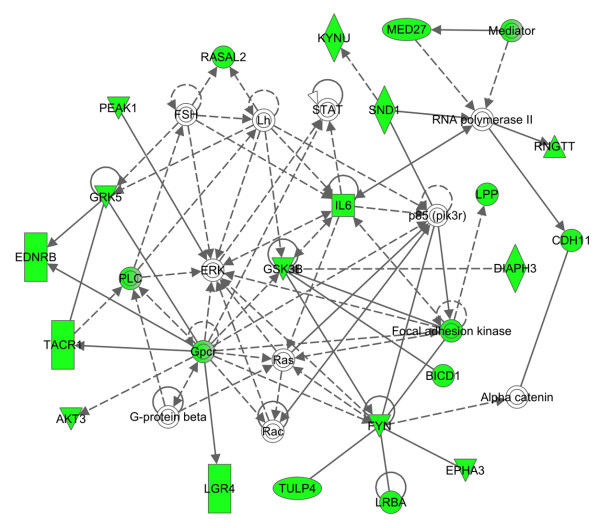
All of these compounds induced apoptosis of U373MG cells at nanomolar concentrations. The compound 3 reduced the expression of 417 genes and elevated the levels of 84 genes, while ET-770 downregulated 426 genes and upregulated 45 genes. RM decreased the expression of 274 genes and increased the expression of 9 genes. The set of 196 downregulated genes and 6 upregulated genes showed an overlap among all the compounds, suggesting an existence of the common pathways involved in induction of apoptosis. We identified the ErbB (EGFR) signaling pathway as one of the common pathways enriched in the set of downregulated genes, composed of PTK2, AKT3, and GSK3B serving as key molecules that regulate cell movement and the nervous system development. Furthermore, a GSK3B-specific inhibitor induced apoptosis of U373MG cells, supporting an anti-apoptotic role of GSK3B.
Molecular network analysis is a useful approach not only to characterize the glioma-relevant pathways but also to identify the network-based effective drug targets.
胶质母细胞瘤是最具侵袭性的脑肿瘤,对各种化疗药物具有耐药性。根除胶质母细胞瘤的最有效方法需要同时抑制与胶质母细胞瘤进展相关的多个信号通路和靶分子。最近,我们从泰国海洋无脊椎动物中获得了一系列具有强大抗癌活性的 1,2,3,4-四氢异喹啉生物碱,包括埃替巴肽 770(ET-770;化合物 1a)和雷尼霉素 M(RM;化合物 2a),以及 ET-770 的 2'-N-4'-吡啶甲酰基衍生物(化合物 3)。我们试图通过生物信息学途径分析工具来表征这些化合物对人胶质母细胞瘤 U373MG 细胞系的细胞毒性作用的分子途径。
我们使用基因组芯片和分子网络研究了这些化合物对 U373MG 细胞的全基因组基因表达谱。
所有这些化合物在纳摩尔浓度下诱导 U373MG 细胞凋亡。化合物 3 降低了 417 个基因的表达水平,同时提高了 84 个基因的表达水平,而 ET-770 下调了 426 个基因,上调了 45 个基因。RM 降低了 274 个基因的表达水平,同时增加了 9 个基因的表达水平。所有化合物共同下调的 196 个基因和上调的 6 个基因集显示出重叠,表明存在共同参与诱导凋亡的途径。我们鉴定出表皮生长因子受体(EGFR)信号通路是下调基因集中富集的共同途径之一,由 PTK2、AKT3 和 GSK3B 组成,这些分子调节细胞运动和神经系统发育。此外,GSK3B 特异性抑制剂诱导 U373MG 细胞凋亡,支持 GSK3B 的抗凋亡作用。
分子网络分析不仅是一种表征与脑肿瘤相关途径的有用方法,也是一种识别基于网络的有效药物靶点的方法。