City of Hope Irell & Manella Graduate School of Biological Sciences, Duarte, California, United States of America.
PLoS Pathog. 2012;8(4):e1002597. doi: 10.1371/journal.ppat.1002597. Epub 2012 Apr 5.
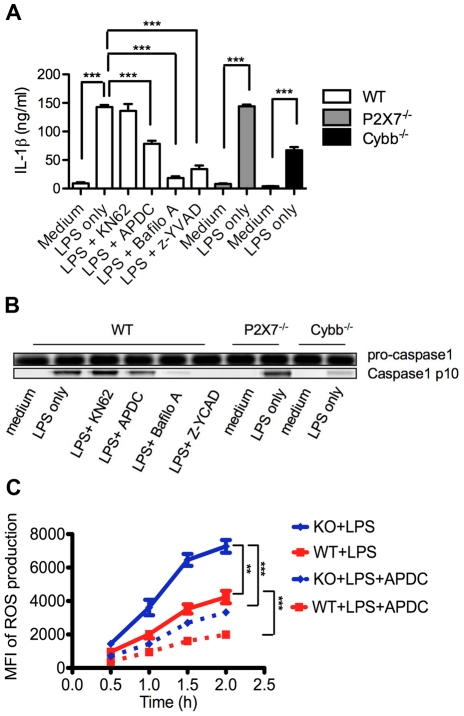
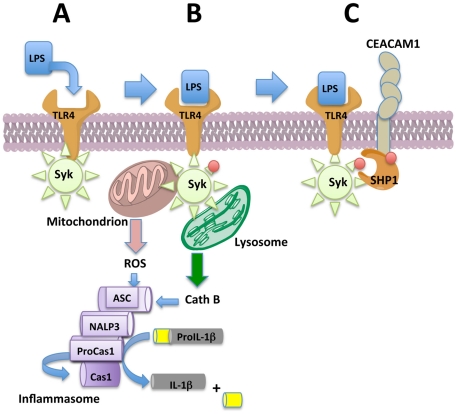
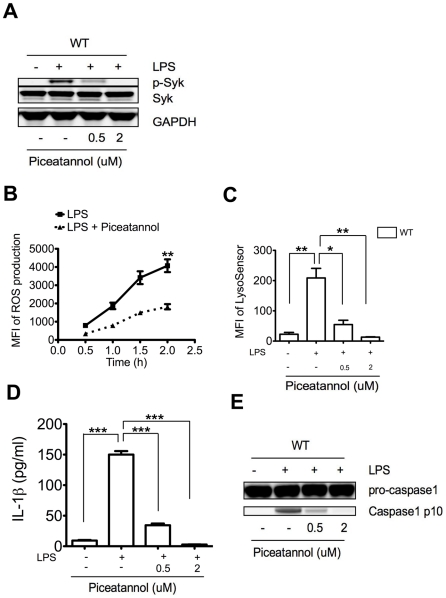
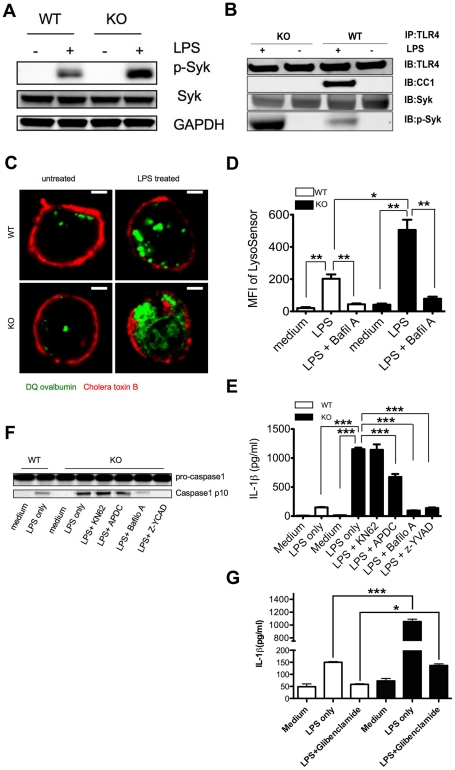
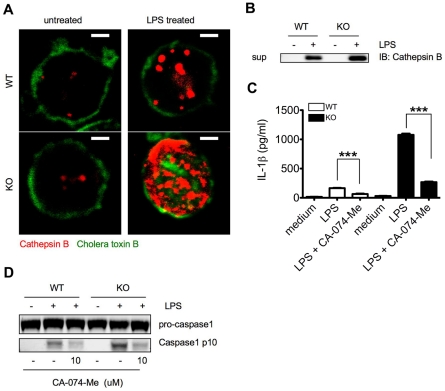
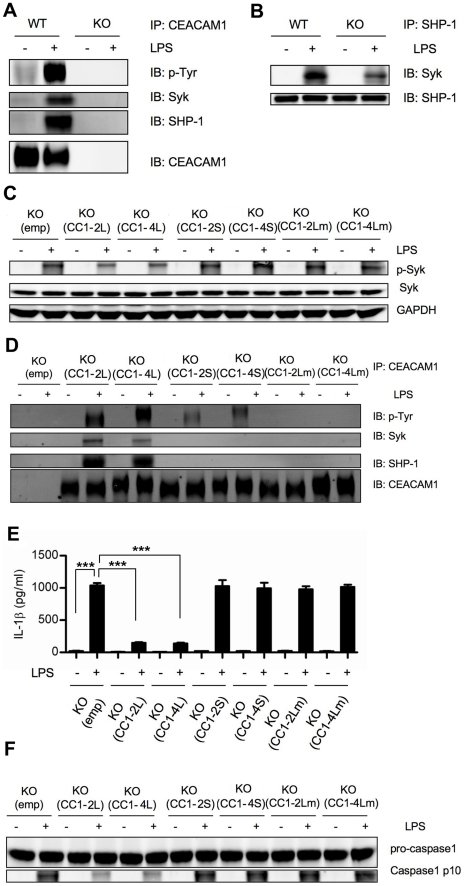
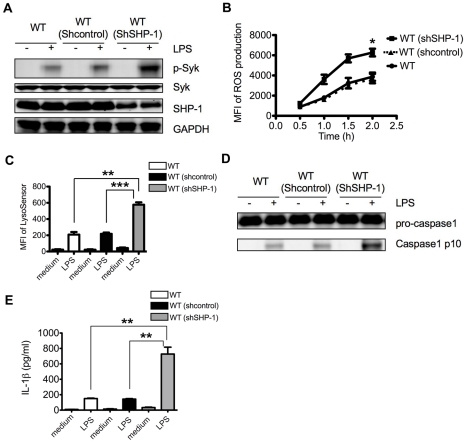
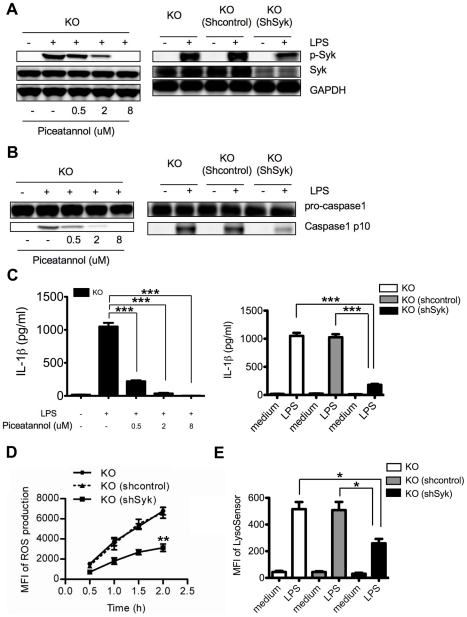
LPS-activated neutrophils secrete IL-1β by activation of TLR-4. Based on studies in macrophages, it is likely that ROS and lysosomal destabilization regulated by Syk activation may also be involved. Since neutrophils have abundant expression of the ITIM-containing co-receptor CEACAM1 and Gram-negative bacteria such as Neisseria utilize CEACAM1 as a receptor that inhibits inflammation, we hypothesized that the overall production of IL-1β in LPS treated neutrophils may be negatively regulated by CEACAM1. We found that LPS treated neutrophils induced phosphorylation of Syk resulting in the formation of a complex including TLR4, p-Syk, and p-CEACAM1, which in turn, recruited the inhibitory phosphatase SHP-1. LPS treatment leads to ROS production, lysosomal damage, caspase-1 activation and IL-1β secretion in neutrophils. The absence of this regulation in Ceacam1⁻/⁻ neutrophils led to hyper production of IL-1β in response to LPS. The hyper production of IL-1β was abrogated by in vivo reconstitution of wild type but not ITIM-mutated CEACAM1 bone marrow stem cells. Blocking Syk activation by kinase inhibitors or RNAi reduced Syk phosphorylation, lysosomal destabilization, ROS production, and caspase-1 activation in Ceacam1⁻/⁻ neutrophils. We conclude that LPS treatment of neutrophils triggers formation of a complex of TLR4 with pSyk and pCEACAM1, which upon recruitment of SHP-1 to the ITIMs of pCEACAM1, inhibits IL-1β production by the inflammasome. Thus, CEACAM1 fine-tunes IL-1β production in LPS treated neutrophils, explaining why the additional utilization of CEACAM1 as a pathogen receptor would further inhibit inflammation.
LPS 激活的中性粒细胞通过 TLR-4 的激活分泌 IL-1β。基于巨噬细胞的研究,ROS 和溶酶体的不稳定可能也是由 Syk 激活调节的。由于中性粒细胞富含含有 ITIM 的共受体 CEACAM1 的表达,并且革兰氏阴性细菌(如奈瑟氏菌)利用 CEACAM1 作为抑制炎症的受体,我们假设 LPS 处理的中性粒细胞中 IL-1β 的总体产生可能受到 CEACAM1 的负调节。我们发现,LPS 处理的中性粒细胞诱导 Syk 的磷酸化,导致形成包括 TLR4、p-Syk 和 p-CEACAM1 的复合物,该复合物反过来募集抑制性磷酸酶 SHP-1。LPS 处理导致中性粒细胞中 ROS 的产生、溶酶体的损伤、半胱天冬酶-1 的激活和 IL-1β 的分泌。在 Ceacam1⁻/⁻中性粒细胞中缺乏这种调节导致对 LPS 的过度产生 IL-1β。体内重建野生型而非 ITIM 突变型 CEACAM1 骨髓干细胞可消除 IL-1β 的过度产生。通过激酶抑制剂或 RNAi 阻断 Syk 激活可降低 Ceacam1⁻/⁻中性粒细胞中的 Syk 磷酸化、溶酶体不稳定、ROS 产生和半胱天冬酶-1 的激活。我们得出结论,LPS 处理中性粒细胞触发 TLR4 与 pSyk 和 pCEACAM1 的复合物的形成,一旦 SHP-1 募集到 pCEACAM1 的 ITIM,就会抑制炎症小体中 IL-1β 的产生。因此,CEACAM1 精细调节 LPS 处理的中性粒细胞中 IL-1β 的产生,解释了为什么额外利用 CEACAM1 作为病原体受体会进一步抑制炎症。