Department of Molecular Genetics and Microbiology, Center for Infectious Diseases, Stony Brook University, Stony Brook, New York, United States of America.
PLoS Pathog. 2011 Apr;7(4):e1002026. doi: 10.1371/journal.ppat.1002026. Epub 2011 Apr 21.
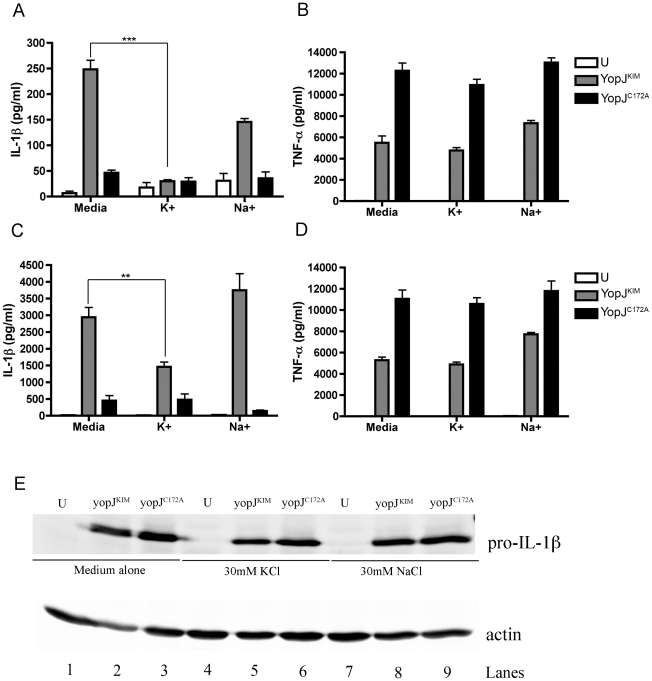
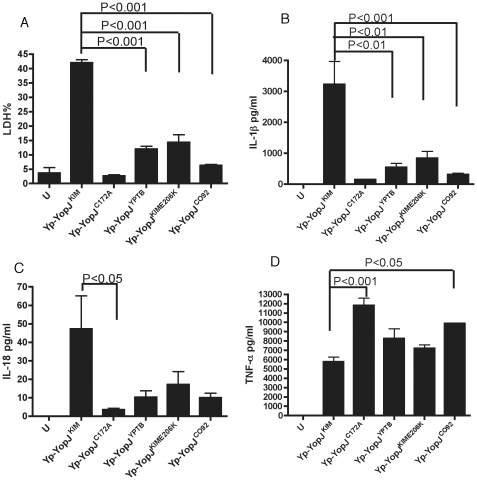
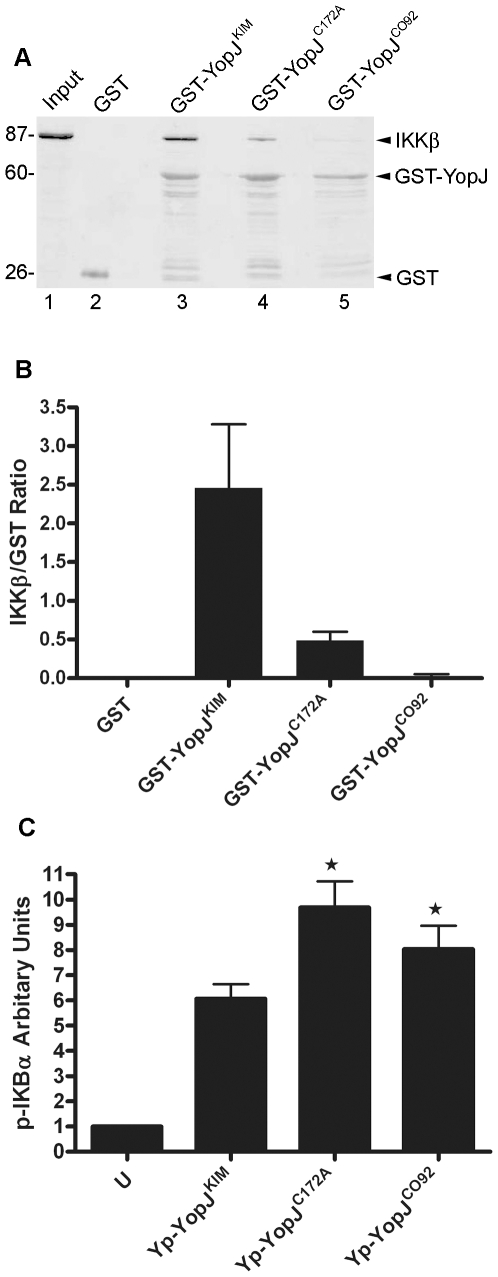
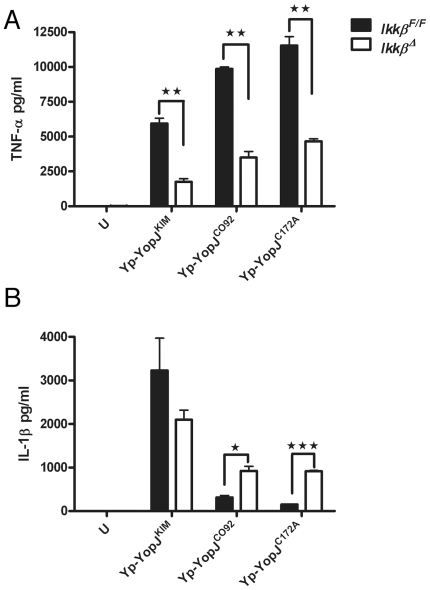
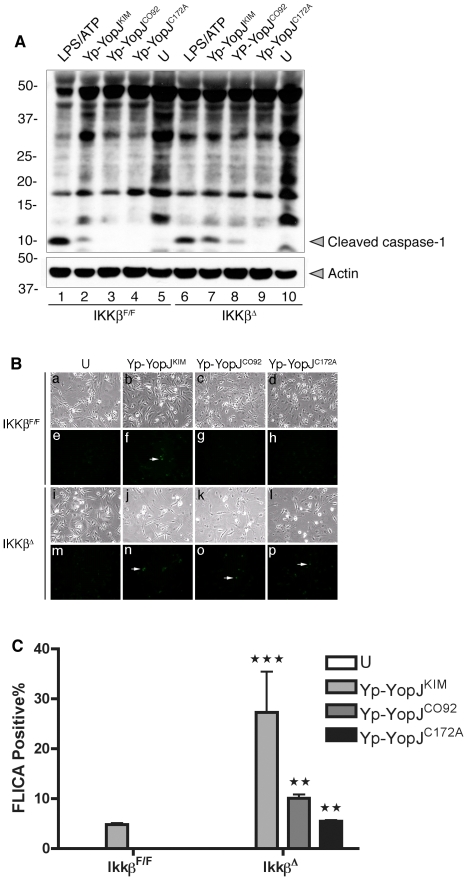
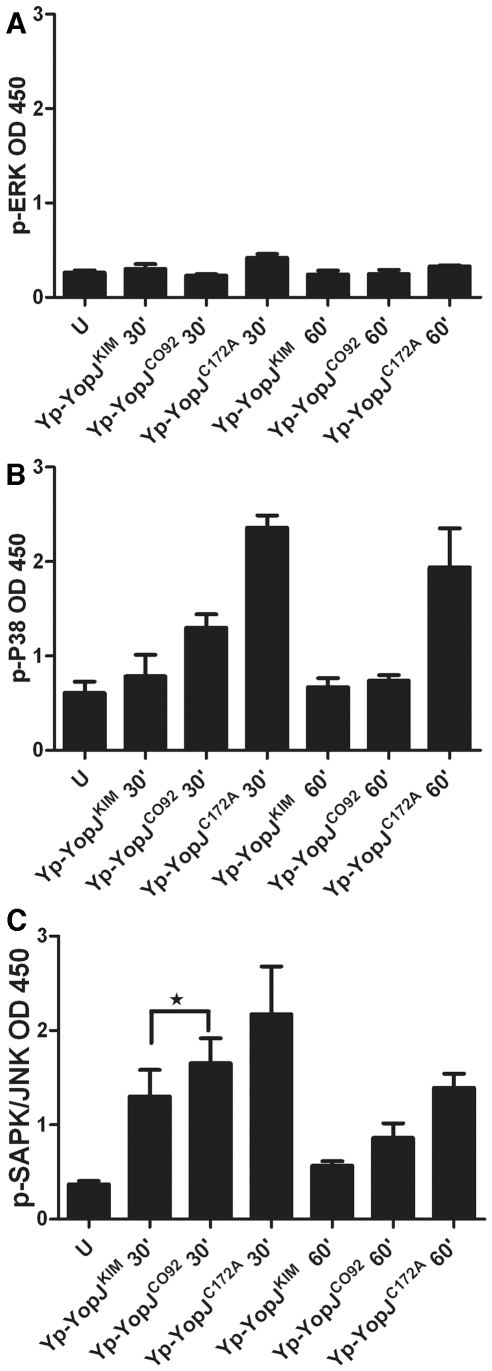
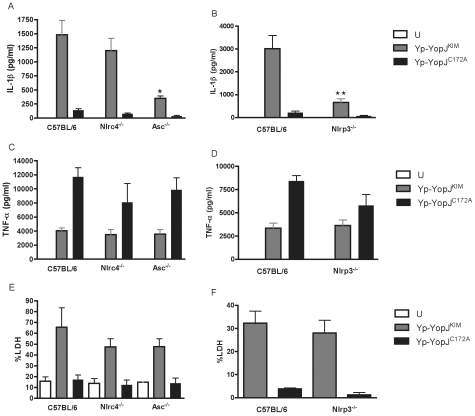
A type III secretion system (T3SS) in pathogenic Yersinia species functions to translocate Yop effectors, which modulate cytokine production and regulate cell death in macrophages. Distinct pathways of T3SS-dependent cell death and caspase-1 activation occur in Yersinia-infected macrophages. One pathway of cell death and caspase-1 activation in macrophages requires the effector YopJ. YopJ is an acetyltransferase that inactivates MAPK kinases and IKKβ to cause TLR4-dependent apoptosis in naïve macrophages. A YopJ isoform in Y. pestis KIM (YopJ(KIM)) has two amino acid substitutions, F177L and K206E, not present in YopJ proteins of Y. pseudotuberculosis and Y. pestis CO92. As compared to other YopJ isoforms, YopJ(KIM) causes increased apoptosis, caspase-1 activation, and secretion of IL-1β in Yersinia-infected macrophages. The molecular basis for increased apoptosis and activation of caspase-1 by YopJ(KIM) in Yersinia-infected macrophages was studied. Site directed mutagenesis showed that the F177L and K206E substitutions in YopJ(KIM) were important for enhanced apoptosis, caspase-1 activation, and IL-1β secretion. As compared to YopJ(CO92), YopJ(KIM) displayed an enhanced capacity to inhibit phosphorylation of IκB-α in macrophages and to bind IKKβ in vitro. YopJ(KIM) also showed a moderately increased ability to inhibit phosphorylation of MAPKs. Increased caspase-1 cleavage and IL-1β secretion occurred in IKKβ-deficient macrophages infected with Y. pestis expressing YopJ(CO92), confirming that the NF-κB pathway can negatively regulate inflammasome activation. K+ efflux, NLRP3 and ASC were important for secretion of IL-1β in response to Y. pestis KIM infection as shown using macrophages lacking inflammasome components or by the addition of exogenous KCl. These data show that caspase-1 is activated in naïve macrophages in response to infection with a pathogen that inhibits IKKβ and MAPK kinases and induces TLR4-dependent apoptosis. This pro-inflammatory form of apoptosis may represent an early innate immune response to highly virulent pathogens such as Y. pestis KIM that have evolved an enhanced ability to inhibit host signaling pathways.
一种 III 型分泌系统(T3SS)在致病性耶尔森氏菌中发挥作用,将 Yop 效应子易位,从而调节细胞因子的产生并调节巨噬细胞中的细胞死亡。在耶尔森氏菌感染的巨噬细胞中,存在着依赖于 T3SS 的细胞死亡和半胱天冬酶-1 激活的不同途径。巨噬细胞中细胞死亡和半胱天冬酶-1 激活的一种途径需要效应子 YopJ。YopJ 是一种乙酰转移酶,可使 MAPK 激酶和 IKKβ失活,导致原始巨噬细胞中 TLR4 依赖性细胞凋亡。在鼠疫耶尔森氏菌 KIM(YopJ(KIM))中的 YopJ 同工型具有两个氨基酸取代,F177L 和 K206E,在 Y. pseudotuberculosis 和 Y. pestis CO92 的 YopJ 蛋白中不存在。与其他 YopJ 同工型相比,YopJ(KIM)在耶尔森氏菌感染的巨噬细胞中引起增加的细胞凋亡、半胱天冬酶-1 激活和 IL-1β 的分泌。研究了 YopJ(KIM)在耶尔森氏菌感染的巨噬细胞中增加细胞凋亡和半胱天冬酶-1 激活的分子基础。定点突变显示,YopJ(KIM)中的 F177L 和 K206E 取代对于增强细胞凋亡、半胱天冬酶-1 激活和 IL-1β 的分泌很重要。与 YopJ(CO92)相比,YopJ(KIM)在巨噬细胞中显示出增强的抑制 IκB-α磷酸化和体外结合 IKKβ的能力。YopJ(KIM)还显示出适度增加的抑制 MAPK 磷酸化的能力。在表达 YopJ(CO92)的鼠疫耶尔森氏菌感染的 IKKβ缺陷型巨噬细胞中,半胱天冬酶-1 的切割和 IL-1β 的分泌增加,证实 NF-κB 途径可以负调节炎性小体的激活。在没有炎性小体成分的巨噬细胞中或通过添加外源性 KCl,钾外流、NLRP3 和 ASC 对 Y. pestis KIM 感染后 IL-1β 的分泌很重要。这些数据表明,在受到抑制 IKKβ 和 MAPK 激酶并诱导 TLR4 依赖性细胞凋亡的病原体感染时,原始巨噬细胞中会激活半胱天冬酶-1。这种促炎形式的细胞凋亡可能代表对高度毒力病原体(如鼠疫耶尔森氏菌 KIM)的早期先天免疫反应,这些病原体已进化出增强抑制宿主信号通路的能力。