Sci Rep. 2012;2:358. doi: 10.1038/srep00358. Epub 2012 Apr 11.
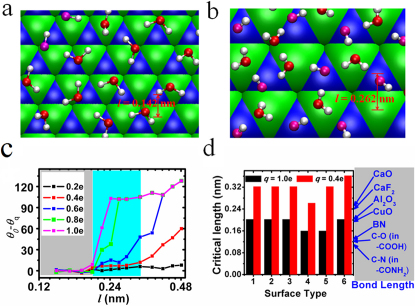
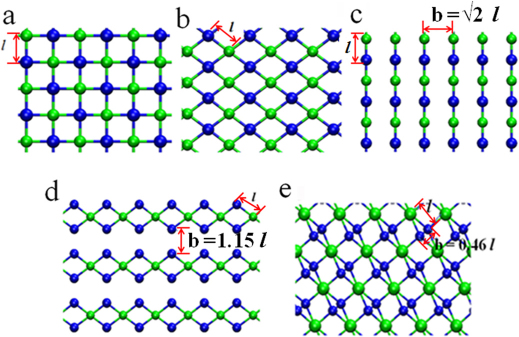
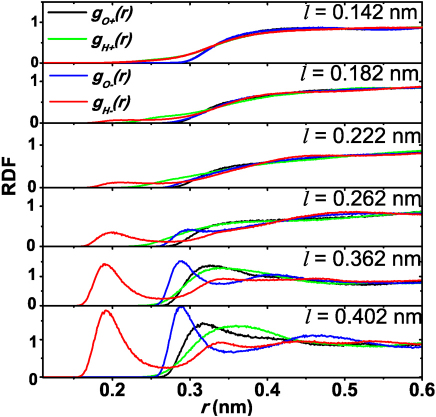
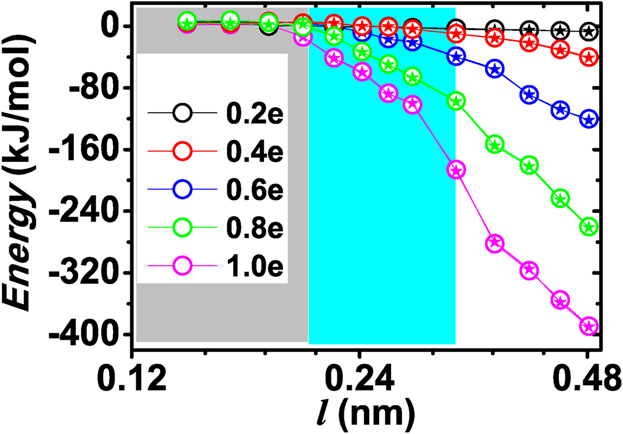
The wetting behavior of water on the solid surfaces is fundamental to various physical, chemical and biological processes. Conventionally, the surface with charges or charge dipoles is hydrophilic, whereas the non-polar surface is hydrophobic though some exceptions were recently reported. Using molecular dynamics simulations, we show that there is a critical length of the charge dipoles on the solid surface. The solid surface still exhibited hydrophobic behavior when the dipole length was less than the critical value, indicating that the water molecules on the solid surface seemed not "feel" attractive interactions from the charge dipoles on the solid surface. Those unexpected observations result from the collective interactions between the water molecules and charge dipoles on the solid surface, where the steric exclusion effect between water molecules greatly reduces the water-dipole interactions. Remarkably, the steric exclusion effect is also important for surfaces with charge dipole lengths greater than this critical length.
水在固体表面的润湿行为是各种物理、化学和生物过程的基础。通常,带电荷或电荷偶极子的表面是亲水的,而非极性表面是疏水的,尽管最近有报道称存在一些例外。我们通过分子动力学模拟表明,固体表面上电荷偶极子存在一个临界长度。当偶极子长度小于临界值时,固体表面仍表现出疏水性,这表明固体表面上的水分子似乎没有“感受到”来自固体表面上电荷偶极子的吸引力相互作用。这些出乎意料的观察结果源于水分子和固体表面上电荷偶极子之间的集体相互作用,其中水分子之间的空间排斥效应大大降低了水-偶极子相互作用。值得注意的是,空间排斥效应对于电荷偶极子长度大于该临界长度的表面也很重要。