Department of Urology, University of Pittsburgh, Pittsburgh, Pennsylvania, USA.
J Urol. 2012 Jun;187(6):2243-8. doi: 10.1016/j.juro.2012.01.034. Epub 2012 Apr 13.
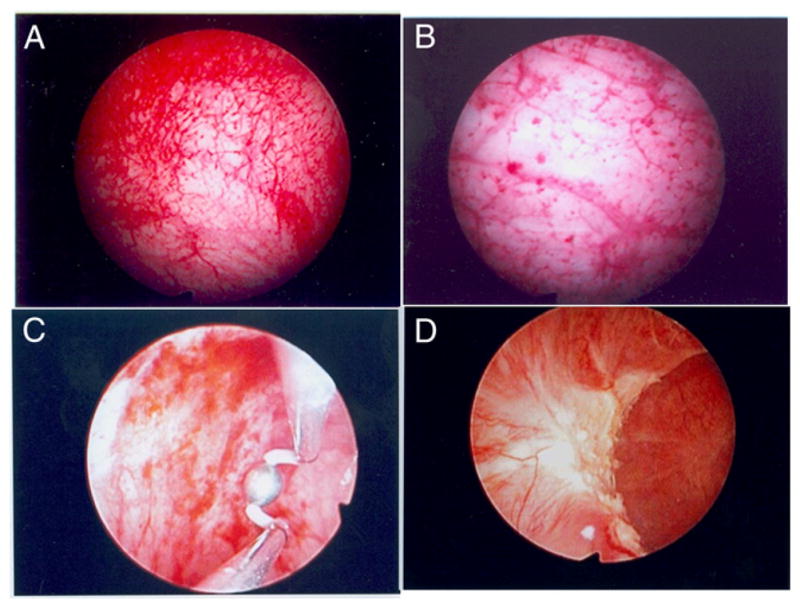
Based on basic research findings an increase in chemokines and cytokines (CXCL-1 and 10, nerve growth factor and interleukin-6) is considered responsible for inflammation and afferent sensitization. In this cross-sectional study we tested the hypothesis that select chemokines are increased in the urine of patients with ulcerative and nonulcerative interstitial cystitis/painful bladder syndrome.
Midstream urinary specimens were collected from 10 patients with ulcerative and nonulcerative interstitial cystitis/painful bladder syndrome, respectively, and from 10 asymptomatic controls. Urinary levels of 7 cytokines were measured by a human cytokine/chemokine assay. Nerve growth factor was measured by enzyme-linked immunosorbent assay.
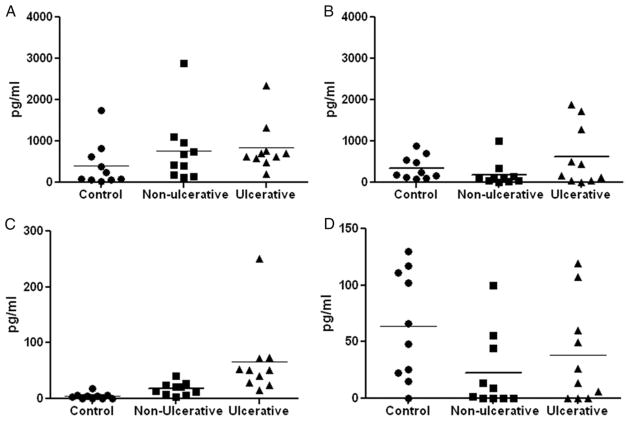
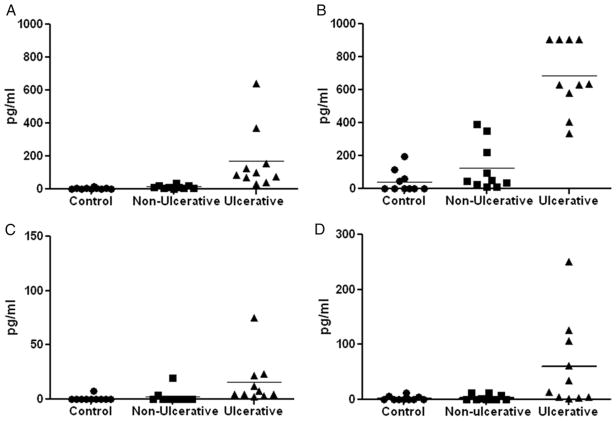
Urinary levels of most chemokines/cytokines were tenfold to 100-fold lower in asymptomatic controls vs patients with ulcerative and nonulcerative interstitial cystitis/painful bladder syndrome. Univariate comparison of 8 tested proteins in the ulcerative vs nonulcerative groups revealed a significant fivefold to twentyfold increase in CXCL-10 and 1, interleukin-6 and nerve growth factor (ANOVA p<0.001).
Differential expression of chemokines in ulcerative and nonulcerative subtypes of interstitial cystitis/painful bladder syndrome suggests differences in paracrine signaling between the 2 entities.
基于基础研究结果,趋化因子和细胞因子(CXCL-1 和 10、神经生长因子和白细胞介素-6)的增加被认为是炎症和传入敏感化的原因。在这项横断面研究中,我们检验了以下假设,即选择趋化因子在溃疡性和非溃疡性间质性膀胱炎/膀胱疼痛综合征患者的尿液中增加。
从中线尿标本中分别收集 10 例溃疡性和非溃疡性间质性膀胱炎/膀胱疼痛综合征患者和 10 例无症状对照者的尿液。通过人类细胞因子/趋化因子测定法测量 7 种细胞因子的尿水平。通过酶联免疫吸附试验测量神经生长因子。
与溃疡性和非溃疡性间质性膀胱炎/膀胱疼痛综合征患者相比,无症状对照组的大多数趋化因子/细胞因子的尿水平低 10 倍至 100 倍。在溃疡性与非溃疡性组之间对 8 种测试蛋白进行的单变量比较显示,CXCL-10、白细胞介素-6 和神经生长因子的水平分别显著增加了 5 倍至 20 倍(ANOVA p<0.001)。
溃疡性和非溃疡性间质性膀胱炎/膀胱疼痛综合征亚型中趋化因子的差异表达表明这两种疾病之间旁分泌信号传递存在差异。