Pfizer Inc, Collegeville, PA, USA.
Int J Womens Health. 2012;4:129-40. doi: 10.2147/IJWH.S29346. Epub 2012 Mar 28.
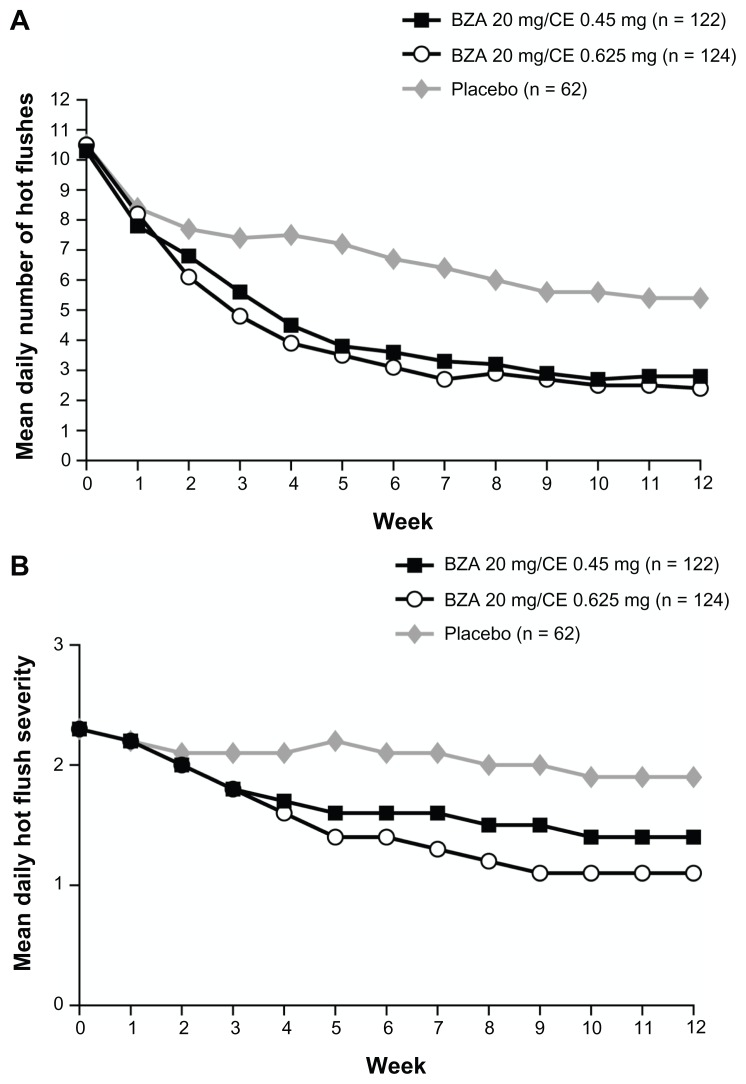
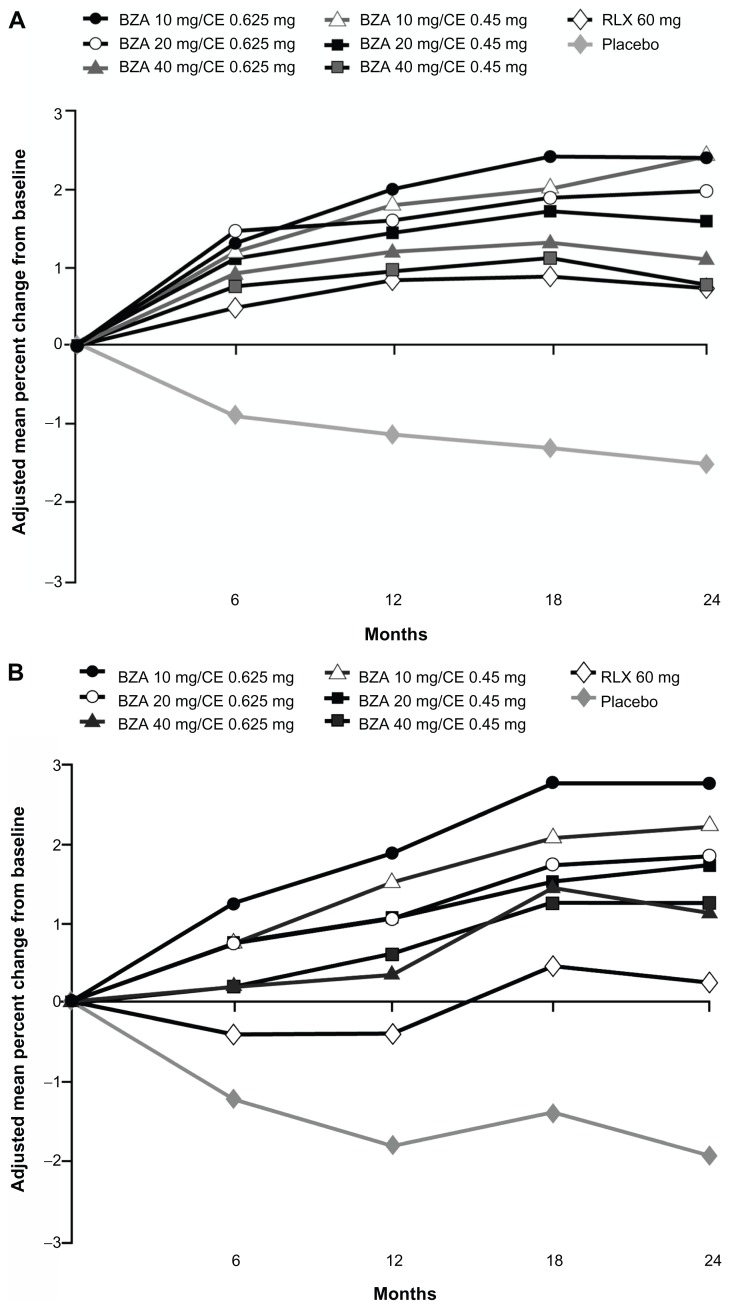
Many women experience bothersome vasomotor and vaginal symptoms during the menopausal transition. Decreasing levels of estrogens during menopause are also associated with reduced bone density and an increased risk of osteoporosis. Combined estrogen/progestin therapy (hormone therapy) effectively treats menopausal symptoms and prevents bone loss, but has been associated with some safety and tolerability concerns. A novel menopausal therapy is the tissue selective estrogen complex, which pairs a selective estrogen receptor modulator with one or more estrogens. In preclinical studies, the tissue selective estrogen complex partnering bazedoxifene (BZA) with conjugated estrogens (CE) antagonized stimulation of breast and endometrial tissue, reduced vasomotor instability, and preserved bone mass in rat and mouse models. The specific attributes seen with BZA/CE were different from those observed with other selective estrogen receptor modulator/estrogen pairings. BZA/CE has undergone clinical evaluation in the Phase III Selective estrogens, Menopause, And Response to Therapy (SMART) trials in postmenopausal women with an intact uterus. Of the various doses of BZA/CE evaluated, BZA 20 mg/CE 0.45 mg and 0.625 mg were associated with a low incidence of endometrial hyperplasia (<1%) similar to placebo, and showed significant improvements in hot flushes and vulvar/vaginal symptoms and increases in bone mineral density. BZA 20 mg/CE 0.45 mg and 0.625 mg were associated with a low incidence of breast-related adverse events and demonstrated no difference from placebo in age-related changes in mammographic breast density. Both BZA/ CE doses showed a favorable tolerability profile, with no increases in uterine bleeding or breast tenderness, and had positive effects on metabolic parameters and quality of life. BZA/CE may be a promising alternative to hormone therapy for the treatment of menopausal symptoms and prevention of osteoporosis in nonhysterectomized postmenopausal women.
许多女性在更年期过渡期间会经历烦人的血管舒缩和阴道症状。绝经后雌激素水平下降也与骨密度降低和骨质疏松症风险增加有关。联合雌激素/孕激素治疗(激素治疗)可有效治疗更年期症状并预防骨质流失,但与一些安全性和耐受性问题有关。一种新的更年期治疗方法是组织选择性雌激素复合物,它将选择性雌激素受体调节剂与一种或多种雌激素结合在一起。在临床前研究中,与结合雌激素(CE)配对的组织选择性雌激素复合物巴多昔芬(BZA)拮抗了对乳房和子宫内膜组织的刺激,减少了血管舒缩不稳定,并在大鼠和小鼠模型中保留了骨量。与其他选择性雌激素受体调节剂/雌激素配对观察到的 BZA/CE 的特定属性不同。BZA/CE 已在接受过子宫完整的绝经后妇女的 III 期选择性雌激素、绝经和对治疗的反应(SMART)试验中进行了临床评估。在评估的各种 BZA/CE 剂量中,BZA 20 mg/CE 0.45 mg 和 0.625 mg 与子宫内膜增生的低发生率(<1%)相似安慰剂,并显示出对热潮红和外阴/阴道症状的显著改善以及骨密度的增加。BZA 20 mg/CE 0.45 mg 和 0.625 mg 与乳房相关不良事件的低发生率相关,与安慰剂相比,在年龄相关的乳腺密度变化方面没有差异。两种 BZA/CE 剂量均表现出良好的耐受性,子宫出血或乳房触痛无增加,并且对代谢参数和生活质量有积极影响。BZA/CE 可能是一种有前途的替代激素治疗方法,可用于治疗非子宫切除的绝经后妇女的更年期症状和预防骨质疏松症。