Noguchi Memorial Institute for Medical Research, University of Ghana, Accra, Ghana.
PLoS One. 2012;7(4):e34565. doi: 10.1371/journal.pone.0034565. Epub 2012 Apr 10.
Haemoglobin S (HbS) and C (HbC) are variants of the HBB gene which both protect against malaria. It is not clear, however, how these two alleles have evolved in the West African countries where they co-exist at high frequencies. Here we use haplotypic signatures of selection to investigate the evolutionary history of the malaria-protective alleles HbS and HbC in the Kassena-Nankana District (KND) of Ghana.
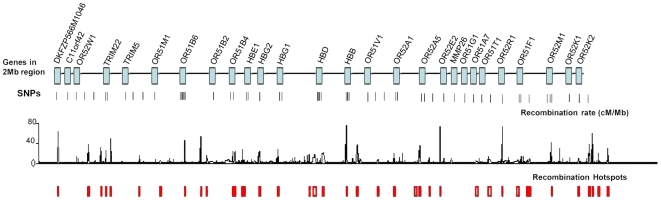
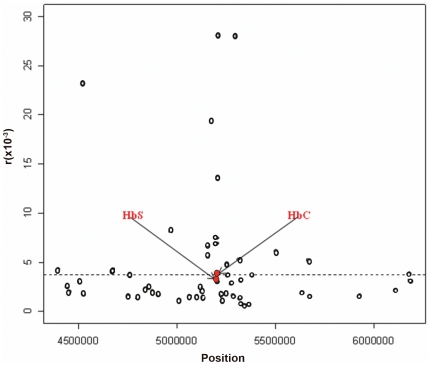
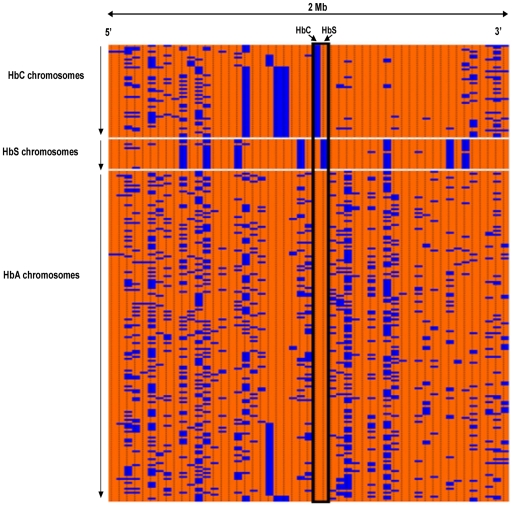
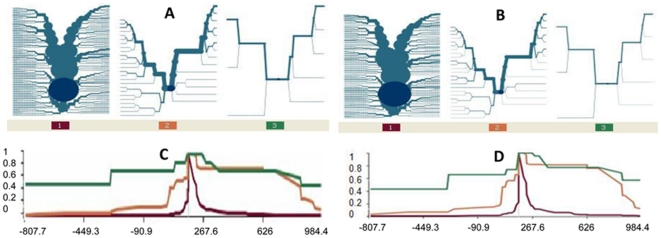
METHODOLOGY/PRINCIPAL FINDINGS: The haplotypic structure of HbS and HbC alleles was investigated, by genotyping 56 SNPs around the HBB locus. We found that, in the KND population, both alleles reside on extended haplotypes (approximately 1.5 Mb for HbS and 650 Kb for HbC) that are significantly less diverse than those of the ancestral HbA allele. The extended haplotypes span a recombination hotspot that is known to exist in this region of the genome
Our findings show strong support for recent positive selection of both the HbS and HbC alleles and provide insights into how these two alleles have both evolved in the population of northern Ghana.
血红蛋白 S(HbS)和 C(HbC)是 HBB 基因的变体,均可对疟疾起到保护作用。然而,在这些变体高频共存的西非国家,它们是如何进化的,目前尚不清楚。在这里,我们利用选择的单体型特征来研究加纳卡萨内-南卡纳区(KND)中具有抗疟作用的 HbS 和 HbC 等位基因的进化历史。
方法/主要发现:通过对 HBB 基因座周围的 56 个 SNP 进行基因分型,研究了 HbS 和 HbC 等位基因的单体型结构。我们发现,在 KND 人群中,这两个等位基因都位于扩展单体型上(大约 HbS 为 1.5Mb,HbC 为 650kb),其多样性明显低于原始 HbA 等位基因。这些扩展单体型跨越了一个已知存在于基因组这一区域的重组热点。
我们的研究结果强烈支持 HbS 和 HbC 等位基因的近期正选择,并为了解这两个等位基因在加纳北部人群中是如何进化的提供了线索。