Department of Medicine (0673), University of California San Diego, La Jolla, California, United States of America.
PLoS One. 2012;7(4):e34976. doi: 10.1371/journal.pone.0034976. Epub 2012 Apr 17.
PPARγ plays a key role in adipocyte biology, and Rosiglitazone (Rosi), a thiazolidinedione (TZD)/PPARγ agonist, is a potent insulin-sensitizing agent. Recent evidences demonstrate that adipose tissue inflammation links obesity with insulin resistance and that the insulin-sensitizing effects of TZDs result, in part, from their anti-inflammatory properties. However the underlying mechanisms are unclear.
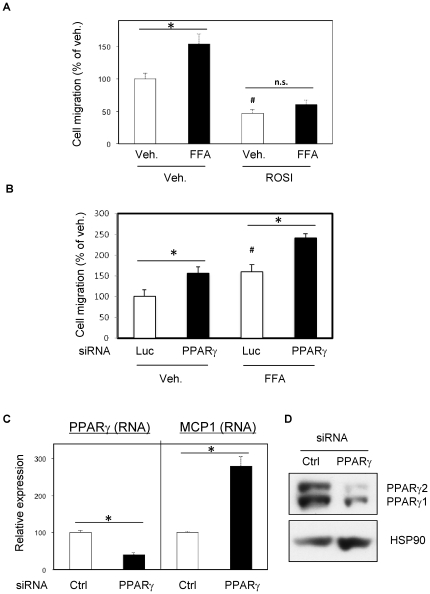
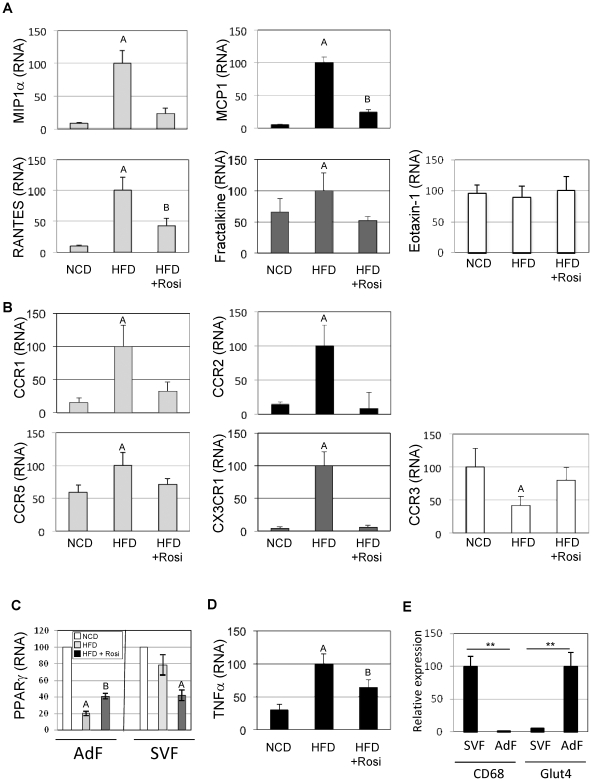
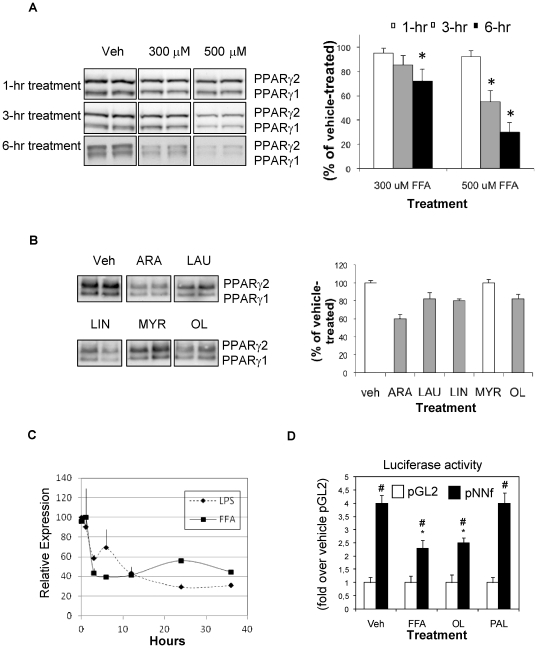
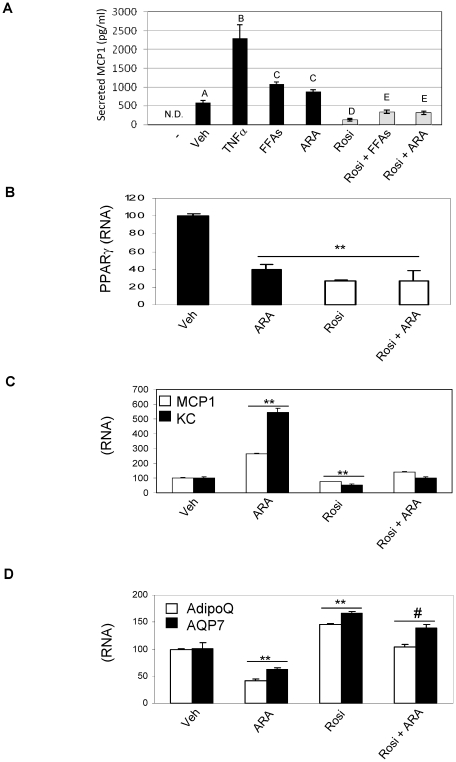
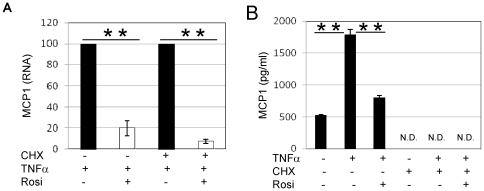
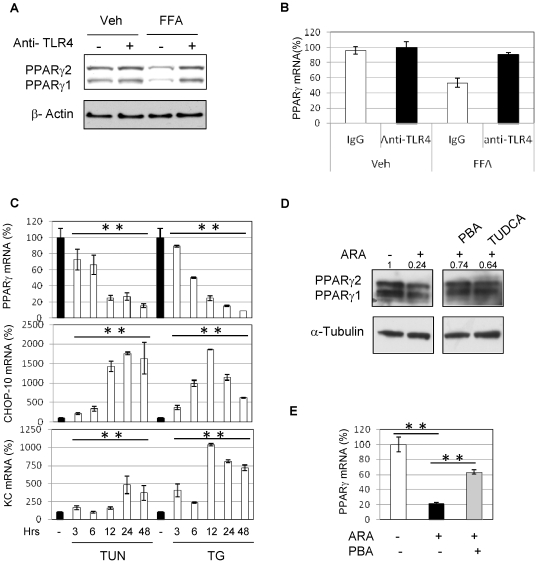
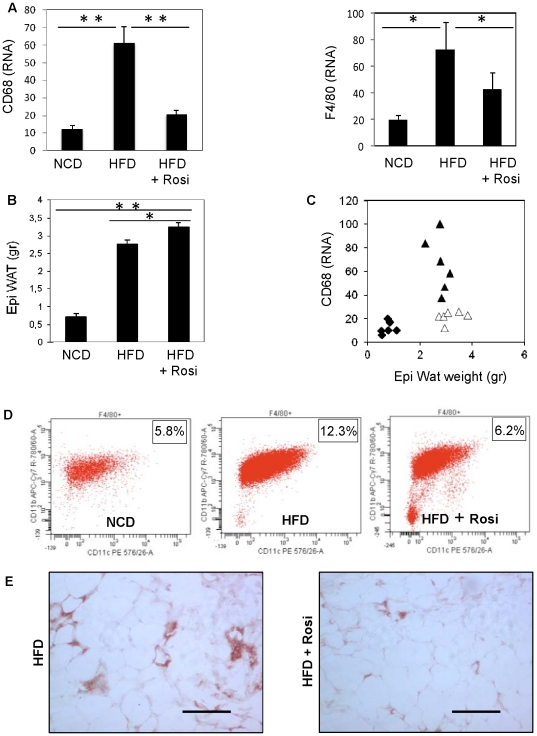
In this study, we establish a link between free fatty acids (FFAs) and PPARγ in the context of obesity-associated inflammation. We show that treatment of adipocytes with FFAs, in particular Arachidonic Acid (ARA), downregulates PPARγ protein and mRNA levels. Furthermore, we demonstrate that the downregulation of PPARγ by ARA requires the activation the of Endoplamsic Reticulum (ER) stress by the TLR4 pathway. Knockdown of adipocyte PPARγ resulted in upregulation of MCP1 gene expression and secretion, leading to enhanced macrophage chemotaxis. Rosi inhibited these effects. In a high fat feeding mouse model, we show that Rosi treatment decreases recruitment of proinflammatory macrophages to epididymal fat. This correlates with decreased chemokine and decreased chemokine receptor expression in adipocytes and macrophages, respectively.
In summary, we describe a novel link between FAs, the TLR4/ER stress pathway and PPARγ, and adipocyte-driven recruitment of macrophages. We thus both describe an additional potential mechanism for the anti-inflammatory and insulin-sensitizing actions of TZDs and an additional detrimental property associated with the activation of the TLR4 pathway by FA.
过氧化物酶体增殖物激活受体 γ(PPARγ)在脂肪细胞生物学中起着关键作用,罗格列酮(Rosi)是噻唑烷二酮(TZD)/PPARγ 激动剂,是一种有效的胰岛素增敏剂。最近的证据表明,脂肪组织炎症将肥胖与胰岛素抵抗联系起来,而 TZDs 的胰岛素增敏作用部分是由于其抗炎特性。然而,潜在的机制尚不清楚。
在这项研究中,我们在肥胖相关炎症的背景下建立了游离脂肪酸(FFAs)与 PPARγ 之间的联系。我们表明,FFAs,特别是花生四烯酸(ARA),处理脂肪细胞会下调 PPARγ 蛋白和 mRNA 水平。此外,我们证明 ARA 下调 PPARγ 需要 TLR4 途径激活内质网(ER)应激。脂肪细胞中 PPARγ 的敲低导致单核细胞趋化蛋白 1(MCP1)基因表达和分泌增加,导致巨噬细胞趋化性增强。Rosi 抑制了这些效应。在高脂肪喂养的小鼠模型中,我们表明 Rosi 治疗可减少促炎巨噬细胞向附睾脂肪的募集。这与脂肪细胞和巨噬细胞中趋化因子和趋化因子受体表达的分别降低相关。
总之,我们描述了 FAs、TLR4/ER 应激途径和 PPARγ 之间的新联系,以及脂肪细胞驱动的巨噬细胞募集。因此,我们描述了 TZDs 抗炎和胰岛素增敏作用的另一种潜在机制,以及 FA 激活 TLR4 途径的另一种有害特性。