Department of Pathology, Stanford University School of Medicine, California 94305-5103, USA.
Annu Rev Pathol. 2011;6:275-97. doi: 10.1146/annurev-pathol-011110-130138.
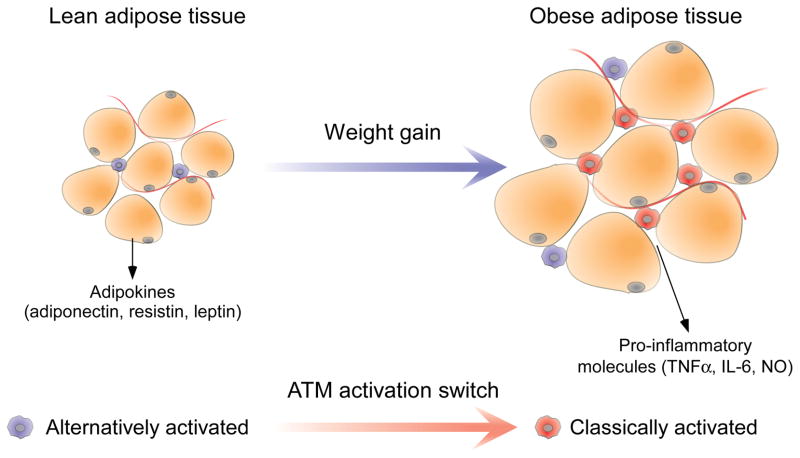
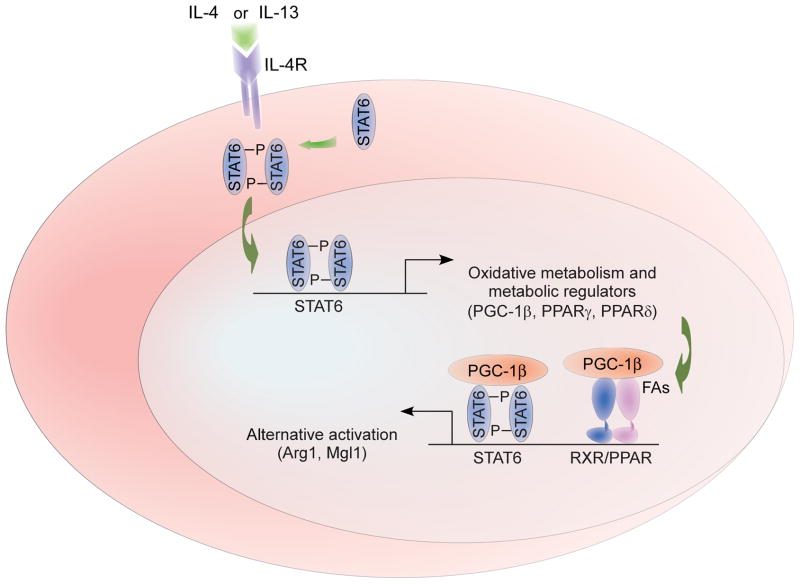
Obesity and its attendant metabolic disorders represent the great public health challenge of our time. Recent evidence suggests that onset of inflammation in metabolic tissues pathogenically links obesity to insulin resistance and type 2 diabetes. In this review, we briefly summarize the extant literature, paying special attention to the central role of the tissue-associated macrophage in the initiation of metabolic inflammation. We argue that rather than representing simple inflammatory disease, obesity and metabolic syndrome represent derangements in macrophage activation with concomitant loss of metabolic coordination. As such, the sequelae of obesity are as much products of the loss of positive macrophage influences as they are of the presence of deleterious inflammation. The therapeutic implications of this conclusion are profound because they suggest that pharmacologic targeting of macrophage activation, rather than simply inflammation, might be efficacious in treating this global epidemic.
肥胖及其伴随的代谢紊乱是我们这个时代面临的重大公共健康挑战。最近的证据表明,代谢组织中炎症的发生将肥胖与胰岛素抵抗和 2 型糖尿病联系起来。在这篇综述中,我们简要总结了现有文献,特别关注组织相关巨噬细胞在代谢炎症发生中的核心作用。我们认为,肥胖和代谢综合征不是简单的炎症性疾病,而是巨噬细胞激活的失调,伴随着代谢协调的丧失。因此,肥胖的后果与其说是有害炎症的存在,不如说是巨噬细胞积极影响的丧失的结果。这一结论具有深远的治疗意义,因为它表明,针对巨噬细胞激活的药物治疗,而不仅仅是炎症,可能在治疗这种全球流行疾病方面有效。