Department of Neuroscience, SantaFe HealthCare Alzheimer's Disease Center, Center for Translational Research in Neurodegenerative Disease, McKnight Brain Institute, University of Florida, Gainesville, FL 32610, USA.
Department of Neuroscience, SantaFe HealthCare Alzheimer's Disease Center, Center for Translational Research in Neurodegenerative Disease, McKnight Brain Institute, University of Florida, Gainesville, FL 32610, USA ; Department of Educational Psychology and Learning Systems, College of Education, Florida State University, Tallahassee, FL 32306, USA.
Alzheimers Res Ther. 2012 Apr 26;4(2):12. doi: 10.1186/alzrt110. eCollection 2012.
The low-density lipoprotein receptor-related protein (LRP1) and its family members have been implicated in the pathogenesis of Alzheimer's disease. Multiple susceptibility factors converge to metabolic pathways that involve LRP1, including modulation of the processing of amyloid precursor protein (APP) and the clearance of Aβ peptide.
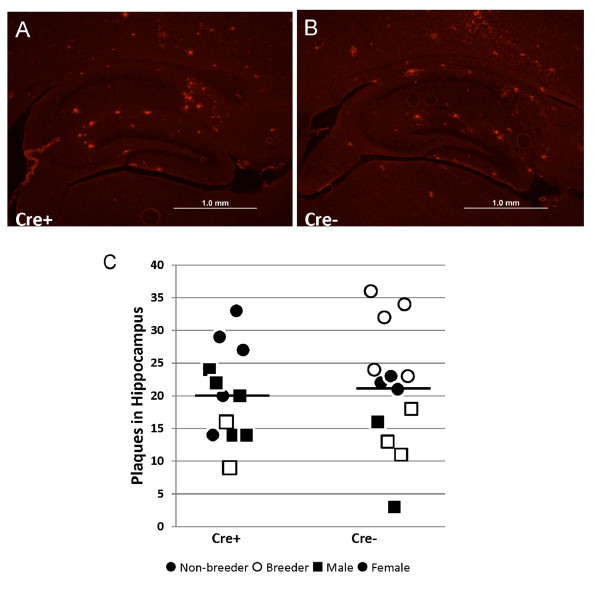
We used the Cre-lox system to lower LRP1 levels in hippocampal neurons of mice that develop Alzheimer-type amyloid by crosses between mice that express Cre recombinase under the transcriptional control of the GFAP promoter, mice that harbor loxp sites in the LRP1 gene, and the APPswe/PS1dE9 transgenic model. We compared amyloid plaque numbers in APPswe/PS1dE9 mice lacking LRP1 expression in hippocampus (n = 13) to mice with normal levels of LRP1 (n = 12). Student t-test was used to test whether there were significant differences in plaque numbers and amyloid levels between the groups. A regression model was used to fit two regression lines for these groups, and to compare the rates of Aβ accumulation.
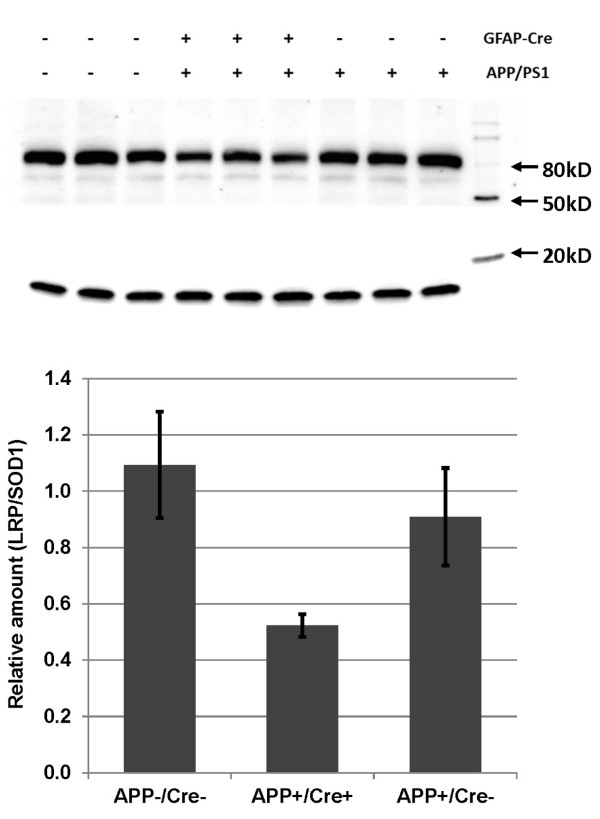
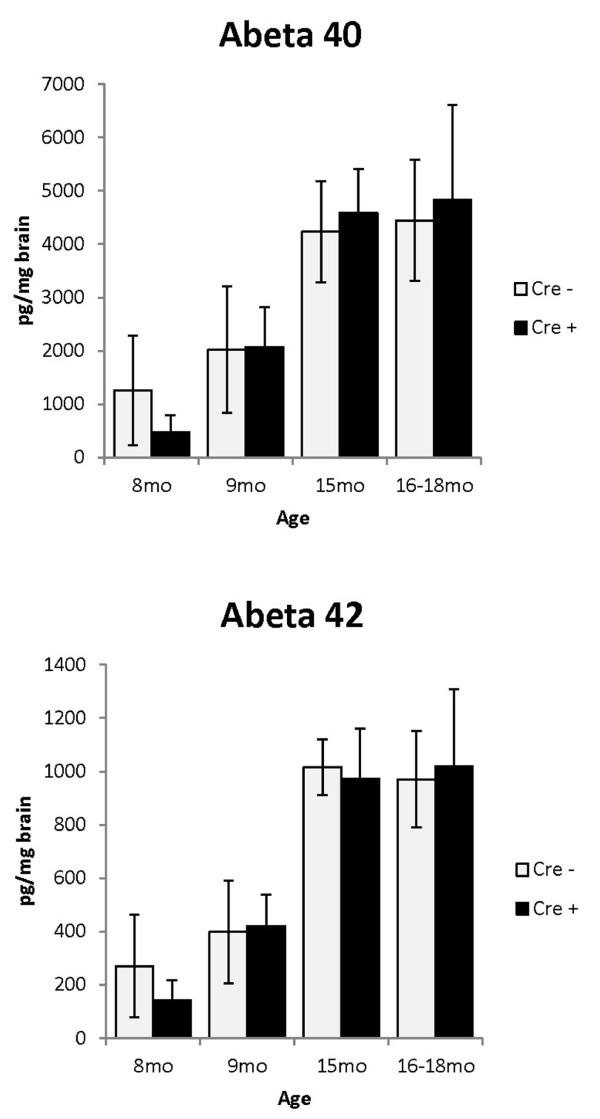
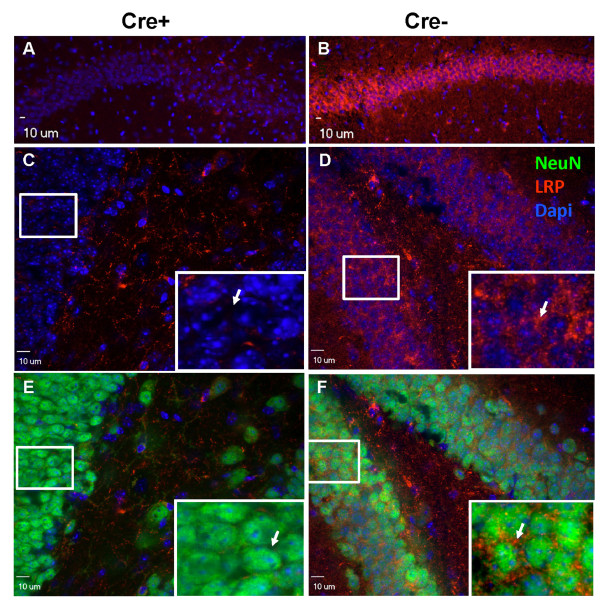
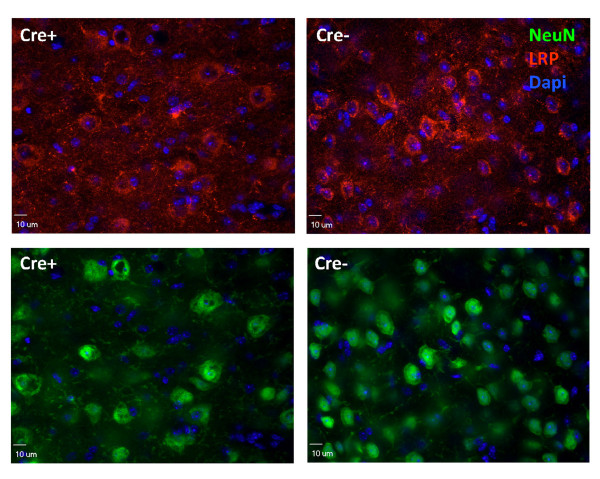
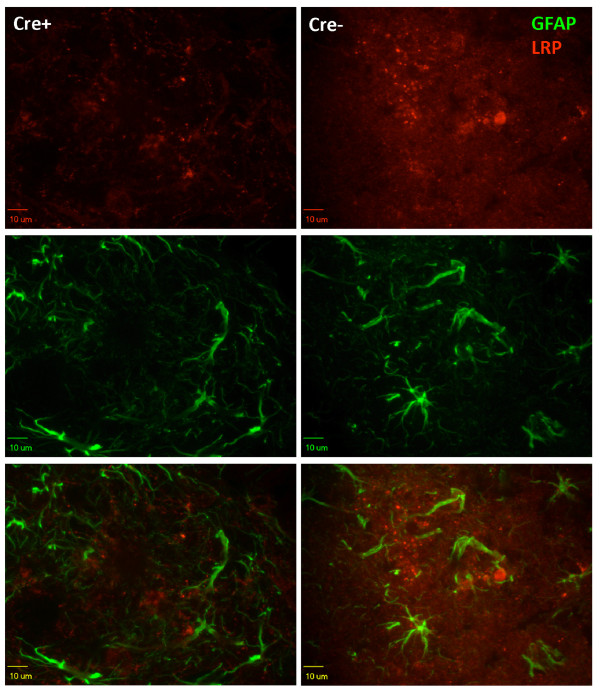
Immunohistochemical analyses demonstrated efficient elimination of LRP1 expression in the CA fields and dentate gyrus of the hippocampus. Within hippocampus, we observed no effect on the severity of amyloid deposition, the rate of Aβ40/42 accumulation, or the architecture of amyloid plaques when LRP1 levels were reduced.
Expression of LRP1 by neurons in proximity to senile amyloid plaques does not appear to play a major role in modulating the formation of these proximal deposits or in the appearance of the associated neuritic pathology.
低密度脂蛋白受体相关蛋白(LRP1)及其家族成员与阿尔茨海默病的发病机制有关。多种易感因素汇聚到涉及 LRP1 的代谢途径,包括淀粉样前体蛋白(APP)的加工和 Aβ肽的清除的调节。
我们使用 Cre-lox 系统降低通过表达 Cre 重组酶的 GFAP 启动子控制下的小鼠、LRP1 基因中具有 loxp 位点的小鼠和 APPswe/PS1dE9 转基因模型之间的交叉,在发展为阿尔茨海默病样淀粉样的小鼠的海马神经元中降低 LRP1 水平。我们将缺乏海马 LRP1 表达的 APPswe/PS1dE9 小鼠(n = 13)的淀粉样斑块数量与 LRP1 水平正常的小鼠(n = 12)进行比较。学生 t 检验用于测试两组之间斑块数量和淀粉样水平是否存在显著差异。回归模型用于拟合这两组的两条回归线,并比较 Aβ 积累的速度。
免疫组织化学分析表明,LRP1 在海马 CA 区和齿状回的表达被有效消除。在海马内,当 LRP1 水平降低时,我们观察到对淀粉样沉积的严重程度、Aβ40/42 积累的速度或淀粉样斑块的结构没有影响。
靠近老年淀粉样斑块的神经元表达的 LRP1 似乎在调节这些近端沉积物的形成或相关神经突病理学的出现方面没有发挥主要作用。