Schiavo G, Papini E, Genna G, Montecucco C
Centro Consiglio Nazionale delle Ricerche Biomembrane e Istituto di Patologia Generale, Università di Padova, Padua, Italy.
Infect Immun. 1990 Dec;58(12):4136-41. doi: 10.1128/iai.58.12.4136-4141.1990.
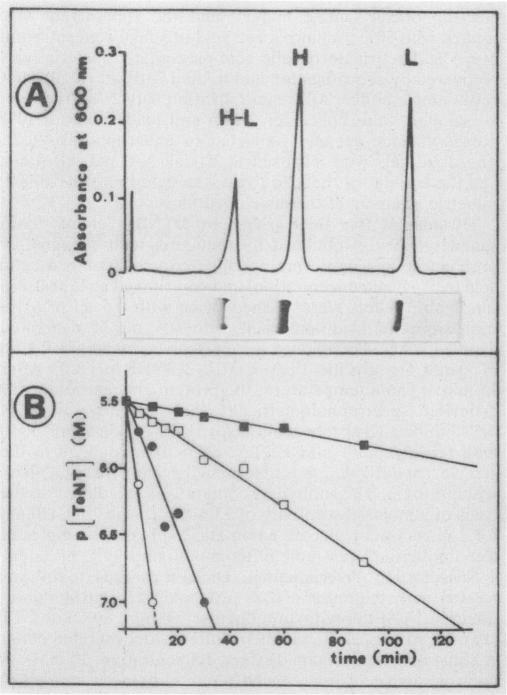
Tetanus toxin is composed of a heavy chain (100 kDa) and a light chain (50 kDa) held together by a single interchain disulfide bridge. An additional intrachain disulfide is present in the carboxy-terminal part of the heavy chain. Reduction of the two disulfide bonds in tetanus toxin with both chemical and proteinaceous reducing agents was studied. Dithiothreitol and 2-mercaptoethanol cleaved both the inter- and intrachain disulfide bridges of the toxin, while glutathione and cysteine were ineffective. Specific reduction of the single interchain disulfide link was achieved with the thioredoxin-thioredoxin reductase system, thus indicating that this bond is exposed at the protein surface. Also, dead or permeabilized cells were able to reduce the toxin. Such reduced toxin bound to neuronal membranes as well as the native toxin but was not neurotoxic. These findings open the possibility that reduction by cytoplasmic agents released by dead cells contributes to detoxification of tetanus toxin. Moreover, together with the notion that the light chain is the active form of the toxin in the cytoplasm, these results suggest that the interchain disulfide bond of tetanus toxin plays a role in nerve cell penetration.
破伤风毒素由一条重链(100 kDa)和一条轻链(50 kDa)组成,二者通过一个链间二硫键相连。重链的羧基末端部分还存在一个链内二硫键。研究了用化学还原剂和蛋白质类还原剂还原破伤风毒素中的两个二硫键的情况。二硫苏糖醇和2-巯基乙醇能切断毒素的链间和链内二硫键,而谷胱甘肽和半胱氨酸则无效。利用硫氧还蛋白-硫氧还蛋白还原酶系统可特异性还原单个链间二硫键,这表明该键暴露于蛋白质表面。此外,死亡或通透化的细胞也能够还原毒素。这种还原后的毒素与天然毒素一样能与神经元膜结合,但没有神经毒性。这些发现提示,死亡细胞释放的胞质因子进行的还原作用可能有助于破伤风毒素的解毒。此外,结合轻链是毒素在细胞质中的活性形式这一观点,这些结果表明破伤风毒素的链间二硫键在神经细胞穿透过程中起作用。