Key Laboratory of Conservation Biology for Endangered Wildlife of Ministry of Education, Key Laboratory of Animal Virology of Ministry of Agriculture and College of Life Sciences, Zhejiang University, Hangzhou 310058, People's Republic of China.
BMC Genomics. 2012 Apr 30;13:159. doi: 10.1186/1471-2164-13-159.
MicroRNAs (miRNAs) are key posttranscriptional regulators of gene expression that are implicated in many processes of eukaryotic cells. It is known that the expression profiles of host miRNAs can be reshaped by viruses. However, a systematic investigation of marine invertebrate miRNAs that respond to virus infection has not yet been performed.
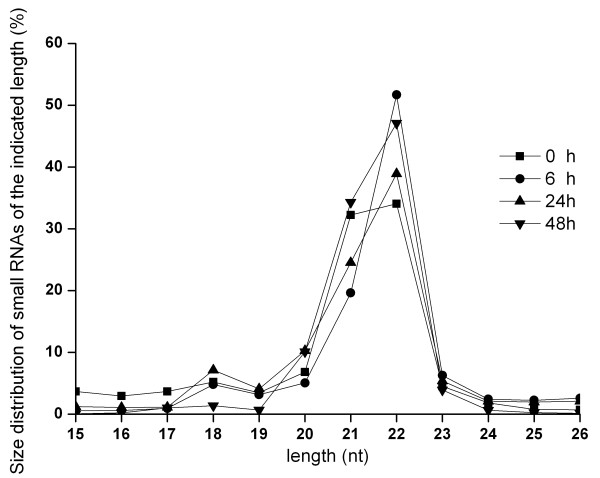
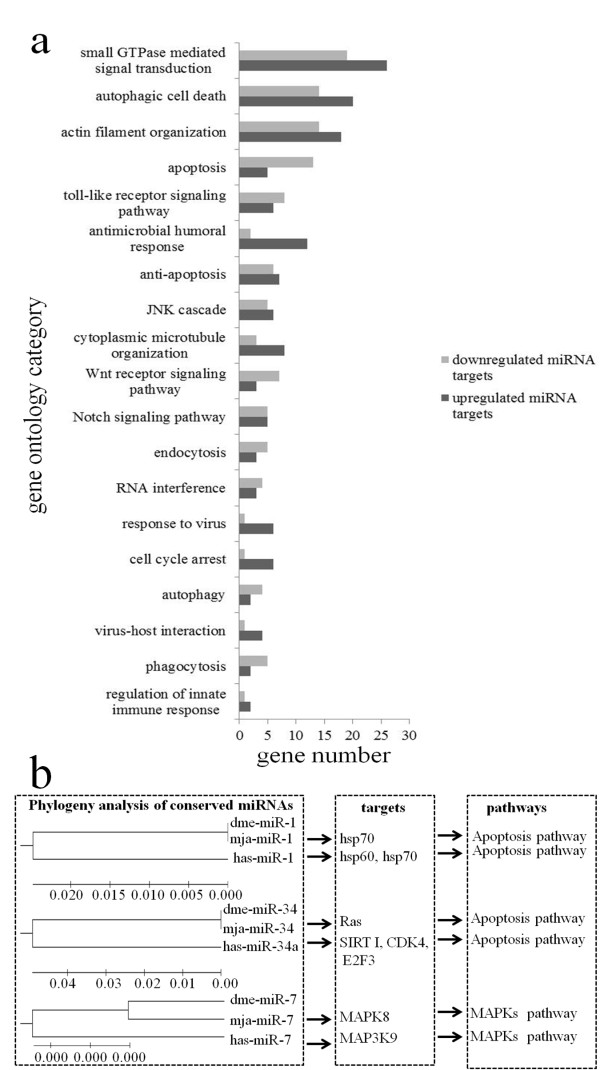
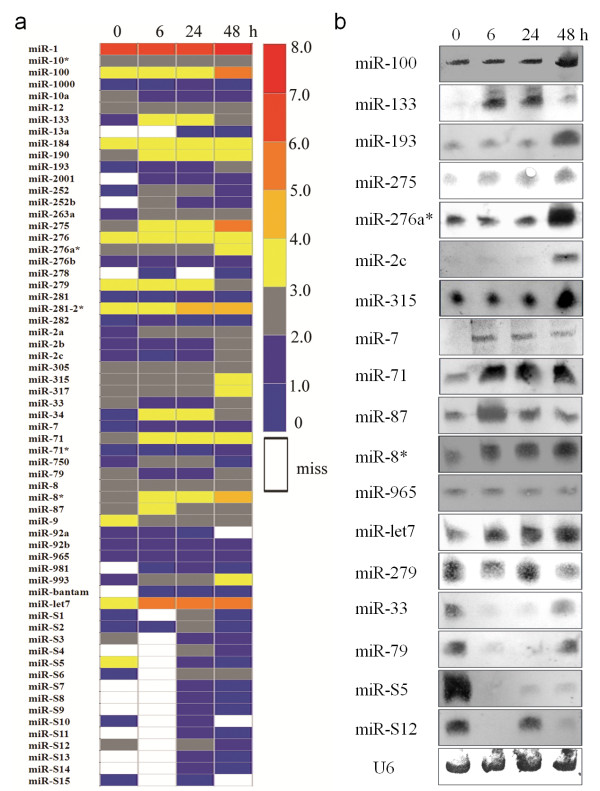
In this study, the shrimp Marsupenaeus japonicus was challenged by white spot syndrome virus (WSSV). Small RNA sequencing of WSSV-infected shrimp at different time post-infection (0, 6, 24 and 48 h) identified 63 host miRNAs, 48 of which were conserved in other animals, representing 43 distinct families. Of the identified host miRNAs, 31 were differentially expressed in response to virus infection, of which 25 were up-regulated and six down-regulated. The results were confirmed by northern blots. The TargetScan and miRanda algorithms showed that most target genes of the differentially expressed miRNAs were related to immune responses. Gene ontology analysis revealed that immune signaling pathways were mediated by these miRNAs. Evolutionary analysis showed that three of them, miR-1, miR-7 and miR-34, are highly conserved in shrimp, fruit fly and humans and function in the similar pathways.
Our study provides the first large-scale characterization of marine invertebrate miRNAs that respond to virus infection. This will help to reveal the molecular events involved in virus-host interactions mediated by miRNAs and their evolution in animals.
微小 RNA(miRNAs)是真核细胞中基因表达的关键转录后调控因子,参与许多细胞过程。已知宿主 miRNAs 的表达谱可以被病毒重塑。然而,对于响应病毒感染的海洋无脊椎动物 miRNAs 的系统研究尚未进行。
本研究中,用白斑综合征病毒(WSSV)感染对虾 M. japonicus。在感染后不同时间(0、6、24 和 48 h)对 WSSV 感染的对虾进行小 RNA 测序,鉴定出 63 个宿主 miRNAs,其中 48 个在其他动物中保守,代表 43 个不同的家族。在鉴定出的宿主 miRNAs 中,有 31 个对病毒感染有差异表达,其中 25 个上调,6 个下调。Northern blot 验证了结果。TargetScan 和 miRanda 算法表明,差异表达 miRNAs 的大多数靶基因与免疫反应有关。基因本体分析表明,这些 miRNAs 介导了免疫信号通路。进化分析表明,其中 3 个 miRNA(miR-1、miR-7 和 miR-34)在虾、果蝇和人类中高度保守,并且在相似的途径中发挥作用。
本研究首次大规模描述了响应病毒感染的海洋无脊椎动物 miRNAs。这将有助于揭示病毒-宿主相互作用中涉及的分子事件以及它们在动物中的进化。