Falk Torsten, Congrove Nicole R, Zhang Shiling, McCourt Alexander D, Sherman Scott J, McKay Brian S
Department of Neurology, College of Medicine, The University of Arizona, AHSC, P.O. Box 245023, 1501 N. Campbell Avenue, Tucson, AZ 85724, USA.
J Biomed Biotechnol. 2012;2012:278932. doi: 10.1155/2012/278932. Epub 2012 Apr 2.
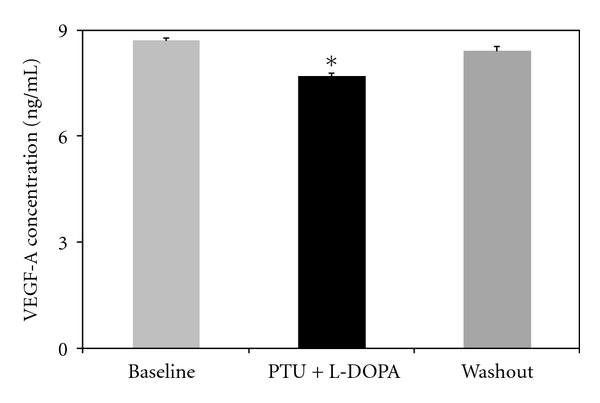
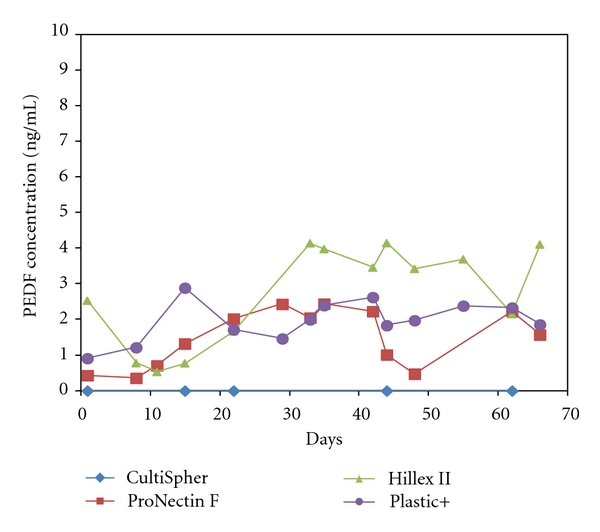
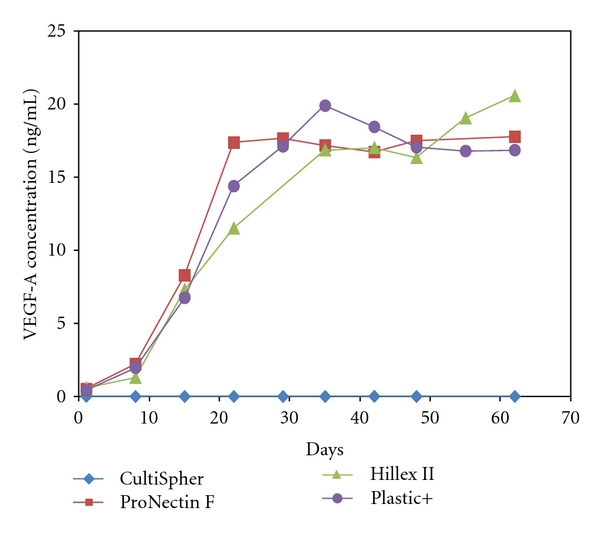
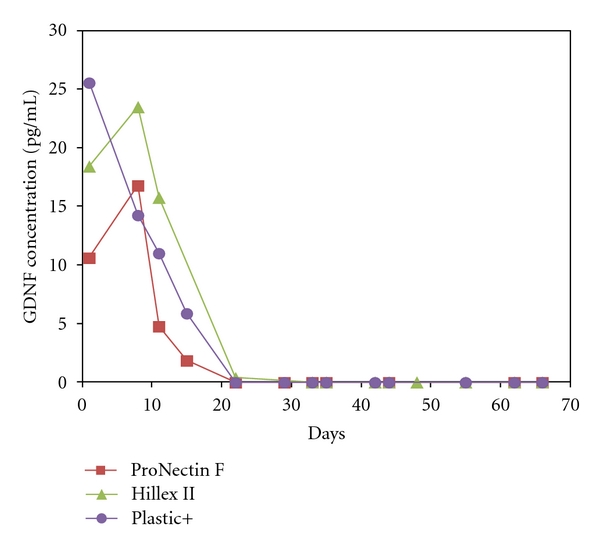
Human retinal pigment epithelial (hRPE) cells have been tested as a cell-based therapy for Parkinson's disease but will require additional study before further clinical trials can be planned. We now show that the long-term survival and neurotrophic potential of hRPE cells can be enhanced by the use of FDA-approved plastic-based microcarriers compared to a gelatin-based microcarrier as used in failed clinical trials. The hRPE cells grown on these plastic-based microcarriers display several important characteristics of hRPE found in vivo: (1) characteristic morphological features, (2) accumulation of melanin pigment, and (3) high levels of production of the neurotrophic factors pigment epithelium-derived factor (PEDF) and vascular endothelial growth factor-A (VEGF-A). Growth of hRPE cells on plastic-based microcarriers led to sustained levels (>1 ng/ml) of PEDF and VEGF-A in conditioned media for two months. We also show that the expression of VEGF-A and PEDF is reciprocally regulated by activation of the GPR143 pathway. GPR143 is activated by L-DOPA (1 μM) which decreased VEGF-A secretion as opposed to the previously reported increase in PEDF secretion. The hRPE microcarriers are therefore novel candidate delivery systems for achieving long-term delivery of the neuroprotective factors PEDF and VEGF-A, which could have a value in neurodegenerative conditions such as Parkinson's disease.
人视网膜色素上皮(hRPE)细胞已作为帕金森病的细胞疗法进行了测试,但在能够规划进一步的临床试验之前还需要更多研究。我们现在表明,与在失败的临床试验中使用的明胶基微载体相比,使用美国食品药品监督管理局(FDA)批准的塑料基微载体可以提高hRPE细胞的长期存活率和神经营养潜能。在这些塑料基微载体上生长的hRPE细胞表现出在体内发现的hRPE的几个重要特征:(1)特征性形态特征,(2)黑色素的积累,以及(3)神经营养因子色素上皮衍生因子(PEDF)和血管内皮生长因子-A(VEGF-A)的高水平产生。hRPE细胞在塑料基微载体上的生长导致条件培养基中PEDF和VEGF-A持续两个月保持在>1 ng/ml的水平。我们还表明,VEGF-A和PEDF的表达受GPR143途径激活的相互调节。GPR143被L-多巴(1 μM)激活,这导致VEGF-A分泌减少,与先前报道的PEDF分泌增加相反。因此,hRPE微载体是用于实现神经保护因子PEDF和VEGF-A长期递送的新型候选递送系统,这可能对帕金森病等神经退行性疾病具有价值。