Falk Torsten, Gonzalez Robert T, Sherman Scott J
Department of Neurology, University of Arizona College of Medicine, 1501 N. Campbell Avenue, Tucson AZ 85724-5023, USA; E-Mails:
Int J Mol Sci. 2010 Aug 5;11(8):2875-900. doi: 10.3390/ijms11082875.
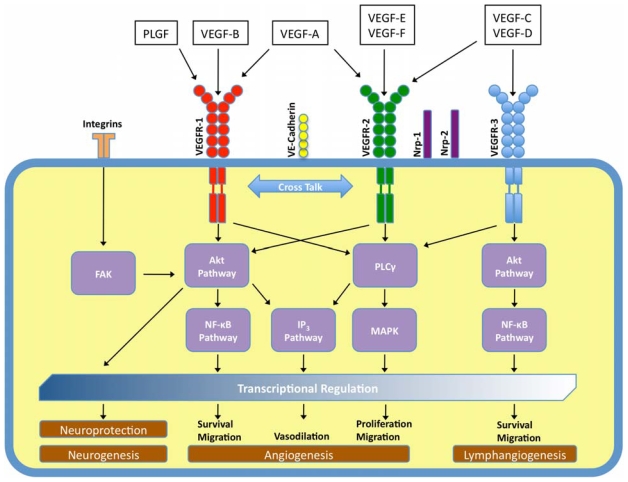
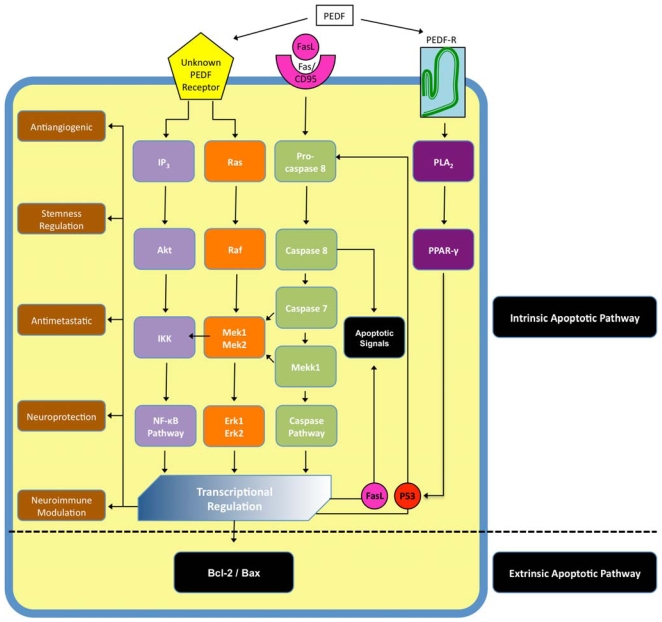
Over the last few decades, vascular endothelial growth factor (VEGF) and pigment epithelium-derived factor (PEDF) have emerged as multifaceted players in not only the pathogenesis, but potential treatment, of numerous diseases. They activate diverse intracellular signaling cascades known to have extensive crosstalk, and have been best studied for their effects in cardiology and cancer biology. Recent work with the two factors indicates that the activity of one growth factor is often directly related to the action of the other. Their respective neuroprotective effects, in particular, raise important questions regarding the treatment of neurodegenerative disorders, including Parkinson's disease.
在过去几十年中,血管内皮生长因子(VEGF)和色素上皮衍生因子(PEDF)不仅在多种疾病的发病机制中,而且在潜在治疗方面都成为了多面手。它们激活了已知具有广泛相互作用的多种细胞内信号级联反应,并且在心脏病学和癌症生物学方面的作用得到了最深入的研究。最近对这两种因子的研究表明,一种生长因子的活性通常与另一种因子的作用直接相关。特别是它们各自的神经保护作用,引发了关于包括帕金森病在内的神经退行性疾病治疗的重要问题。