European Institute of Oncology, Department of Experimental Oncology, Via Adamello 16, 20139 Milan, Italy.
Nat Cell Biol. 2012 May 6;14(6):614-24. doi: 10.1038/ncb2495.
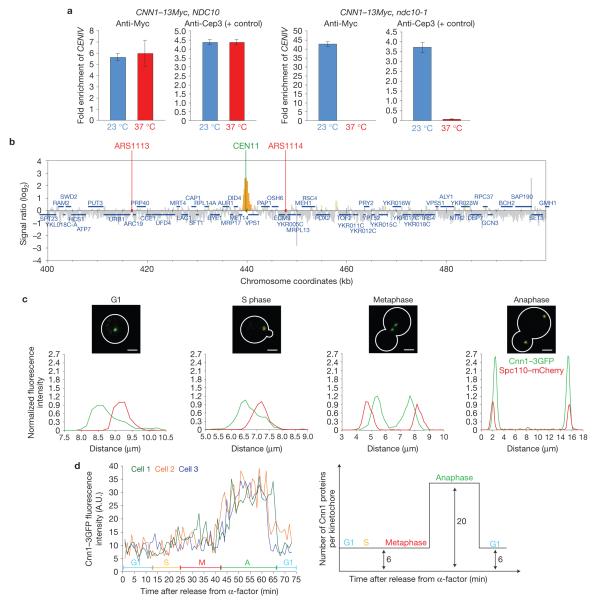
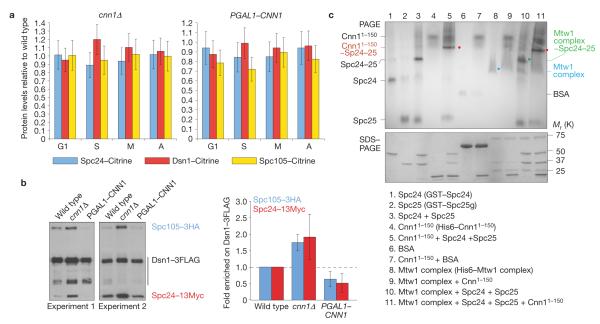
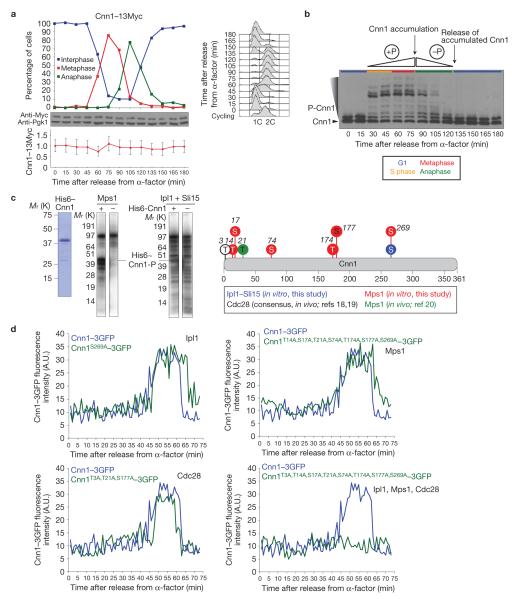
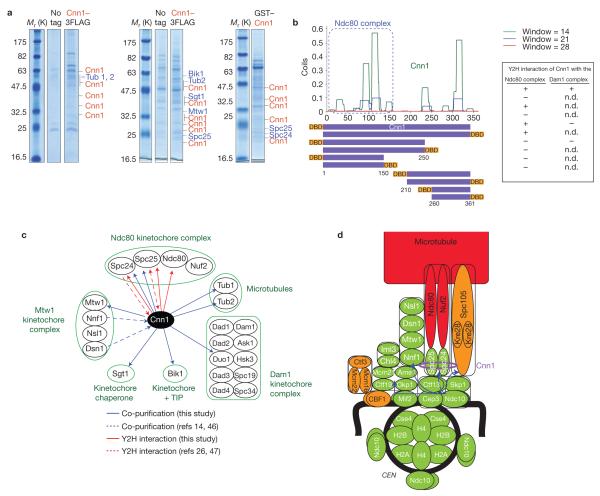
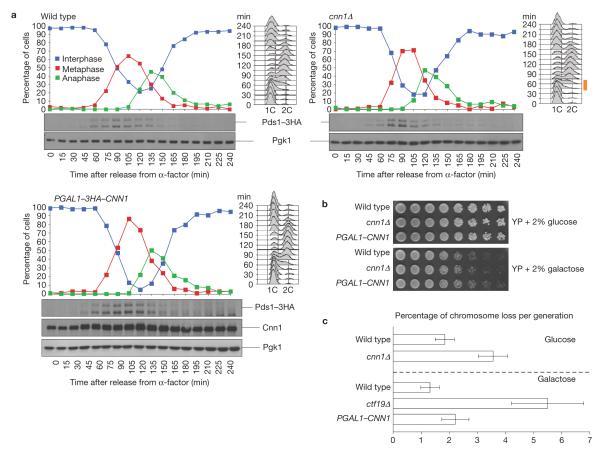
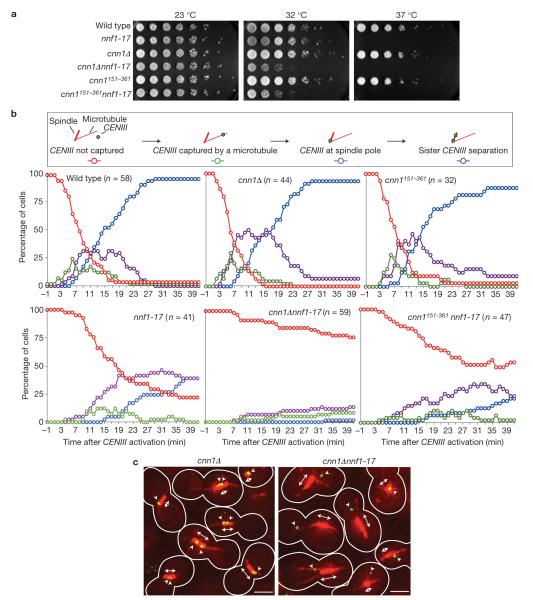
Kinetochores attach the replicated chromosomes to the mitotic spindle and orchestrate their transmission to the daughter cells. Kinetochore-spindle binding and chromosome segregation are mediated by the multi-copy KNL1(Spc105), MIS12(Mtw1) and NDC80(Ndc80) complexes that form the so-called KMN network. KMN-spindle attachment is regulated by the Aurora B(Ipl1) and MPS1(Mps1) kinases. It is unclear whether other mechanisms exist that support KMN activity during the cell cycle. Using budding yeast, we show that kinetochore protein Cnn1 localizes to the base of the Ndc80 complex and promotes a functionally competent configuration of the KMN network. Cnn1 regulates KMN activity in a spatiotemporal manner by inhibiting the interaction between its complexes. Cnn1 activity peaks in anaphase and is driven by the Cdc28, Mps1 and Ipl1 kinases.
着丝粒将复制的染色体附着到有丝分裂纺锤体上,并协调它们向子细胞的传递。着丝粒-纺锤体结合和染色体分离是由多拷贝的 KNL1(Spc105)、MIS12(Mtw1)和 NDC80(Ndc80)复合物介导的,这些复合物形成了所谓的 KMN 网络。KMN-纺锤体附着受 Aurora B(Ipl1)和 MPS1(Mps1)激酶的调节。目前尚不清楚是否存在其他机制来支持细胞周期中 KMN 的活性。利用 budding yeast,我们发现着丝粒蛋白 Cnn1 定位于 Ndc80 复合物的底部,并促进 KMN 网络的功能完备构象。Cnn1 通过抑制其复合物之间的相互作用以时空方式调节 KMN 的活性。Cnn1 活性在后期达到峰值,由 Cdc28、Mps1 和 Ipl1 激酶驱动。