Department of Biostatistics, University of Washington, Seattle, Washington, USA.
Nat Genet. 2012 May 6;44(6):642-50. doi: 10.1038/ng.2271.
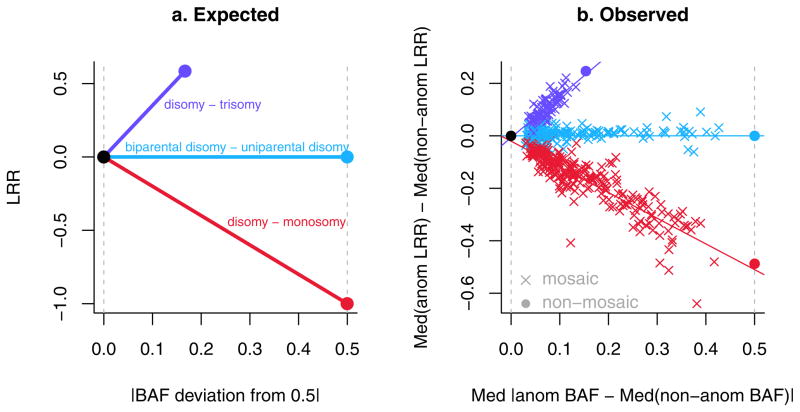
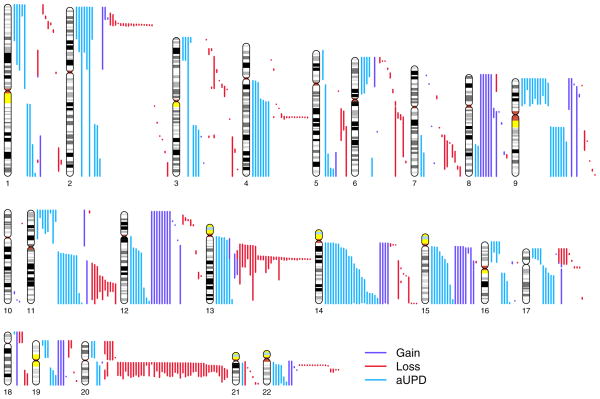
We detected clonal mosaicism for large chromosomal anomalies (duplications, deletions and uniparental disomy) using SNP microarray data from over 50,000 subjects recruited for genome-wide association studies. This detection method requires a relatively high frequency of cells with the same abnormal karyotype (>5-10%; presumably of clonal origin) in the presence of normal cells. The frequency of detectable clonal mosaicism in peripheral blood is low (<0.5%) from birth until 50 years of age, after which it rapidly rises to 2-3% in the elderly. Many of the mosaic anomalies are characteristic of those found in hematological cancers and identify common deleted regions with genes previously associated with these cancers. Although only 3% of subjects with detectable clonal mosaicism had any record of hematological cancer before DNA sampling, those without a previous diagnosis have an estimated tenfold higher risk of a subsequent hematological cancer (95% confidence interval = 6-18).
我们使用超过 50000 名参与全基因组关联研究的个体的 SNP 微阵列数据,检测到了大片段染色体异常(重复、缺失和单亲二体性)的克隆嵌合体。这种检测方法需要具有相同异常核型的细胞具有相对较高的频率(>5-10%;可能来自克隆起源),同时存在正常细胞。从出生到 50 岁,外周血中可检测到的克隆嵌合体的频率较低(<0.5%),此后在老年人中迅速上升至 2-3%。许多镶嵌异常与血液系统癌症中发现的异常相似,并确定了与这些癌症相关的常见缺失区域的基因。尽管在 DNA 采样前有检测到克隆嵌合体的 3%的个体有血液系统癌症的记录,但那些没有先前诊断的个体随后发生血液系统癌症的风险估计高出十倍(95%置信区间= 6-18)。