The Division of Public Health Sciences, Fred Hutchinson Cancer Research Center, Seattle, Washington, United States of America.
PLoS One. 2013;8(3):e59823. doi: 10.1371/journal.pone.0059823. Epub 2013 Mar 22.
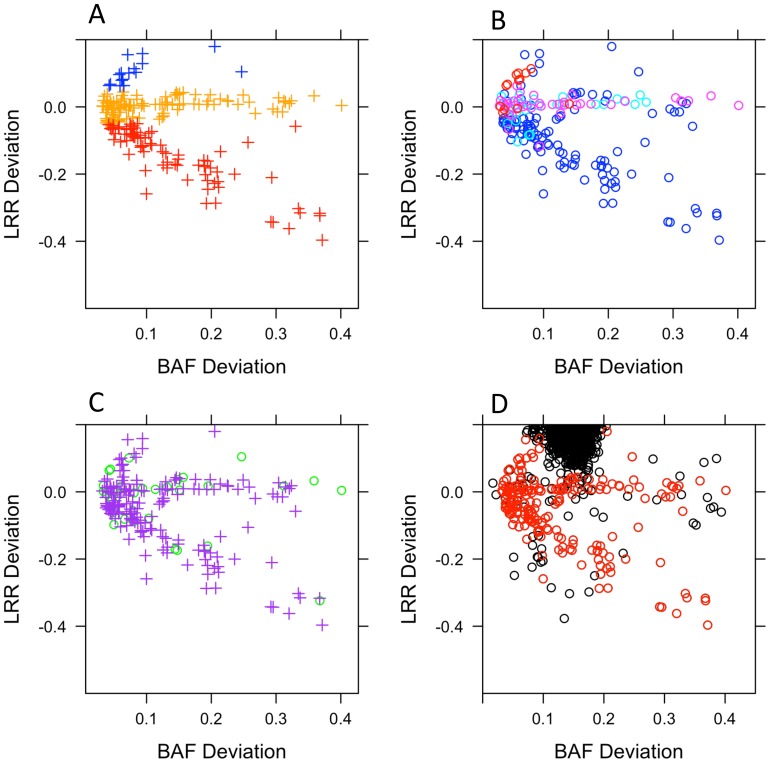
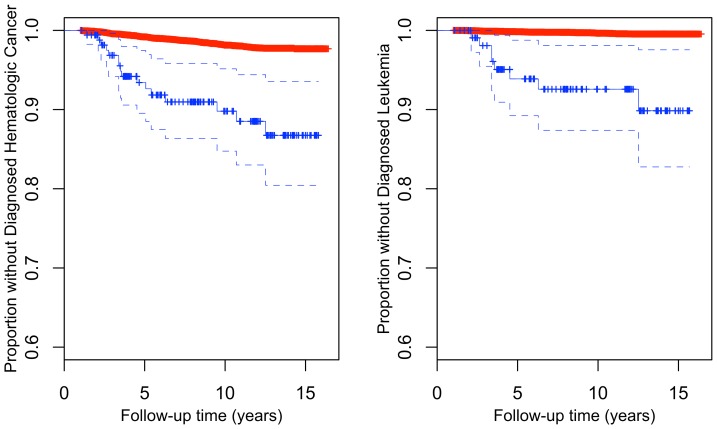
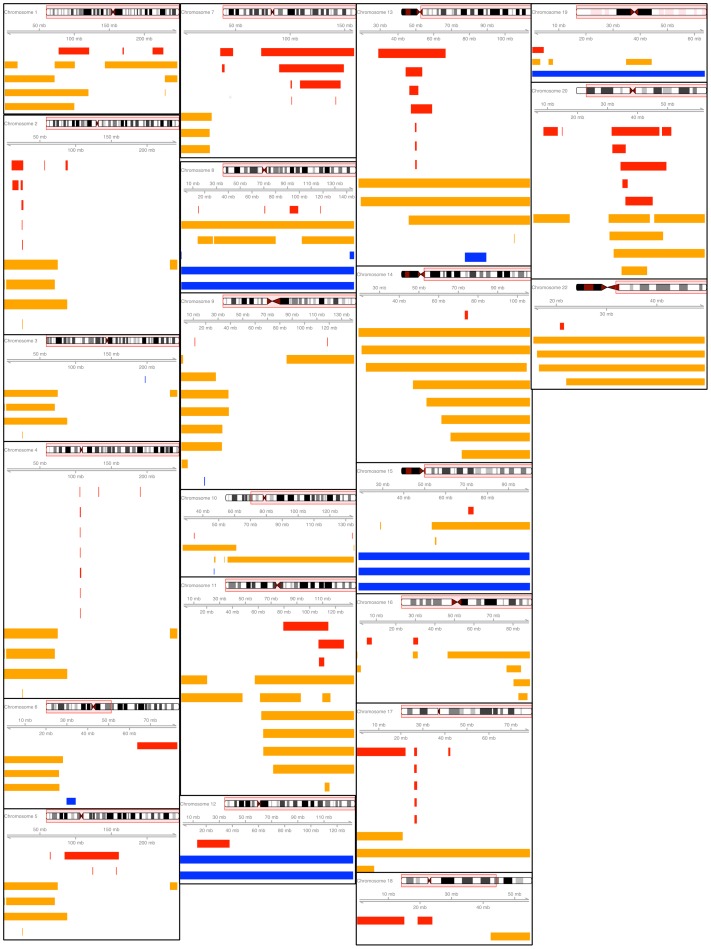
Chromosomal abnormalities provide clinical utility in the diagnosis and treatment of hematologic malignancies, and may be predictive of malignant transformation in individuals without apparent clinical presentation of a hematologic cancer. In an effort to confirm previous reports of an association between clonal mosaicism and incident hematologic cancer, we applied the anomDetectBAF algorithm to call chromosomal anomalies in genotype data from previously conducted Genome Wide Association Studies (GWAS). The genotypes were initially collected from DNA derived from peripheral blood of 12,176 participants in the Group Health electronic Medical Records and Genomics study (eMERGE) and the Women's Health Initiative (WHI). We detected clonal mosaicism in 169 individuals (1.4%) and large clonal mosaic events (>2 mb) in 117 (1.0%) individuals. Though only 9.5% of clonal mosaic carriers had an incident diagnosis of hematologic cancer (multiple myeloma, myelodysplastic syndrome, lymphoma, or leukemia), the carriers had a 5.5-fold increased risk (95% CI: 3.3-9.3; p-value = 7.5×10(-11)) of developing these cancers subsequently. Carriers of large mosaic anomalies showed particularly pronounced risk of subsequent leukemia (HR = 19.2, 95% CI: 8.9-41.6; p-value = 7.3×10(-14)). Thus we independently confirm the association between detectable clonal mosaicism and hematologic cancer found previously in two recent publications.
染色体异常为血液系统恶性肿瘤的诊断和治疗提供了临床依据,并且可能预测无明显血液系统癌症临床表现的个体发生恶性转化。为了证实先前关于克隆嵌合体与新发血液系统癌症之间存在关联的报告,我们应用 anomDetectBAF 算法在先前进行的全基因组关联研究(GWAS)的基因型数据中调用染色体异常。这些基因型最初是从 12176 名参与 Group Health 电子病历和基因组学研究(eMERGE)和妇女健康倡议(WHI)的外周血 DNA 中收集的。我们在 169 个人(1.4%)中检测到克隆嵌合体,在 117 个人(1.0%)中检测到大的克隆嵌合体事件(>2mb)。尽管只有 9.5%的克隆嵌合体携带者有新发血液系统癌症(多发性骨髓瘤、骨髓增生异常综合征、淋巴瘤或白血病)的诊断,但携带者的发病风险增加了 5.5 倍(95%CI:3.3-9.3;p 值=7.5×10(-11))。大嵌合体异常携带者随后发生白血病的风险尤其显著(HR=19.2,95%CI:8.9-41.6;p 值=7.3×10(-14))。因此,我们独立证实了先前在两项最近的出版物中发现的可检测到的克隆嵌合体与血液系统癌症之间的关联。