Department of Neurobiology and Anatomy, Wake Forest University School of Medicine, Winston-Salem NC, USA.
Front Integr Neurosci. 2012 May 3;6:17. doi: 10.3389/fnint.2012.00017. eCollection 2012.
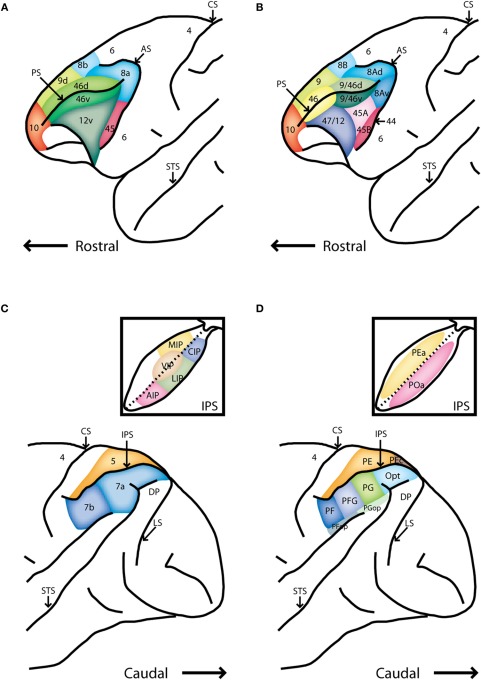
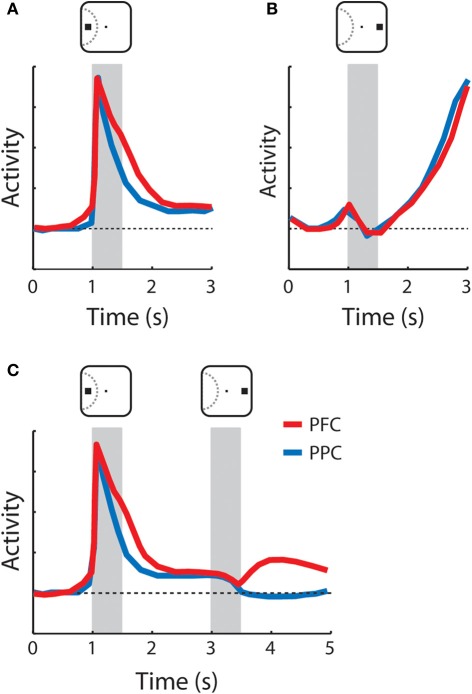
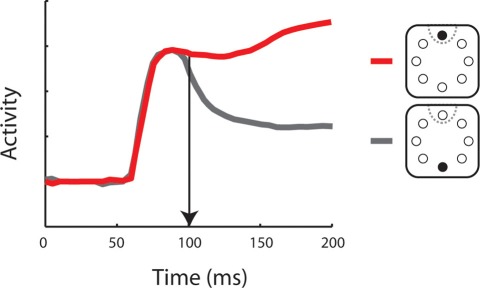
The dorsolateral prefrontal cortex (PFC) and posterior parietal cortex (PPC) are two parts of a broader brain network involved in the control of cognitive functions such as working-memory, spatial attention, and decision-making. The two areas share many functional properties and exhibit similar patterns of activation during the execution of mental operations. However, neurophysiological experiments in non-human primates have also documented subtle differences, revealing functional specialization within the fronto-parietal network. These differences include the ability of the PFC to influence memory performance, attention allocation, and motor responses to a greater extent, and to resist interference by distracting stimuli. In recent years, distinct cellular and anatomical differences have been identified, offering insights into how functional specialization is achieved. This article reviews the common functions and functional differences between the PFC and PPC, and their underlying mechanisms.
背外侧前额叶皮层(PFC)和顶后皮质(PPC)是参与控制认知功能的更广泛脑网络的两个部分,这些认知功能包括工作记忆、空间注意和决策制定。这两个区域具有许多共同的功能特性,并在执行心理操作期间表现出相似的激活模式。然而,非人类灵长类动物的神经生理学实验也记录到了细微的差异,揭示了额顶网络内的功能专业化。这些差异包括 PFC 能够在更大程度上影响记忆表现、注意力分配和对运动反应,并且能够抵抗分心刺激的干扰。近年来,已经确定了明显的细胞和解剖学差异,为了解功能专业化是如何实现的提供了线索。本文综述了 PFC 和 PPC 的共同功能和功能差异及其潜在机制。