Division of Hematology, the Children's Hospital of Philadelphia, Philadelphia, Pennsylvania 19104, USA.
Mol Ther. 2012 Jul;20(7):1410-6. doi: 10.1038/mt.2012.84. Epub 2012 May 8.
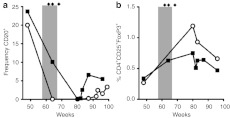
Liver gene transfer for hemophilia B has shown very promising results in recent clinical studies. A potential complication of gene-based treatments for hemophilia and other inherited disorders, however, is the development of neutralizing antibodies (NAb) against the therapeutic transgene. The risk of developing NAb to the coagulation factor IX (F.IX) transgene product following adeno-associated virus (AAV)-mediated hepatic gene transfer for hemophilia is small but not absent, as formation of inhibitory antibodies to F.IX is observed in experimental animals following liver gene transfer. Thus, strategies to modulate antitransgene NAb responses are needed. Here, we used the anti-B cell monoclonal antibody rituximab (rtx) in combination with cyclosporine A (CsA) to eradicate anti-human F.IX NAb in rhesus macaques previously injected intravenously with AAV8 vectors expressing human F.IX. A short course of immunosuppression (IS) resulted in eradication of anti-F.IX NAb with restoration of plasma F.IX transgene product detection. In one animal, following IS anti-AAV6 antibodies also dropped below detection, allowing for successful AAV vector readministration and resulting in high levels (60% or normal) of F.IX transgene product in plasma. Though the number of animals is small, this study supports for the safety and efficacy of B cell-targeting therapies to eradicate NAb developed following AAV-mediated gene transfer.
肝基因转移治疗乙型血友病在最近的临床研究中显示出非常有前景的结果。然而,基因治疗血友病和其他遗传性疾病的一个潜在并发症是针对治疗性转基因的中和抗体(NAb)的产生。腺相关病毒(AAV)介导的肝基因转移治疗乙型血友病后,针对凝血因子 IX(F.IX)转基因产物产生 NAb 的风险虽然很小,但并非不存在,因为在实验动物中,肝基因转移后会形成针对 F.IX 的抑制性抗体。因此,需要有策略来调节抗转基因 NAb 反应。在这里,我们使用抗 B 细胞单克隆抗体利妥昔单抗(rtx)联合环孢素 A(CsA),以消除先前静脉注射表达人 F.IX 的 AAV8 载体的恒河猴体内的抗人 F.IX NAb。短期免疫抑制(IS)导致抗 F.IX NAb 消除,并恢复血浆 F.IX 转基因产物的检测。在一只动物中,IS 后抗 AAV6 抗体也降至检测以下,允许成功再次给予 AAV 载体,并导致血浆中 F.IX 转基因产物的高水平(60%或正常)。尽管动物数量较少,但这项研究支持针对 B 细胞的靶向治疗以消除 AAV 介导的基因转移后产生的 NAb 的安全性和有效性。