Centro de Investigaciones en Bioquímica Clínica e Inmunología-CIBICI-CONICET, Facultad de Ciencias Químicas, Universidad Nacional de Córdoba, Córdoba, Argentina.
PLoS Pathog. 2012;8(4):e1002658. doi: 10.1371/journal.ppat.1002658. Epub 2012 Apr 26.
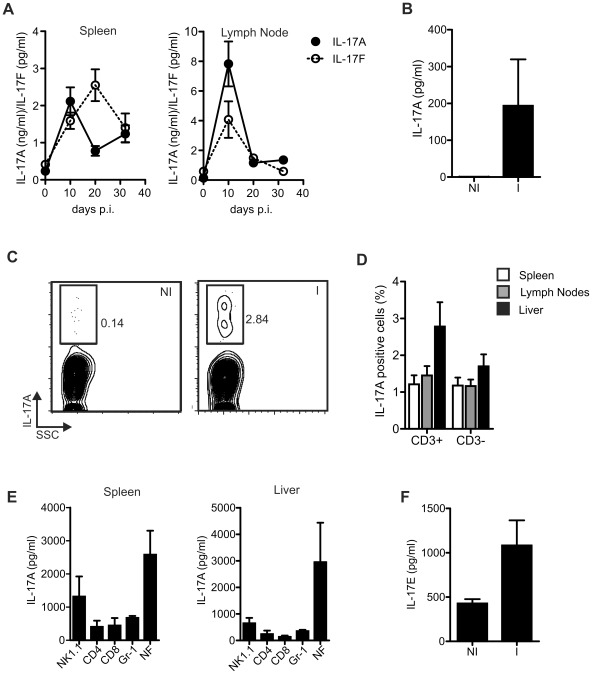
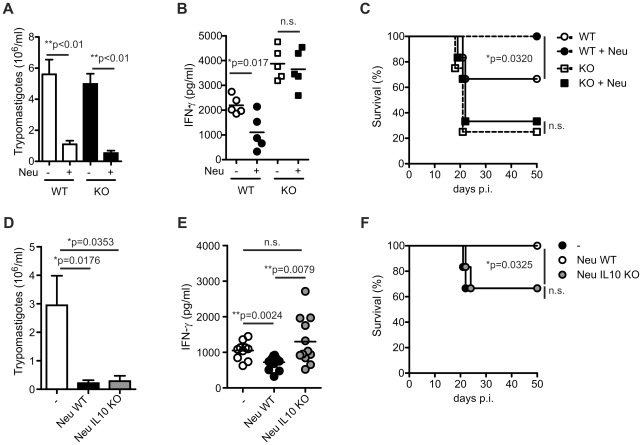
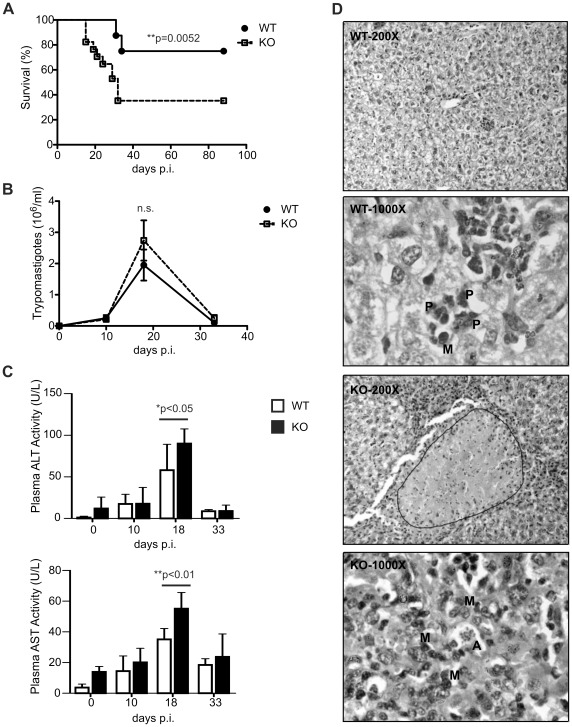
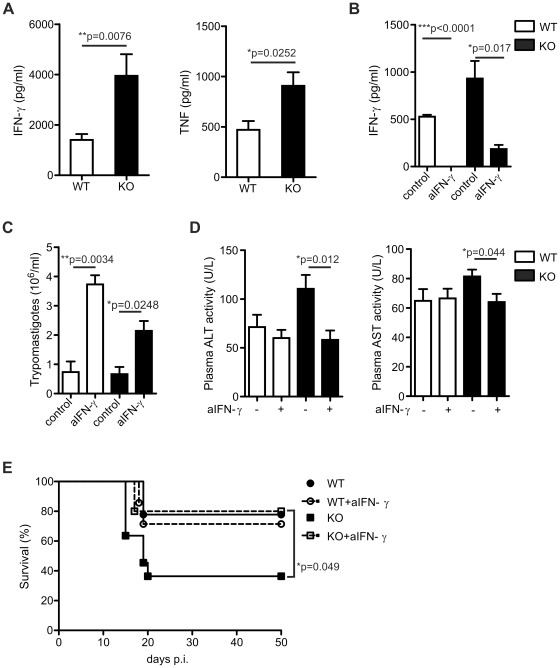
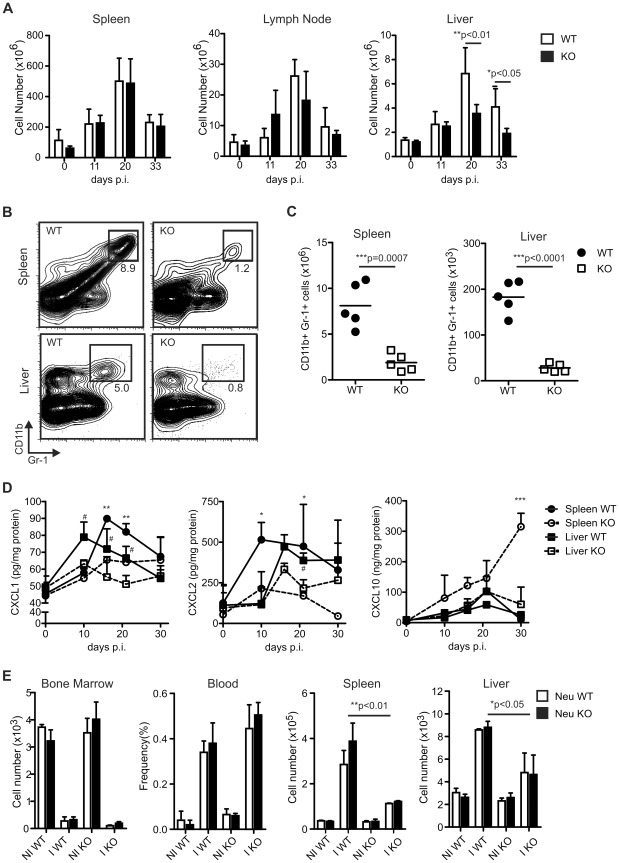
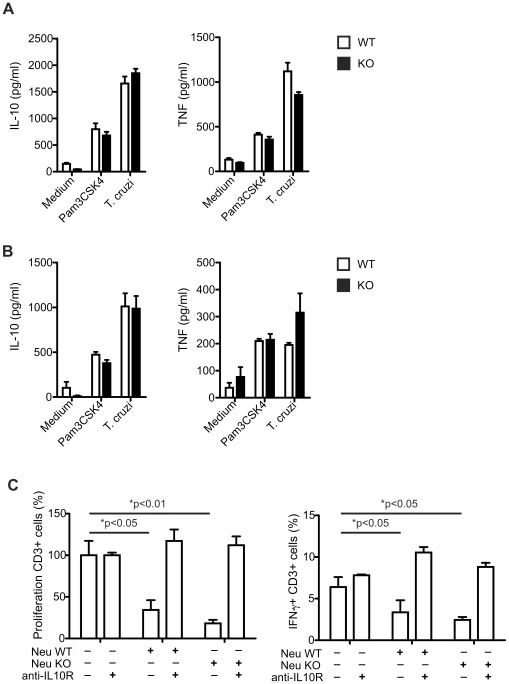
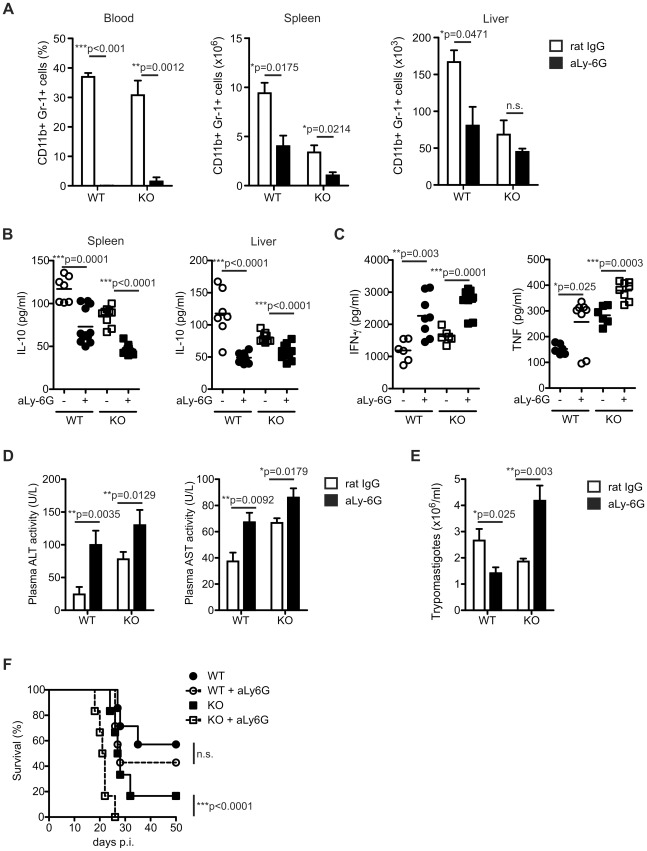
Members of the IL-17 cytokine family play an important role in protection against pathogens through the induction of different effector mechanisms. We determined that IL-17A, IL-17E and IL-17F are produced during the acute phase of T. cruzi infection. Using IL-17RA knockout (KO) mice, we demonstrate that IL-17RA, the common receptor subunit for many IL-17 family members, is required for host resistance during T. cruzi infection. Furthermore, infected IL-17RA KO mice that lack of response to several IL-17 cytokines showed amplified inflammatory responses with exuberant IFN-γ and TNF production that promoted hepatic damage and mortality. Absence of IL-17RA during T. cruzi infection resulted in reduced CXCL1 and CXCL2 expression in spleen and liver and limited neutrophil recruitment. T. cruzi-stimulated neutrophils secreted IL-10 and showed an IL-10-dependent suppressive phenotype in vitro inhibiting T-cell proliferation and IFN-γ production. Specific depletion of Ly-6G+ neutrophils in vivo during T. cruzi infection raised parasitemia and serum IFN-γ concentration and resulted in increased liver pathology in WT mice and overwhelming wasting disease in IL-17RA KO mice. Adoptively transferred neutrophils were unable to migrate to tissues and to restore resistant phenotype in infected IL-17RA KO mice but migrated to spleen and liver of infected WT mice and downregulated IFN-γ production and increased survival in an IL-10 dependent manner. Our results underscore the role of IL-17RA in the modulation of IFN-γ-mediated inflammatory responses during infections and uncover a previously unrecognized regulatory mechanism that involves the IL-17RA-mediated recruitment of suppressive IL-10-producing neutrophils.
白细胞介素-17(IL-17)细胞因子家族的成员通过诱导不同的效应机制在抵御病原体方面发挥着重要作用。我们确定在 T. cruzi 感染的急性期会产生 IL-17A、IL-17E 和 IL-17F。通过使用 IL-17RA 基因敲除(KO)小鼠,我们证明了 IL-17RA,即许多 IL-17 家族成员的共同受体亚基,是宿主抵抗 T. cruzi 感染所必需的。此外,缺乏对几种 IL-17 细胞因子反应的感染性 IL-17RA KO 小鼠表现出炎症反应增强,IFN-γ 和 TNF 产生旺盛,从而促进肝损伤和死亡。在 T. cruzi 感染期间缺乏 IL-17RA 会导致脾脏和肝脏中 CXCL1 和 CXCL2 的表达减少,并限制中性粒细胞的募集。T. cruzi 刺激的中性粒细胞分泌 IL-10,并在体外表现出依赖 IL-10 的抑制表型,抑制 T 细胞增殖和 IFN-γ 产生。在 T. cruzi 感染期间,体内特异性耗尽 Ly-6G+中性粒细胞会增加寄生虫血症和血清 IFN-γ 浓度,并导致 WT 小鼠肝脏病理增加和 IL-17RA KO 小鼠过度消瘦疾病。在感染期间过继转移的中性粒细胞无法迁移到组织中,也无法恢复感染性 IL-17RA KO 小鼠的抗性表型,但可迁移到感染性 WT 小鼠的脾脏和肝脏,并通过依赖 IL-10 的方式下调 IFN-γ 产生并增加生存。我们的研究结果强调了 IL-17RA 在感染期间调节 IFN-γ 介导的炎症反应中的作用,并揭示了一个以前未被认识的调节机制,该机制涉及 IL-17RA 介导的抑制性产生 IL-10 的中性粒细胞的募集。