Department of Microbiology, Mount Sinai School of Medicine, New York, New York, United States of America.
PLoS Pathog. 2012;8(4):e1002668. doi: 10.1371/journal.ppat.1002668. Epub 2012 Apr 26.
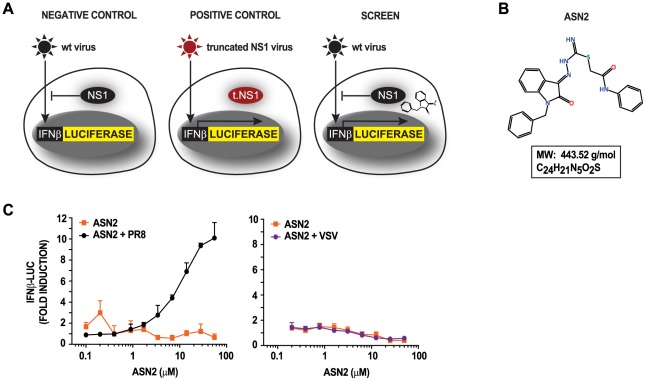
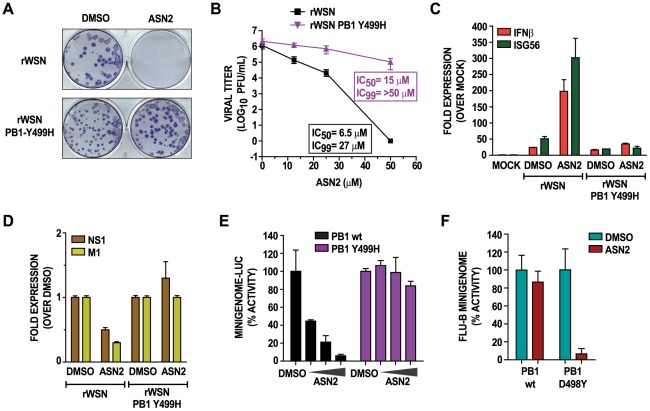
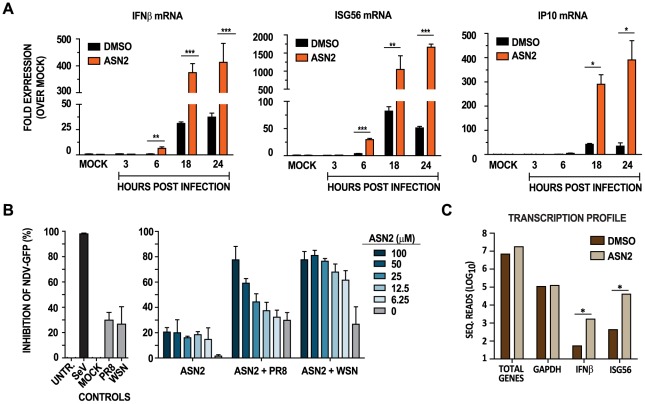
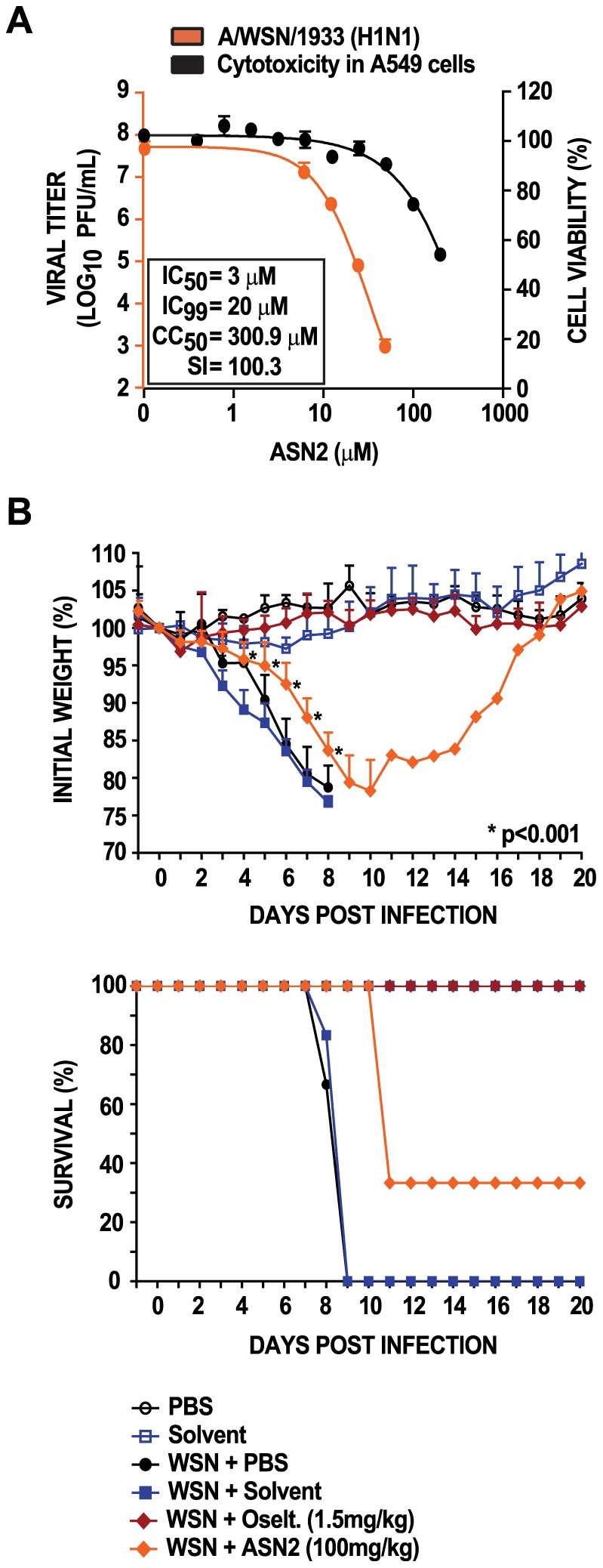
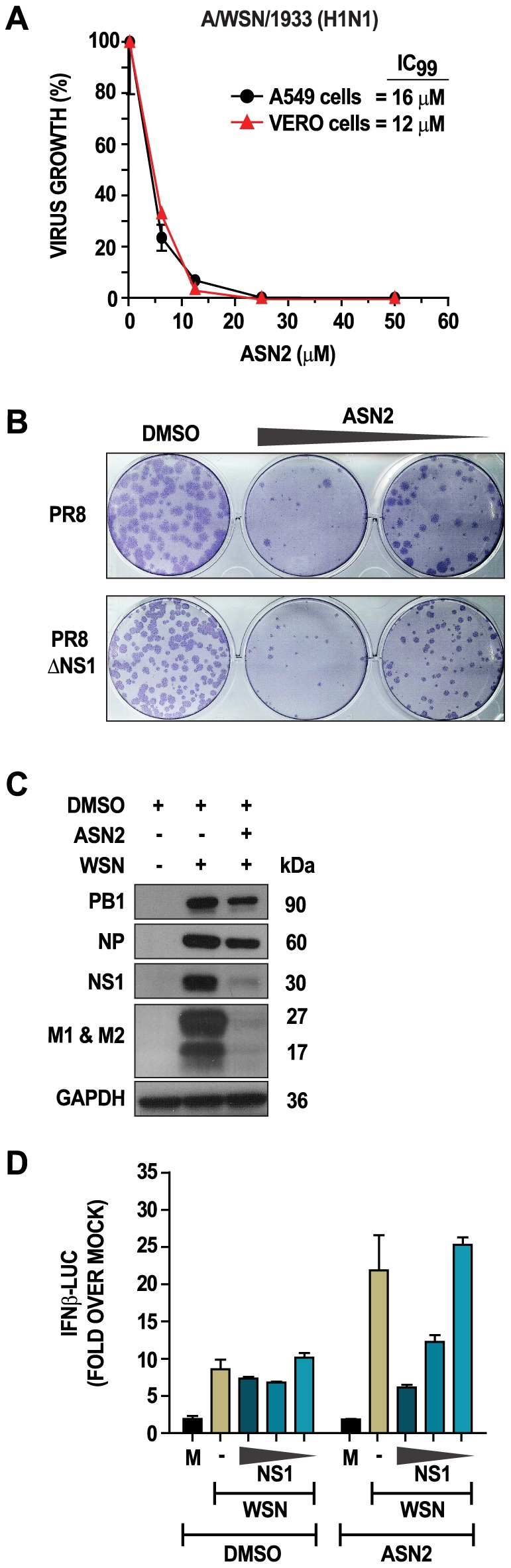
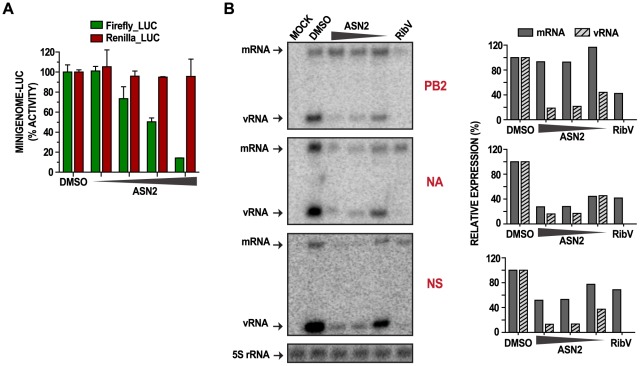
Influenza viruses continue to pose a major public health threat worldwide and options for antiviral therapy are limited by the emergence of drug-resistant virus strains. The antiviral cytokine, interferon (IFN) is an essential mediator of the innate immune response and influenza viruses, like many viruses, have evolved strategies to evade this response, resulting in increased replication and enhanced pathogenicity. A cell-based assay that monitors IFN production was developed and applied in a high-throughput compound screen to identify molecules that restore the IFN response to influenza virus infected cells. We report the identification of compound ASN2, which induces IFN only in the presence of influenza virus infection. ASN2 preferentially inhibits the growth of influenza A viruses, including the 1918 H1N1, 1968 H3N2 and 2009 H1N1 pandemic strains and avian H5N1 virus. In vivo, ASN2 partially protects mice challenged with a lethal dose of influenza A virus. Surprisingly, we found that the antiviral activity of ASN2 is not dependent on IFN production and signaling. Rather, its IFN-inducing property appears to be an indirect effect resulting from ASN2-mediated inhibition of viral polymerase function, and subsequent loss of the expression of the viral IFN antagonist, NS1. Moreover, we identified a single amino acid mutation at position 499 of the influenza virus PB1 protein that confers resistance to ASN2, suggesting that PB1 is the direct target. This two-pronged antiviral mechanism, consisting of direct inhibition of virus replication and simultaneous activation of the host innate immune response, is a unique property not previously described for any single antiviral molecule.
流感病毒仍然是全球主要的公共卫生威胁,抗病毒治疗的选择受到抗药性病毒株出现的限制。抗病毒细胞因子干扰素(IFN)是先天免疫反应的重要介质,而流感病毒,像许多病毒一样,已经进化出逃避这种反应的策略,导致复制增加和致病性增强。开发了一种监测 IFN 产生的基于细胞的测定法,并应用于高通量化合物筛选,以鉴定可恢复感染流感病毒的细胞中 IFN 反应的分子。我们报告了化合物 ASN2 的鉴定,该化合物仅在存在流感病毒感染的情况下诱导 IFN。ASN2 优先抑制甲型流感病毒的生长,包括 1918 年 H1N1、1968 年 H3N2 和 2009 年 H1N1 大流行株以及禽流感 H5N1 病毒。在体内,ASN2 部分保护了接受致死剂量流感病毒攻击的小鼠。令人惊讶的是,我们发现 ASN2 的抗病毒活性不依赖于 IFN 的产生和信号转导。相反,其诱导 IFN 的特性似乎是 ASN2 介导的病毒聚合酶功能抑制的间接影响,随后导致病毒 IFN 拮抗剂 NS1 的表达丧失。此外,我们在流感病毒 PB1 蛋白的 499 位发现了一个单一氨基酸突变,该突变赋予了对 ASN2 的抗性,表明 PB1 是直接靶标。这种由直接抑制病毒复制和同时激活宿主先天免疫反应组成的双重抗病毒机制是以前未描述过的任何单一抗病毒分子所没有的独特特性。