Division of Rheumatology, Massachusetts General Hospital, Harvard Medical School, Boston, MA, USA.
Curr Rheumatol Rep. 2012 Aug;14(4):324-33. doi: 10.1007/s11926-012-0261-7.
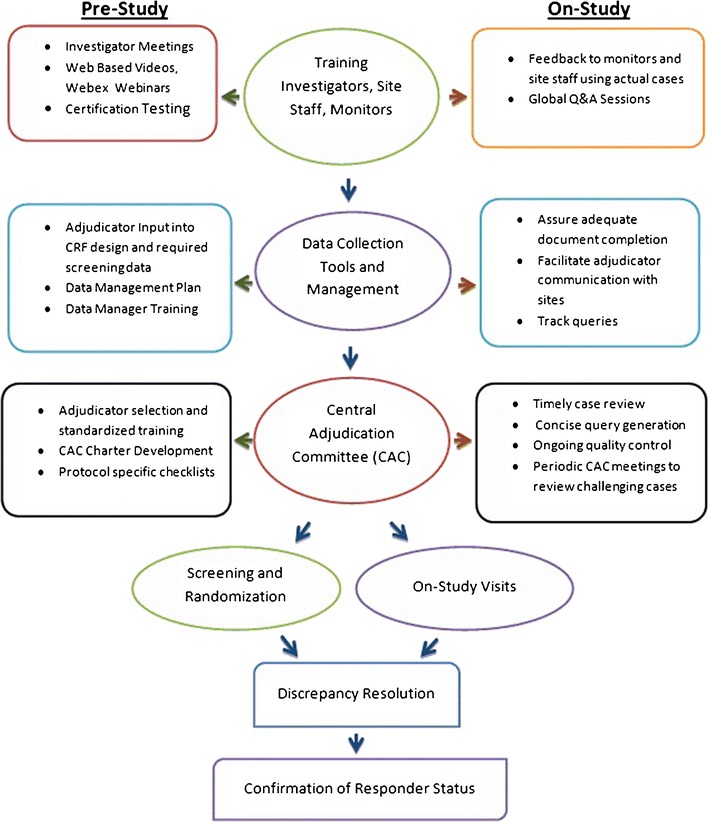
Major scientific advances in basic science, pharmacology, and translational medicine have allowed the discovery of new molecular targets whose manipulation by new chemical entities has led to treatments for inflammatory diseases, including rheumatoid arthritis, multiple sclerosis, and inflammatory bowel disease. Development of new agents for systemic lupus erythematosus (SLE) has lagged, however, because the protean manifestations of SLE present challenges for measuring therapeutic effects in a consistent manner. Composite end points combining several Disease Activity Indices (DAIs) are being used in ongoing global studies, but the uniform application of these complex DAIs across large numbers of clinical sites has proven difficult. We describe herein approaches that are being utilized to facilitate collection, review, and analysis of the clinical measures utilizing independent central adjudication committees.
基础科学、药理学和转化医学的重大科学进步使得发现新的分子靶点成为可能,通过新的化学实体对这些靶点的操作已经导致了针对炎症性疾病(包括类风湿关节炎、多发性硬化症和炎症性肠病)的治疗方法。然而,用于全身性红斑狼疮(SLE)的新药物的开发却滞后了,因为 SLE 的多种表现形式给以一致的方式衡量治疗效果带来了挑战。正在进行的全球研究中使用了结合了几种疾病活动指数(DAI)的综合终点,但在大量临床站点中统一应用这些复杂的 DAI 已被证明是困难的。我们在此描述了正在利用独立的中央裁决委员会来促进临床措施的收集、审查和分析的方法。