Orthopedics International, Seattle, WA, USA.
Clin Orthop Relat Res. 2012 Oct;470(10):2756-63. doi: 10.1007/s11999-012-2367-7. Epub 2012 May 15.
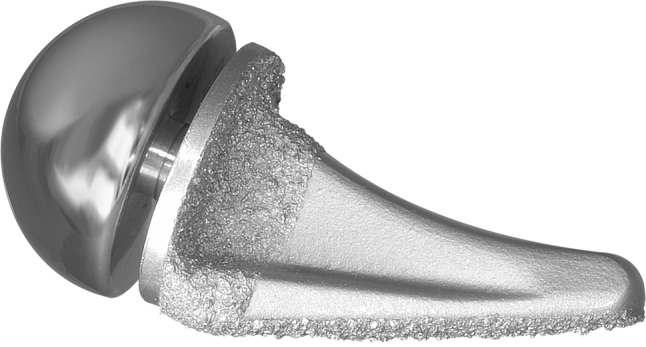
Trapeziometacarpal joint osteoarthritis is a painful, disabling condition that primarily affects women who are postmenopausal. Arthroplasty has been performed to treat this condition; however, subluxation has been a problem with all previous implants. We report the results of hemiarthroplasty using a prosthesis designed to address the problems associated with previous implants.
QUESTIONS/PURPOSES: We wished to (1) determine if this prosthesis results in pain relief and functional improvement and preserves the appearance of the thumb, (2) assess the prosthetic reconstruction during followup, (3) assess complications that occur with the use of this prosthesis, and (4) determine the survivorship of this prosthesis.
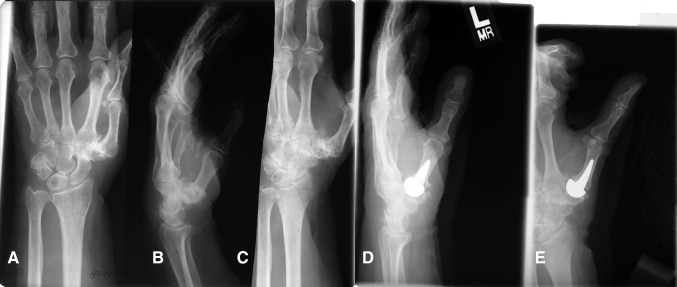
We performed 159 basal joint hemiarthroplasties (138 patients) to treat osteoarthritis of the trapeziometacarpal joint. The mean age of the patients was 63 years, 78% were women, and all had Eaton-Littler Stage II or III changes. Only the damaged articular surfaces of the metacarpal and trapezium were excised; no tendon grafts or transfers were performed. Seven patients (seven thumbs) were lost to followup and seven (nine thumbs) died, leaving 124 patients (143 thumbs) for review. Clinical and radiographic assessments were made preoperatively, 12 weeks postoperatively, and annually thereafter. Minimum followup was 35 months (mean, 72.1 months; range, 35-120 months).
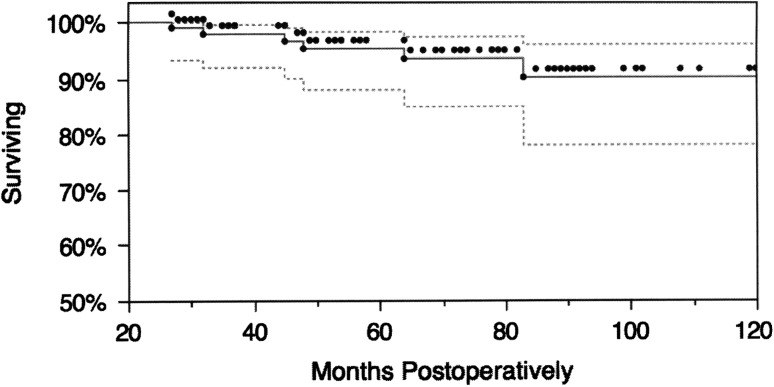
At latest followup, pain relief occurred in 135 thumbs, function improved in 138 thumbs, 139 thumbs were excellent or good in overall assessment, and 142 thumbs had good or excellent cosmetic appearance. The mean tip pinch improved from 4.9 kg preoperatively to 6.44 kg postoperatively. Mean postoperative Buck-Gramcko score was 49 (excellent); overall Kaplan-Meier analysis with revision as the end point showed 94% implant survivorship at a mean followup of 72.1 months.
Our results are superior to those of other implants and support continued use of this implant. Studies with longer followup are required to confirm these results.
Level IV, therapeutic study. See the Guidelines for Authors for a complete description of levels of evidence.
腕掌关节骨关节炎是一种疼痛、致残的疾病,主要影响绝经后的女性。关节成形术已被用于治疗这种疾病;然而,所有以前的植入物都存在半脱位的问题。我们报告了使用一种旨在解决以前植入物相关问题的假体进行半关节成形术的结果。
问题/目的:我们希望(1)确定这种假体是否能减轻疼痛和改善功能,同时保持拇指的外观,(2)评估随访期间的假体重建,(3)评估使用这种假体时发生的并发症,以及(4)确定这种假体的存活率。
我们对 138 例患者的 159 例掌指关节进行了基底关节半关节成形术,以治疗腕掌关节骨关节炎。患者的平均年龄为 63 岁,78%为女性,所有患者均为 Eaton-Littler Ⅱ期或Ⅲ期改变。仅切除掌骨和大多角骨的受损关节面;未进行肌腱移植或转移。7 例(7 个拇指)失访,7 例(9 个拇指)死亡,留下 124 例(143 个拇指)进行回顾。术前、术后 12 周和此后每年进行临床和影像学评估。最低随访时间为 35 个月(平均 72.1 个月;范围 35-120 个月)。
末次随访时,135 个拇指疼痛缓解,138 个拇指功能改善,139 个拇指总体评估为优秀或良好,142 个拇指外观美观或良好。拇指尖捏力从术前的 4.9kg 提高到术后的 6.44kg。术后平均 Buck-Gramcko 评分 49(优秀);以翻修为终点的总体 Kaplan-Meier 分析显示,72.1 个月平均随访时,植入物存活率为 94%。
我们的结果优于其他植入物,支持继续使用这种植入物。需要进行更长时间的随访研究来证实这些结果。
IV 级,治疗研究。请参阅作者指南,以获取完整的证据水平描述。