School of Marine and Tropical Biology & Centre for Sustainable Tropical Fisheries and Aquaculture, James Cook University, Townsville, Australia.
PLoS One. 2012;7(5):e36470. doi: 10.1371/journal.pone.0036470. Epub 2012 May 9.
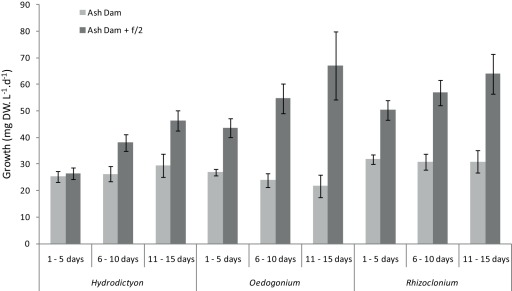
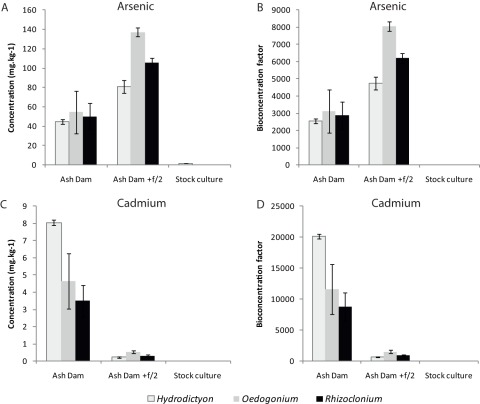
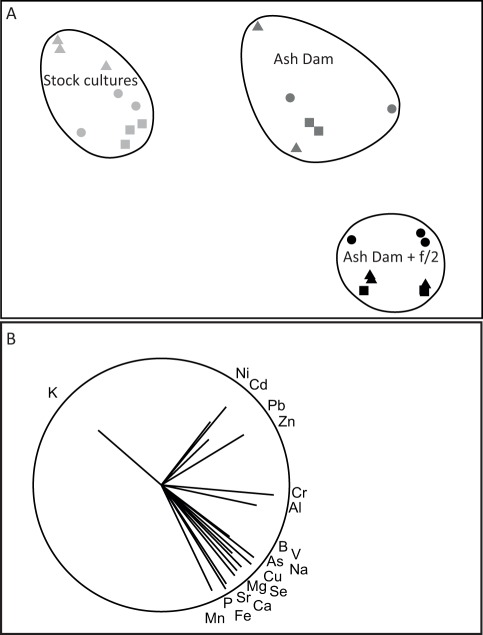
Biosorption of heavy metals using dried algal biomass has been extensively described but rarely implemented. We contend this is because available algal biomass is a valuable product with a ready market. Therefore, we considered an alternative and practical approach to algal bioremediation in which algae were cultured directly in the waste water stream. We cultured three species of algae with and without nutrient addition in water that was contaminated with heavy metals from an Ash Dam associated with coal-fired power generation and tested metal uptake and bioremediation potential. All species achieved high concentrations of heavy metals (to 8% dry mass). Two key elements, V and As, reached concentrations in the biomass of 1543 mg.kg(-1) DW and 137 mg.kg(-1) DW. Growth rates were reduced by more than half in neat Ash Dam water than when nutrients were supplied in excess. Growth rate and bioconcentration were positively correlated for most elements, but some elements (e.g. Cd, Zn) were concentrated more when growth rates were lower, indicating the potential to tailor bioremediation depending on the pollutant. The cosmopolitan nature of the macroalgae studied, and their ability to grow and concentrate a suite of heavy metals from industrial wastes, highlights a clear benefit in the practical application of waste water bioremediation.
利用干燥藻类生物质吸附重金属的方法已有广泛描述,但很少付诸实施。我们认为,这是因为现有的藻类生物质是一种具有现成市场的有价值产品。因此,我们考虑了藻类生物修复的一种替代和实用方法,即在废水中直接培养藻类。我们在受到燃煤发电灰坝重金属污染的废水中培养了三种藻类,并在添加和不添加营养物质的情况下进行培养,测试了金属的吸收和生物修复潜力。所有物种都达到了重金属的高浓度(达到 8%干重)。两种关键元素,V 和 As,在生物质中的浓度达到 1543mg/kg DW 和 137mg/kg DW。与过量供应营养物质相比,在纯净的灰坝水中,生长速度降低了一半以上。对于大多数元素,生长速度和生物浓缩呈正相关,但有些元素(例如 Cd、Zn)在生长速度较低时浓缩更多,这表明可以根据污染物来调整生物修复。所研究的大型藻类具有世界性,并且能够从工业废水中生长和浓缩一系列重金属,这突出了废水生物修复在实际应用中的明显优势。