Bio and Brain Engineering Department, KAIST, Daejeon 305-701, South Korea.
BMC Med Inform Decis Mak. 2012 Apr 30;12 Suppl 1(Suppl 1):S1. doi: 10.1186/1472-6947-12-S1-S1.
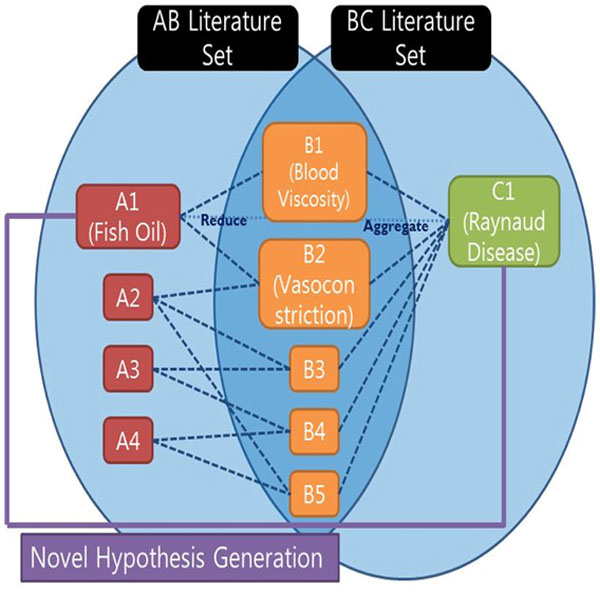
The Swanson's ABC model is powerful to infer hidden relationships buried in biological literature. However, the model is inadequate to infer relations with context information. In addition, the model generates a very large amount of candidates from biological text, and it is a semi-automatic, labor-intensive technique requiring human expert's manual input. To tackle these problems, we incorporate context terms to infer relations between AB interactions and BC interactions.
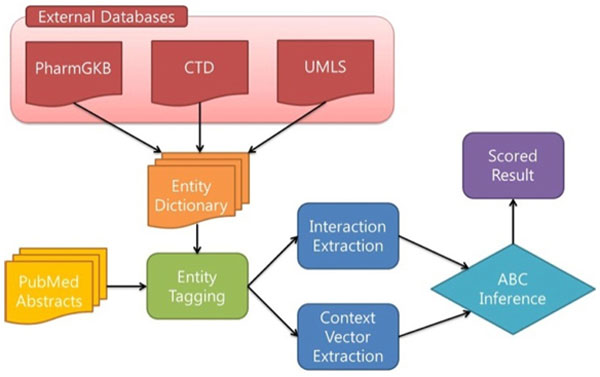
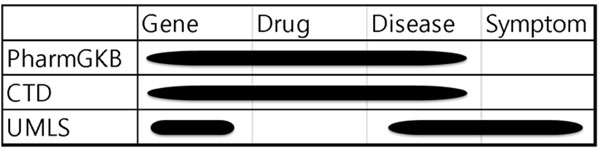
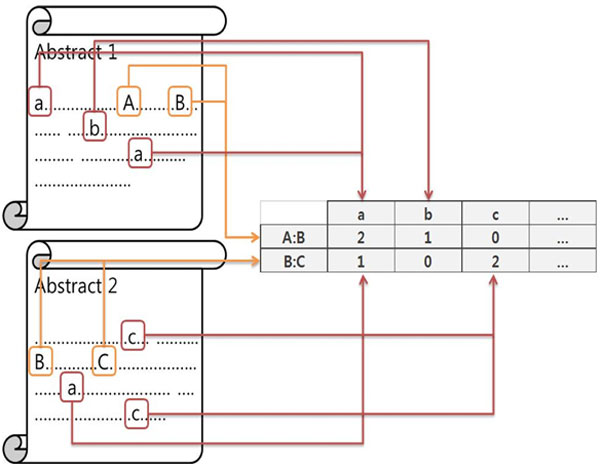
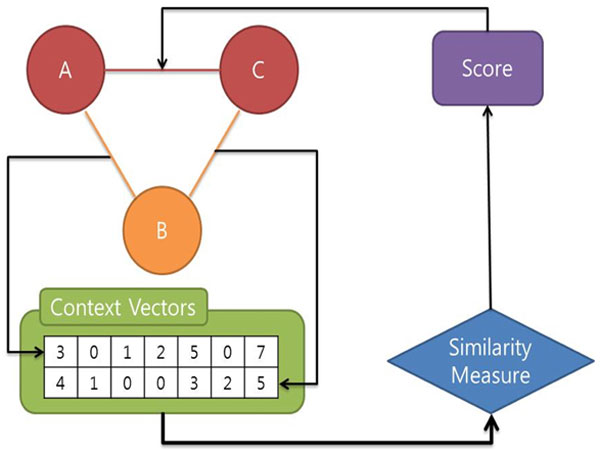
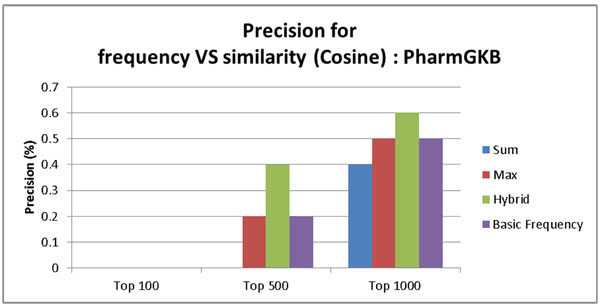
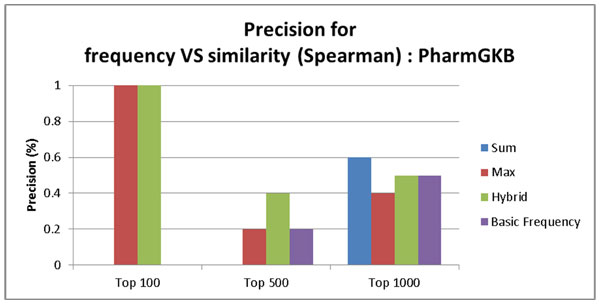
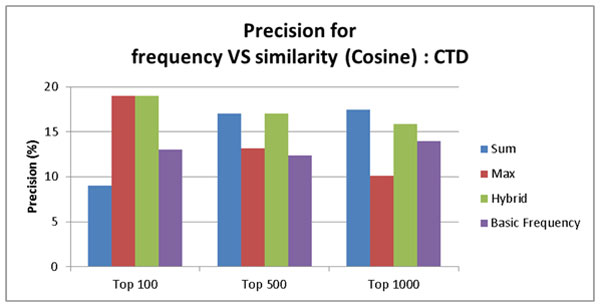
We propose 3 steps to discover meaningful hidden relationships between drugs and diseases: 1) multi-level (gene, drug, disease, symptom) entity recognition, 2) interaction extraction (drug-gene, gene-disease) from literature, 3) context vector based similarity score calculation. Subsequently, we evaluate our hypothesis with the datasets of the "Alzheimer's disease" related 77,711 PubMed abstracts. As golden standards, PharmGKB and CTD databases are used. Evaluation is conducted in 2 ways: first, comparing precision of the proposed method and the previous method and second, analysing top 10 ranked results to examine whether highly ranked interactions are truly meaningful or not.
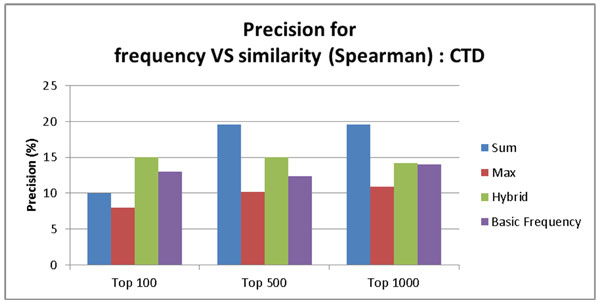
The results indicate that context-based relation inference achieved better precision than the previous ABC model approach. The literature analysis also shows that interactions inferred by the context-based approach are more meaningful than interactions by the previous ABC model.
We propose a novel interaction inference technique that incorporates context term vectors into the ABC model to discover meaningful hidden relationships. By utilizing multi-level context terms, our model shows better performance than the previous ABC model.
Swanson 的 ABC 模型能够推断出隐藏在生物文献中的关系,但它在推断带有上下文信息的关系时并不适用。此外,该模型从生物文本中生成了大量的候选关系,而且这是一种半自动的、劳动密集型的技术,需要人工专家的手动输入。为了解决这些问题,我们将上下文项纳入其中,以推断 AB 相互作用和 BC 相互作用之间的关系。
我们提出了 3 个步骤来发现药物和疾病之间有意义的隐藏关系:1)多层次(基因、药物、疾病、症状)实体识别;2)从文献中提取相互作用(药物-基因、基因-疾病);3)基于上下文向量的相似度得分计算。随后,我们使用“阿尔茨海默病”相关的 77711 篇 PubMed 摘要数据集来评估我们的假设。作为黄金标准,使用 PharmGKB 和 CTD 数据库。评估分两步进行:首先,比较所提出的方法和之前的方法的精度;其次,分析排名前 10 的结果,以检查排名靠前的相互作用是否具有真正的意义。
结果表明,基于上下文的关系推断比之前的 ABC 模型方法具有更高的精度。文献分析还表明,基于上下文的方法推断出的相互作用比之前的 ABC 模型方法推断出的相互作用更有意义。
我们提出了一种新的交互推断技术,该技术将上下文项向量纳入 ABC 模型中,以发现有意义的隐藏关系。通过利用多层次的上下文项,我们的模型比之前的 ABC 模型表现更好。