Division of Developmental Immunology, BIOCENTER, Medical University Innsbruck, Austria.
Cell Death Differ. 2012 Oct;19(10):1722-32. doi: 10.1038/cdd.2012.54. Epub 2012 May 18.
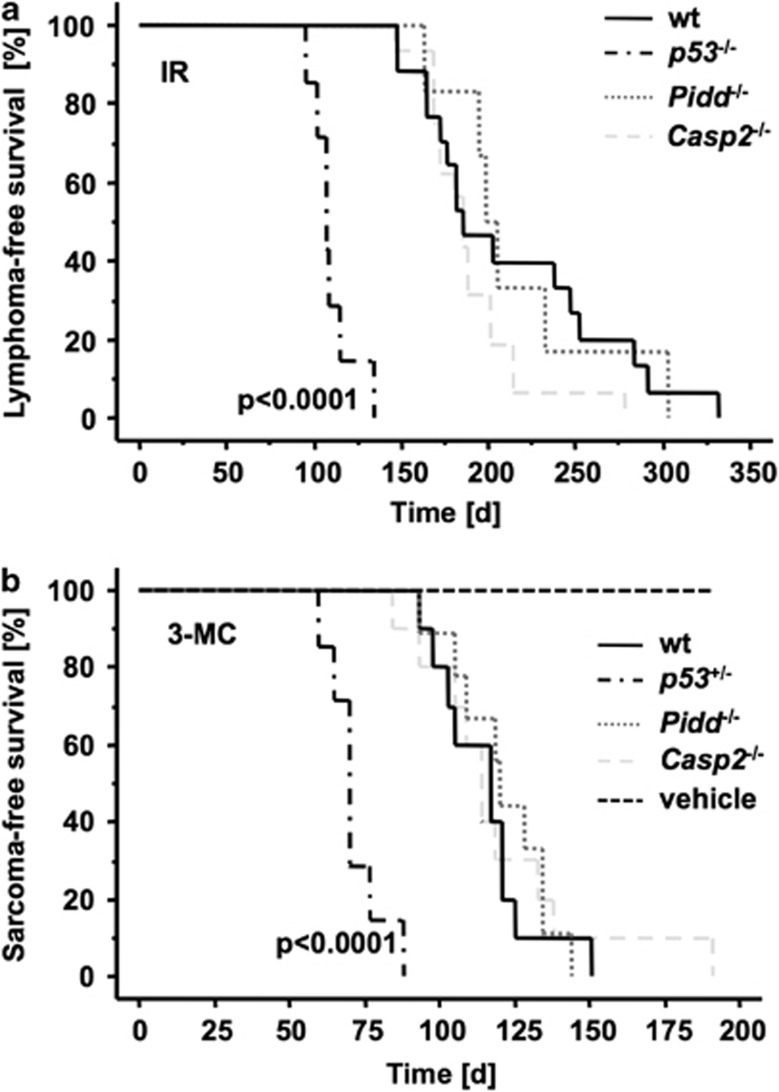
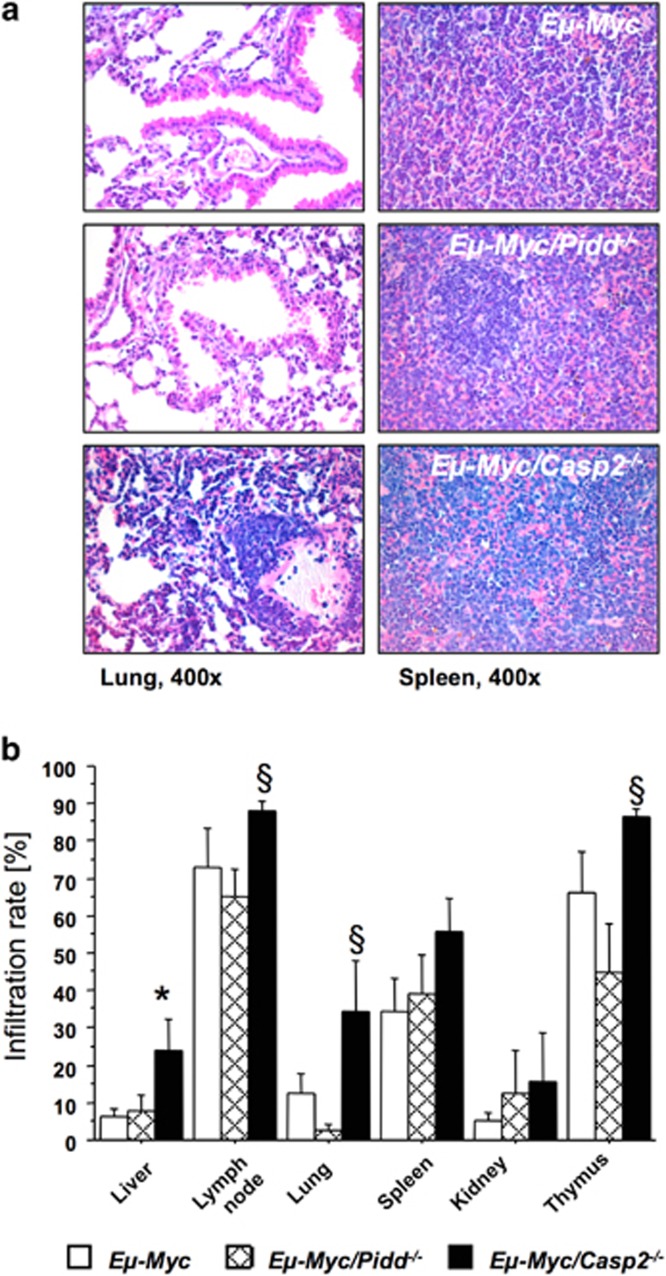
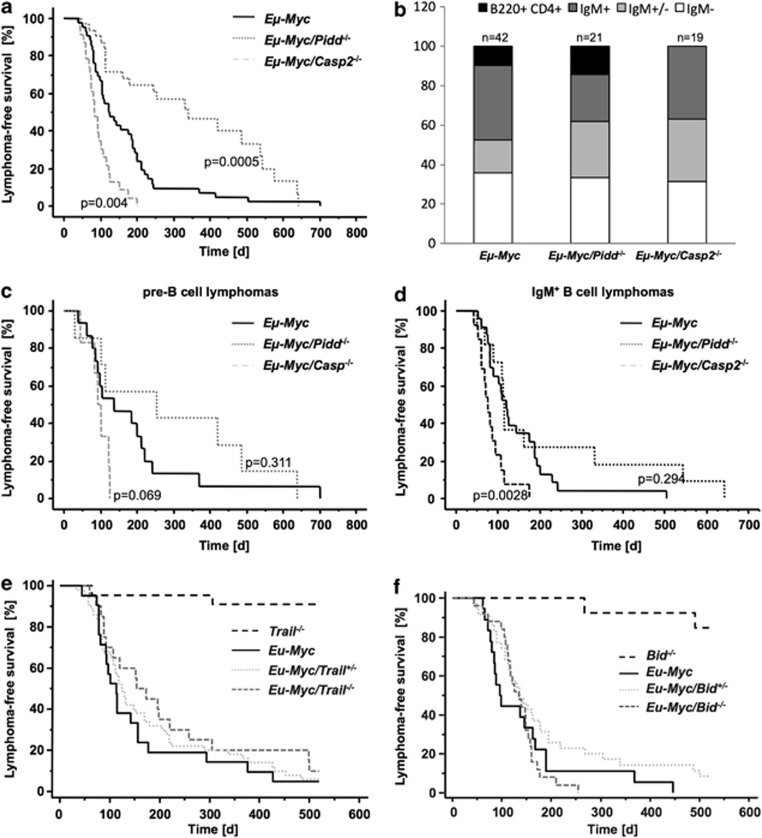
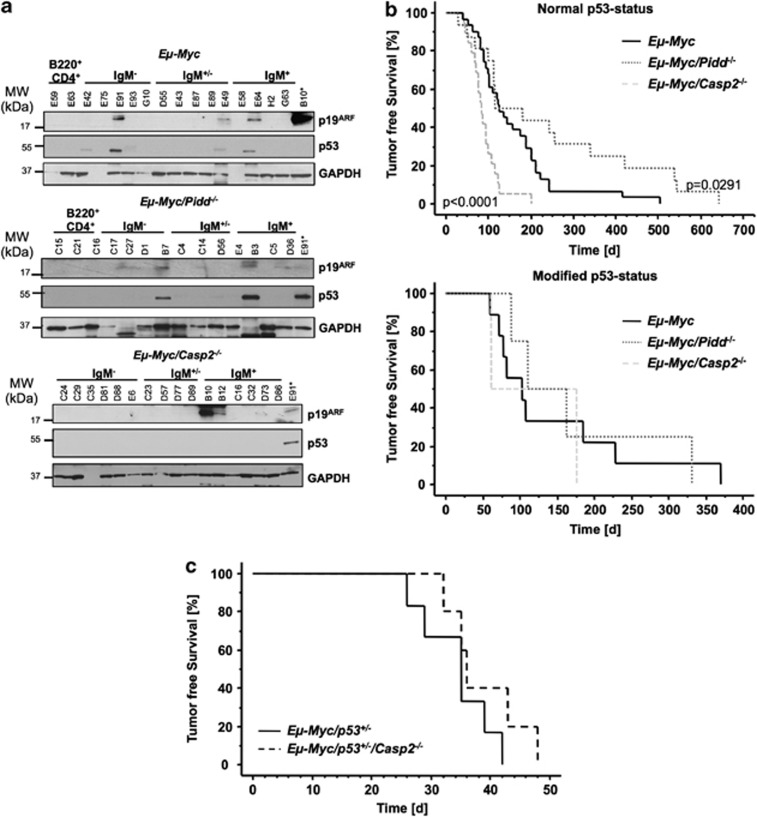
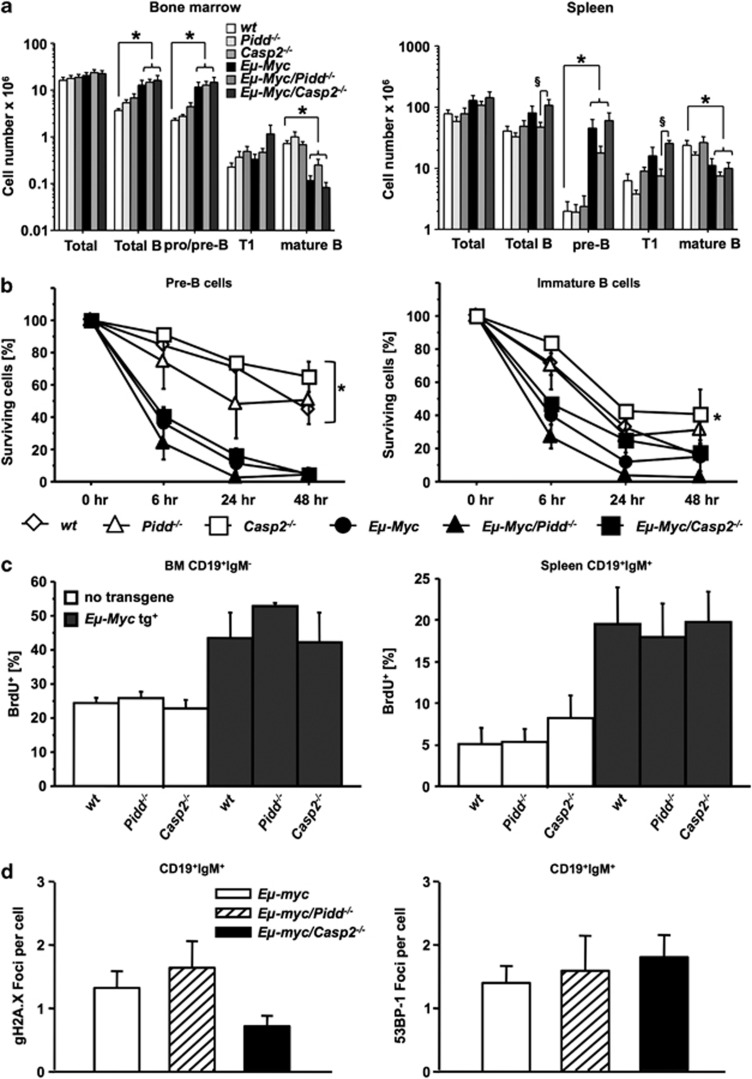
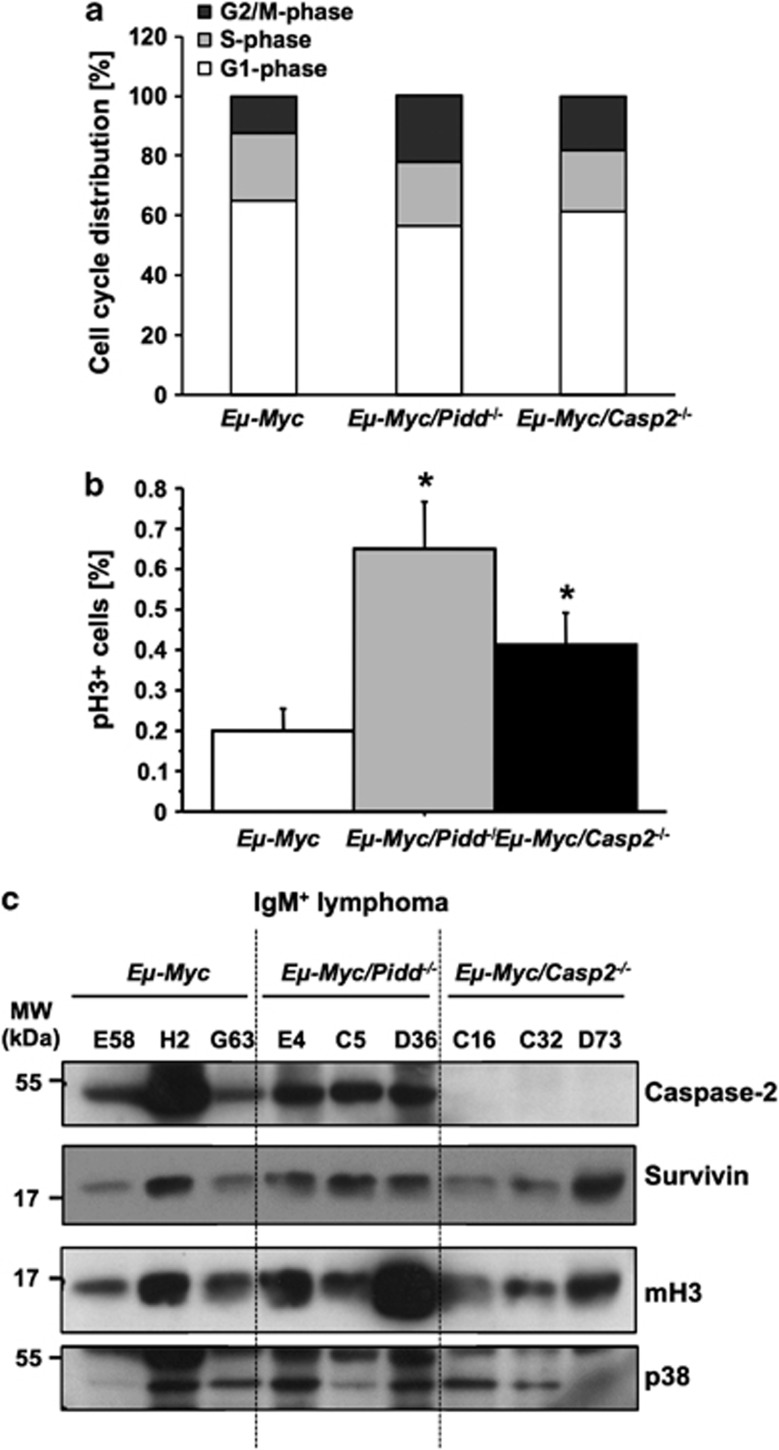
The PIDDosome, a multiprotein complex constituted of the 'p53-induced protein with a death domain (PIDD), 'receptor-interacting protein (RIP)-associated ICH-1/CED-3 homologous protein with a death domain' (RAIDD) and pro-Caspase-2 has been defined as an activating platform for this apoptosis-related protease. PIDD has been implicated in p53-mediated cell death in response to DNA damage but also in DNA repair and nuclear factor kappa-light-chain enhancer (NF-κB) activation upon genotoxic stress, together with RIP-1 kinase and Nemo/IKKγ. As all these cellular responses are critical for tumor suppression and deregulated expression of individual PIDDosome components has been noted in human cancer, we investigated their role in oncogenesis induced by DNA damage or oncogenic stress in gene-ablated mice. We observed that Pidd or Caspase-2 failed to suppress lymphoma formation triggered by γ-irradiation or 3-methylcholanthrene-driven fibrosarcoma development. In contrast, Caspase-2 showed tumor suppressive capacity in response to aberrant c-Myc expression, which did not rely on PIDD, the BH3-only protein Bid (BH3 interacting domain death agonist) or the death receptor ligand Trail (TNF-related apoptosis-inducing ligand), but associated with reduced rates of p53 loss and increased extranodal dissemination of tumor cells. In contrast, Pidd deficiency associated with abnormal M-phase progression and delayed disease onset, indicating that both proteins are differentially engaged upon oncogenic stress triggered by c-Myc, leading to opposing effects on tumor-free survival.
PIDDosome 是一种由“带有死亡域的 p53 诱导蛋白(PIDD)”、“受体相互作用蛋白(RIP)相关的 ICH-1/CED-3 同源蛋白带有死亡域(RAIDD)”和前胱天蛋白酶-2 组成的多蛋白复合物,已被定义为这种与凋亡相关的蛋白酶的激活平台。PIDD 已被牵连到 p53 介导的细胞死亡反应中,以应对 DNA 损伤,但也涉及 DNA 修复和核因子 kappa-轻链增强子(NF-κB)的激活,伴随着 RIP-1 激酶和 Nemo/IKKγ。由于所有这些细胞反应对于肿瘤抑制都至关重要,并且在人类癌症中已经注意到个别 PIDDosome 成分的表达失调,因此我们研究了它们在基因缺失小鼠中由 DNA 损伤或致癌应激引起的致癌作用中的作用。我们观察到,Pidd 或 Caspase-2 未能抑制γ辐射或 3-甲基胆蒽驱动的纤维肉瘤发展引发的淋巴瘤形成。相比之下,Caspase-2 在应对异常 c-Myc 表达时表现出肿瘤抑制能力,这并不依赖于 PIDD、BH3 仅蛋白 Bid(BH3 相互作用域死亡激动剂)或死亡受体配体 Trail(TNF 相关凋亡诱导配体),但与降低的 p53 丢失率和增加的肿瘤细胞的结外播散相关。相比之下,Pidd 缺乏与异常的 M 期进展和疾病发作延迟相关,表明这两种蛋白在 c-Myc 触发的致癌应激下的参与程度不同,导致对无肿瘤存活的相反影响。