Division of Cancer Research, Peter MacCallum Cancer Centre, Melbourne, VIC, 3000, Australia.
Sir Peter MacCallum Department of Oncology, The University of Melbourne, Parkville, VIC, 3010, Australia.
Cell Death Dis. 2024 Mar 1;15(3):182. doi: 10.1038/s41419-024-06560-6.
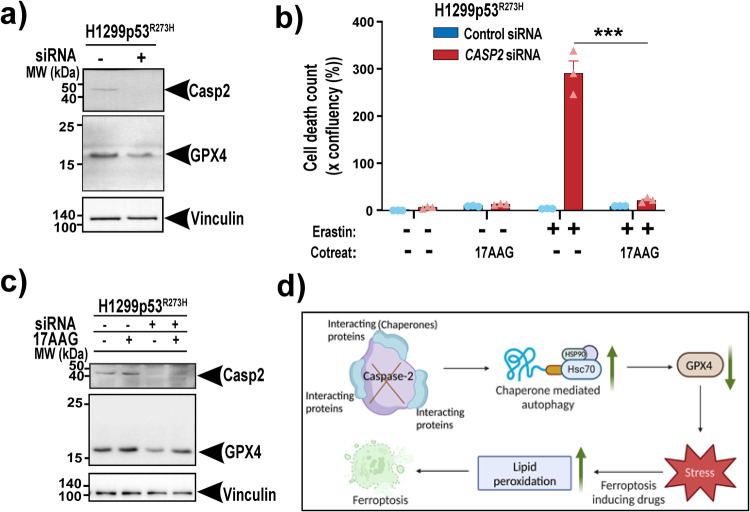
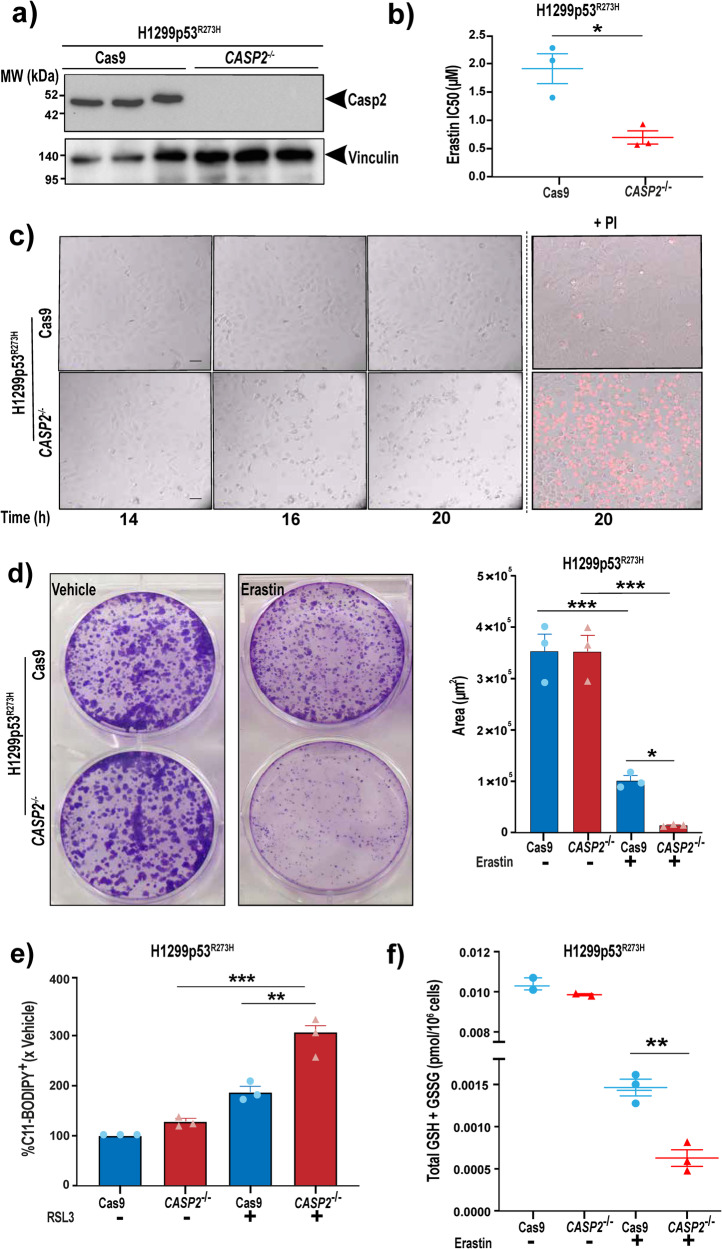
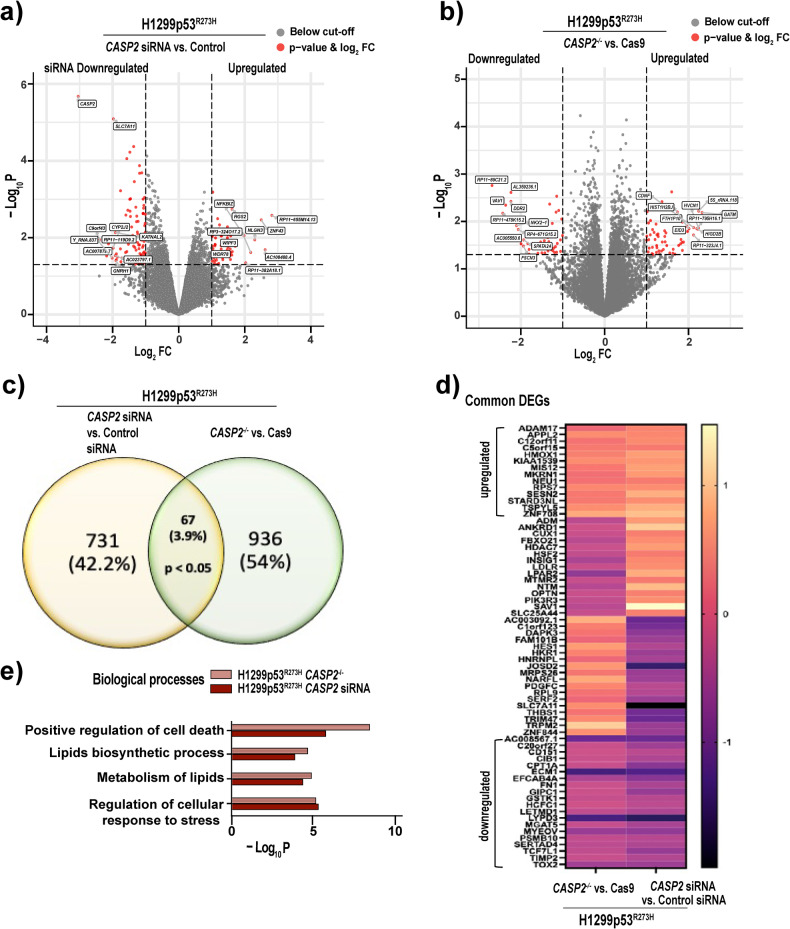
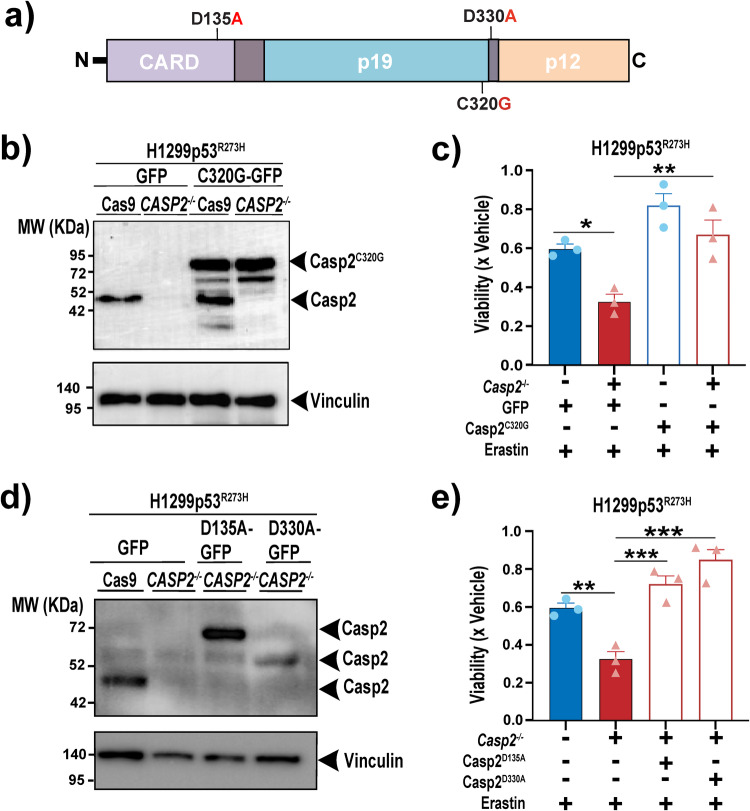
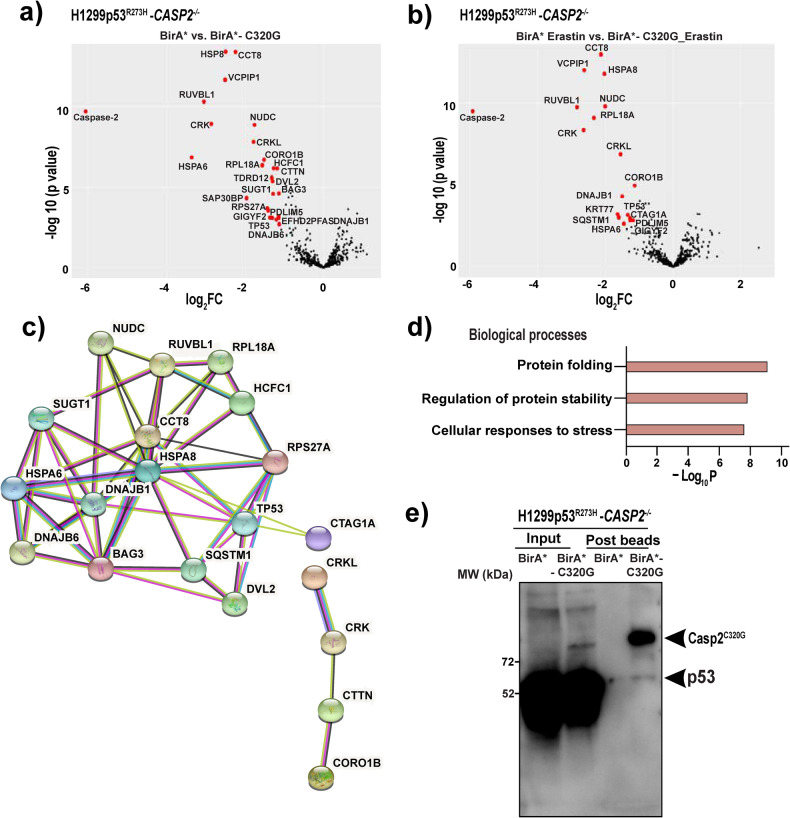
Caspase-2, one of the most evolutionarily conserved members of the caspase family, is an important regulator of the cellular response to oxidative stress. Given that ferroptosis is suppressed by antioxidant defense pathways, such as that involving selenoenzyme glutathione peroxidase 4 (GPX4), we hypothesized that caspase-2 may play a role in regulating ferroptosis. This study provides the first demonstration of an important and unprecedented function of caspase-2 in protecting cancer cells from undergoing ferroptotic cell death. Specifically, we show that depletion of caspase-2 leads to the downregulation of stress response genes including SESN2, HMOX1, SLC7A11, and sensitizes mutant-p53 cancer cells to cell death induced by various ferroptosis-inducing compounds. Importantly, the canonical catalytic activity of caspase-2 is not required for its role and suggests that caspase-2 regulates ferroptosis via non-proteolytic interaction with other proteins. Using an unbiased BioID proteomics screen, we identified novel caspase-2 interacting proteins (including heat shock proteins and co-chaperones) that regulate cellular responses to stress. Finally, we demonstrate that caspase-2 limits chaperone-mediated autophagic degradation of GPX4 to promote the survival of mutant-p53 cancer cells. In conclusion, we document a novel role for caspase-2 as a negative regulator of ferroptosis in cells with mutant p53. Our results provide evidence for a novel function of caspase-2 in cell death regulation and open potential new avenues to exploit ferroptosis in cancer therapy.
半胱天冬酶-2(Caspase-2)是半胱天冬酶家族中进化上最保守的成员之一,是细胞对氧化应激反应的重要调节剂。鉴于铁死亡受到抗氧化防御途径的抑制,例如涉及硒酶谷胱甘肽过氧化物酶 4(GPX4)的途径,我们假设半胱天冬酶-2可能在调节铁死亡中发挥作用。本研究首次证明了半胱天冬酶-2在保护癌细胞免受铁死亡细胞死亡方面的一个重要的、前所未有的功能。具体而言,我们表明,半胱天冬酶-2的耗竭会导致应激反应基因(包括 SESN2、HMOX1、SLC7A11 等)下调,并使突变型 p53 癌细胞对各种诱导铁死亡的化合物诱导的细胞死亡敏感。重要的是,半胱天冬酶-2 的经典催化活性不是其发挥作用所必需的,这表明半胱天冬酶-2 通过与其他蛋白质的非蛋白水解相互作用来调节铁死亡。通过使用无偏的 BioID 蛋白质组学筛选,我们鉴定了新型半胱天冬酶-2相互作用蛋白(包括热休克蛋白和共伴侣),这些蛋白调节细胞对应激的反应。最后,我们证明半胱天冬酶-2 限制伴侣介导的自噬降解 GPX4,以促进突变型 p53 癌细胞的存活。总之,我们证明了半胱天冬酶-2 在具有突变型 p53 的细胞中作为铁死亡的负调节剂的新作用。我们的研究结果为半胱天冬酶-2 在细胞死亡调控中的新功能提供了证据,并为利用铁死亡进行癌症治疗开辟了新的途径。