Department of Pharmaceutical Technology, Faculty of Pharmacy, University of Ege, Izmir, Turkey.
Int J Nanomedicine. 2012;7:1841-50. doi: 10.2147/IJN.S29710. Epub 2012 Apr 11.
Excessive generation of radical oxygen species (ROS) is a contributor to skin pathologies. Resveratrol (RSV) is a potent antioxidant. Solid lipid nanoparticles (SLN) and nanostructured lipid carriers (NLC) can ensure close contact and increase the amount of drug absorbed into the skin. In this study, RSV was loaded into SLN and NLC for dermal applications.
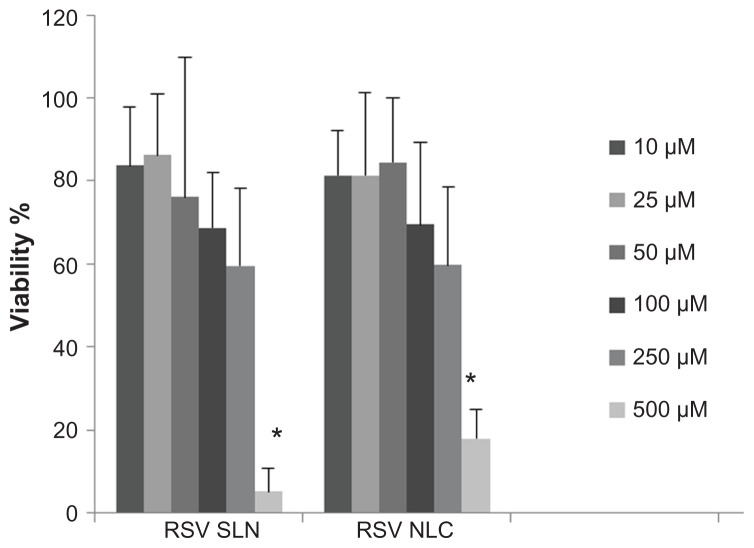
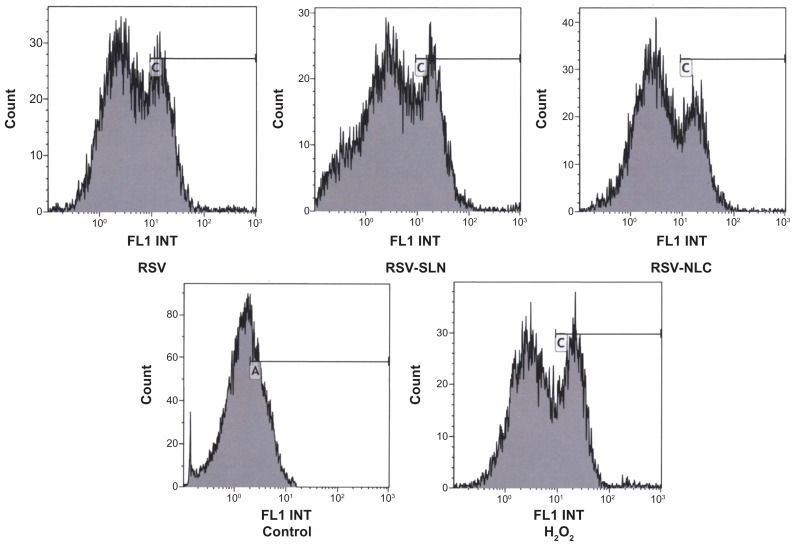
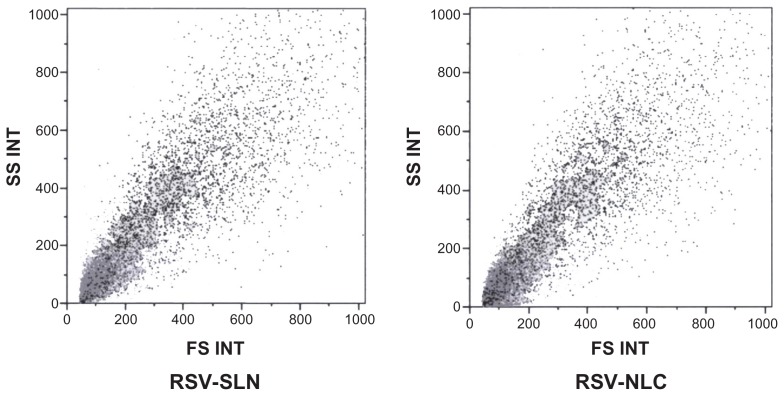
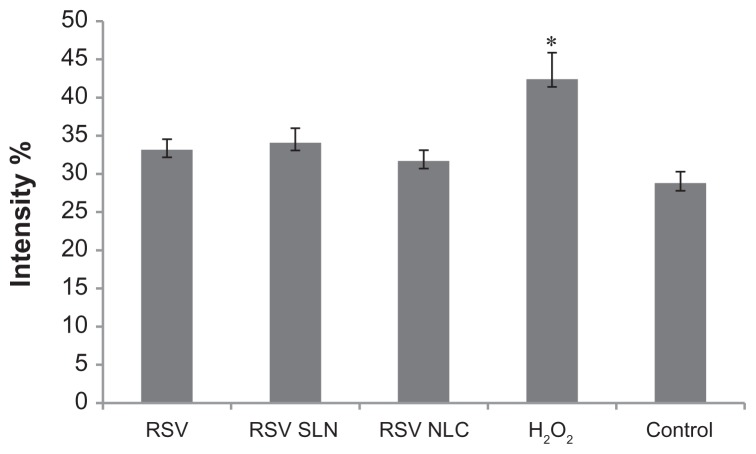
Nanoparticles were prepared by high shear homogenization using Compritol 888ATO, Myglyol, Poloxamer188, and Tween80. Particle size (PS), polydispersity index (PI), zeta potential (ZP), drug entrapment efficiency (EE), and production yield were determined. Differential scanning calorimetry (DSC) analysis and morphological transmission electron microscopy (TEM) examination were conducted. RSV concentration was optimized with cytotoxicity studies, and net intracellular accumulation of ROS was monitored with cytofluorimetry. The amount of RSV was determined from different layers of rat abdominal skin.
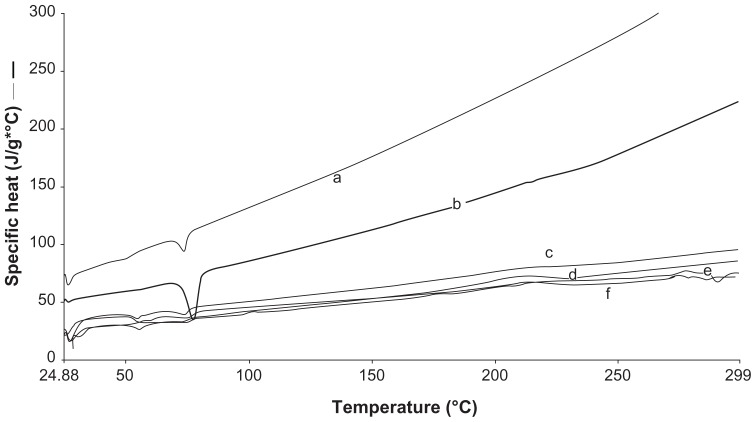
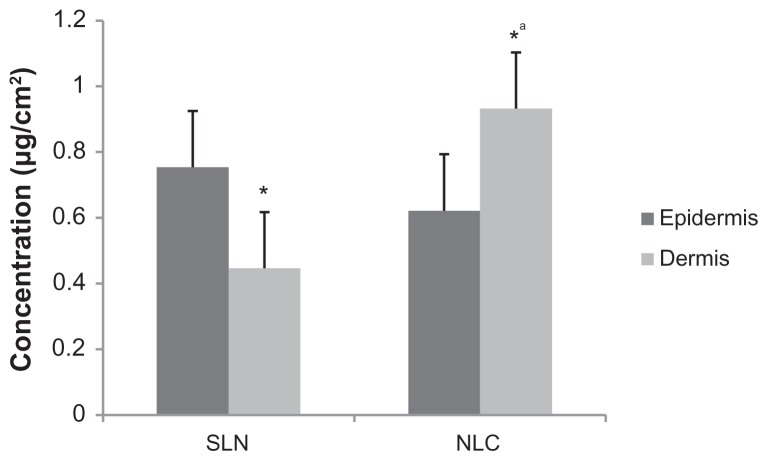
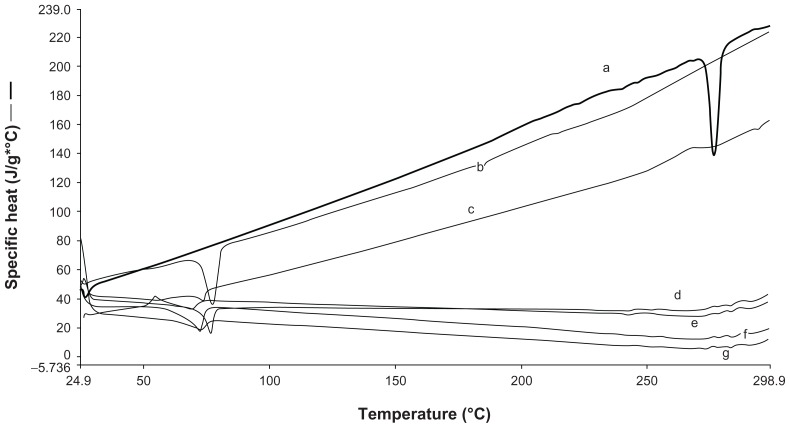
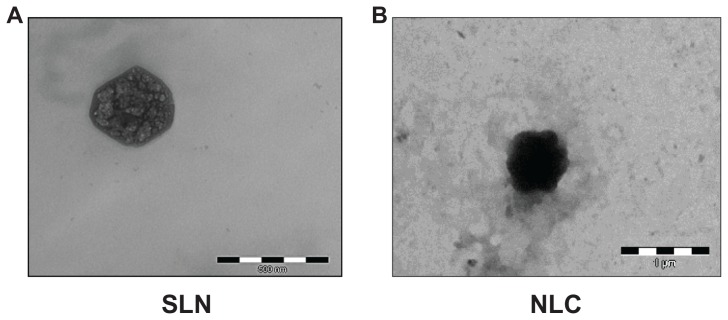
PS of uniform RSV-SLN and RSV-NLC were determined as 287.2 nm ± 5.1 and 110.5 nm ± 1.3, respectively. ZP was -15.3 mV ± 0.4 and -13.8 mV ± 0.1 in the same order. The drug EE was 18% higher in NLC systems. TEM studies showed that the drug in the shell model was relevant for SLN, and that the melting point of the lipid in NLC was slightly lower. Concentrations below 50 μM were determined as suitable RSV concentrations for both SLN and NLC in cell culture studies. RSV-NLC showed less fluorescence, indicating less ROS production in cytofluorometric studies. Ex vivo skin studies revealed that NLC are more efficient in carrying RSV to the epidermis.
This study suggests that both of the lipid nanoparticles had antioxidant properties at a concentration of 50 μM. When the two systems were compared, NLC penetrated deeper into the skin. RSV-loaded NLC with smaller PS and higher drug loading appears to be superior to SLN for dermal applications.
活性氧(ROS)的过度产生是导致皮肤病变的一个因素。白藜芦醇(RSV)是一种有效的抗氧化剂。固体脂质纳米粒(SLN)和纳米结构脂质载体(NLC)可以确保密切接触并增加进入皮肤的药物吸收量。在这项研究中,RSV 被负载到 SLN 和 NLC 中用于皮肤应用。
使用 Compritol 888ATO、Moglyol、泊洛沙姆 188 和吐温 80 通过高剪切匀化制备纳米粒。测定了粒径(PS)、多分散指数(PI)、Zeta 电位(ZP)、药物包封效率(EE)和产率。进行了差示扫描量热法(DSC)分析和形态透射电子显微镜(TEM)检查。通过细胞毒性研究优化 RSV 浓度,并通过细胞荧光法监测 ROS 的净细胞内积累。从大鼠腹部皮肤的不同层测定 RSV 的量。
均匀 RSV-SLN 和 RSV-NLC 的 PS 分别确定为 287.2nm±5.1 和 110.5nm±1.3。同样的顺序下,ZP 分别为-15.3mV±0.4 和-13.8mV±0.1。NLC 系统中的药物 EE 高 18%。TEM 研究表明,壳模型中的药物与 SLN 有关,而 NLC 中的脂质熔点略低。细胞培养研究中确定 50μM 以下的浓度为 SLN 和 NLC 中 RSV 的合适浓度。细胞荧光研究表明,RSV-NLC 荧光较弱,表明 ROS 产生较少。离体皮肤研究表明,NLC 更有效地将 RSV 携带到表皮。
这项研究表明,两种脂质纳米粒在 50μM 的浓度下均具有抗氧化特性。当比较这两种系统时,NLC 更深地渗透到皮肤中。与 SLN 相比,具有较小 PS 和较高药物载量的负载 RSV 的 NLC 似乎更适合皮肤应用。