Department of Information Science, Bar-Ilan University, Ramat-Gan, Israel.
PLoS One. 2012;7(5):e35869. doi: 10.1371/journal.pone.0035869. Epub 2012 May 11.
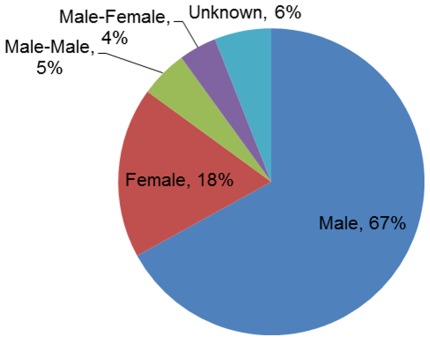
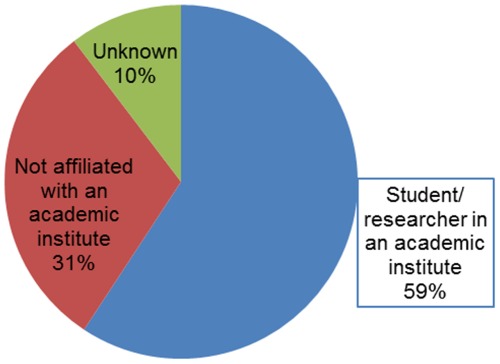
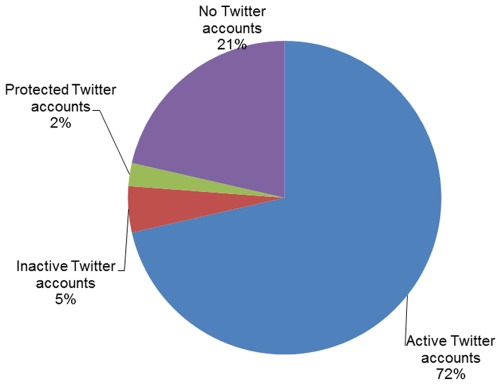
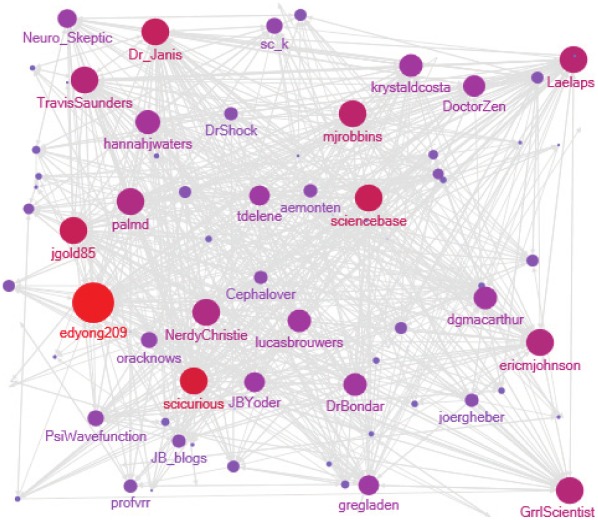
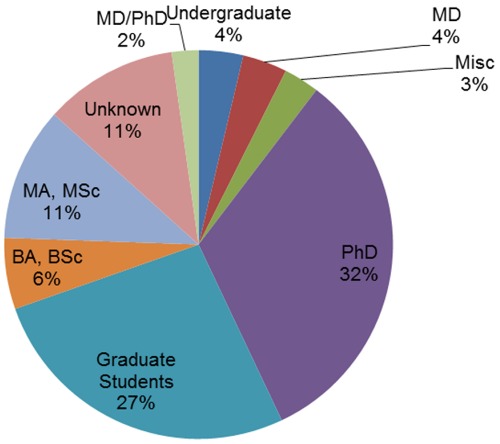
The research blog has become a popular mechanism for the quick discussion of scholarly information. However, unlike peer-reviewed journals, the characteristics of this form of scientific discourse are not well understood, for example in terms of the spread of blogger levels of education, gender and institutional affiliations. In this paper we fill this gap by analyzing a sample of blog posts discussing science via an aggregator called ResearchBlogging.org (RB). ResearchBlogging.org aggregates posts based on peer-reviewed research and allows bloggers to cite their sources in a scholarly manner. We studied the bloggers, blog posts and referenced journals of bloggers who posted at least 20 items. We found that RB bloggers show a preference for papers from high-impact journals and blog mostly about research in the life and behavioral sciences. The most frequently referenced journal sources in the sample were: Science, Nature, PNAS and PLoS One. Most of the bloggers in our sample had active Twitter accounts connected with their blogs, and at least 90% of these accounts connect to at least one other RB-related Twitter account. The average RB blogger in our sample is male, either a graduate student or has been awarded a PhD and blogs under his own name.
研究博客已成为快速讨论学术信息的一种流行机制。然而,与同行评议的期刊不同,这种形式的科学论述的特点还不是很清楚,例如博主的教育程度、性别和机构隶属关系的传播情况。在本文中,我们通过分析一个名为 ResearchBlogging.org(RB)的聚合器来讨论科学的博客文章样本,填补了这一空白。ResearchBlogging.org 根据同行评议的研究成果对文章进行分类,并允许博主以学术的方式引用他们的来源。我们研究了至少发布过 20 篇文章的博主、博客文章和博主引用的期刊。我们发现,RB 博主更喜欢高影响力期刊的论文,并且主要撰写生命和行为科学领域的研究。在样本中最常被引用的期刊来源是:《科学》《自然》《美国国家科学院院刊》和《公共科学图书馆·综合》。我们样本中的大多数博主都有与他们的博客相关联的活跃的 Twitter 账户,并且至少 90%的这些账户与至少一个其他 RB 相关的 Twitter 账户相连。我们样本中的平均 RB 博主是男性,要么是研究生,要么已经获得博士学位,并以自己的名义写博客。