Laboratory of Neurodegenerative Diseases, Department of Anatomy, The University of Hong Kong, Hong Kong SAR, China.
PLoS One. 2012;7(5):e36752. doi: 10.1371/journal.pone.0036752. Epub 2012 May 11.
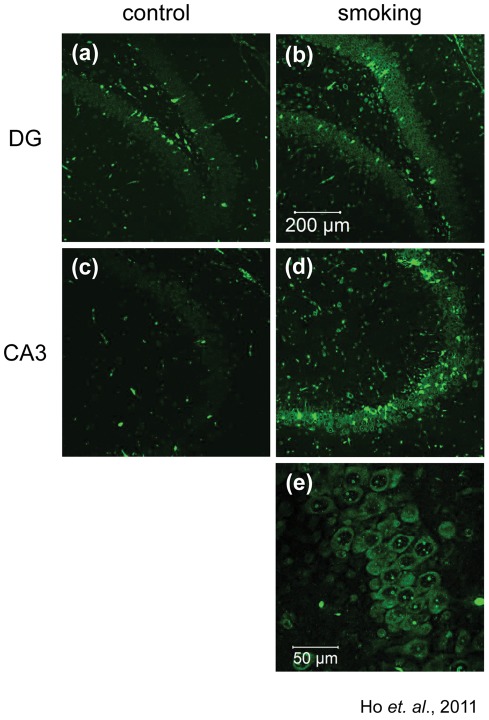
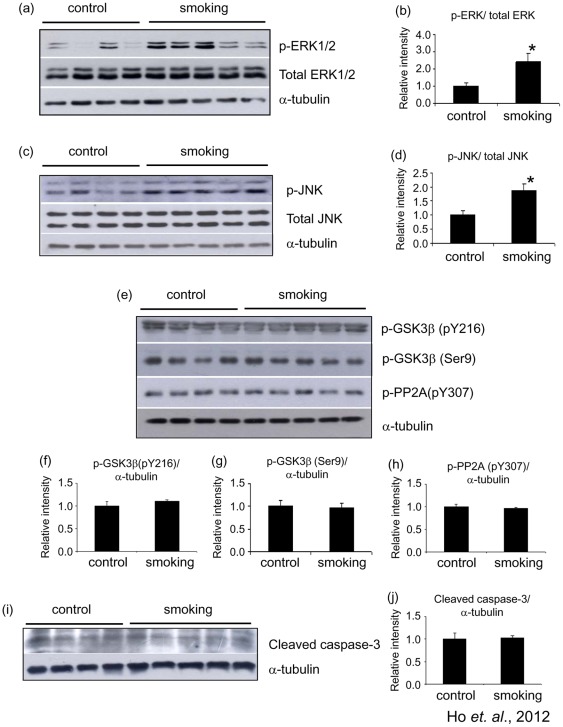
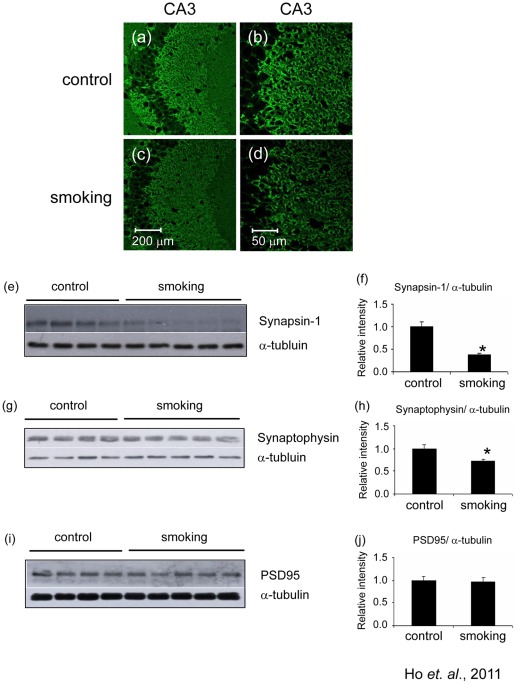
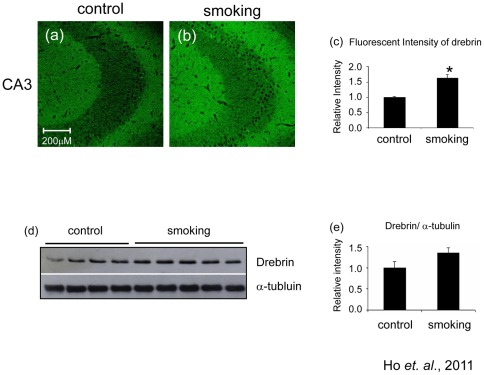
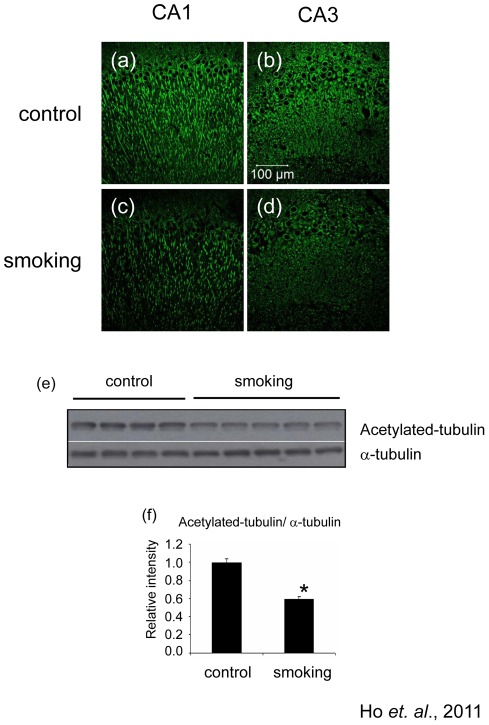
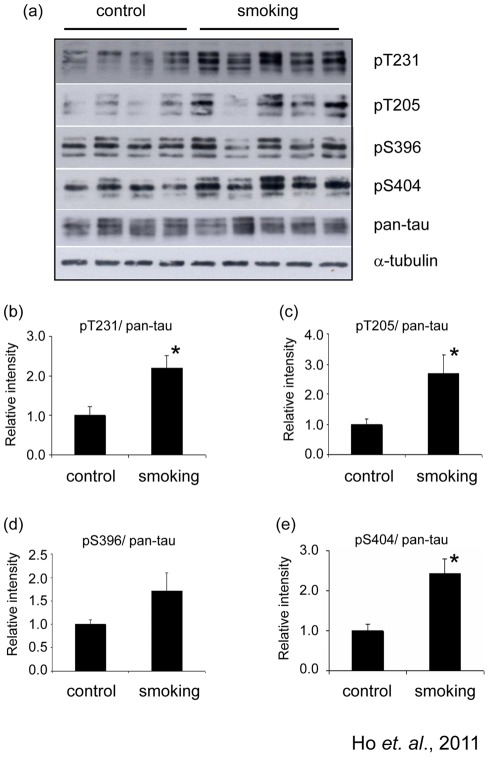
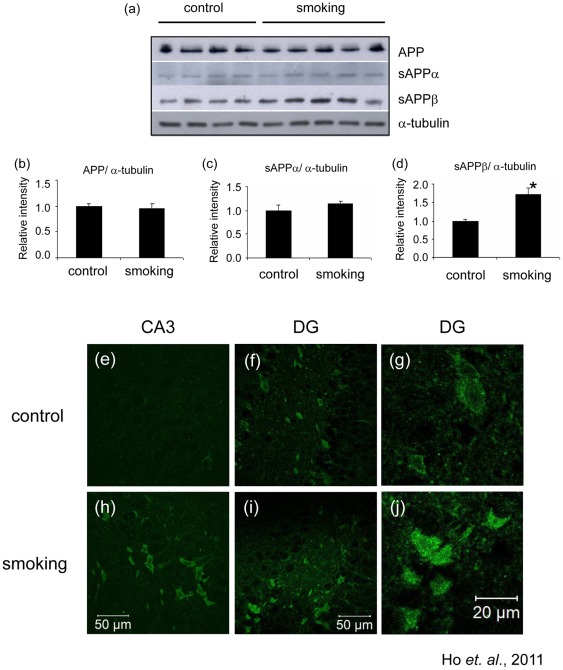
Cigarette smoking has been proposed as a major risk factor for aging-related pathological changes and Alzheimer's disease (AD). To date, little is known for how smoking can predispose our brains to dementia or cognitive impairment. This study aimed to investigate the cigarette smoke-induced pathological changes in brains. Male Sprague-Dawley (SD) rats were exposed to either sham air or 4% cigarette smoke 1 hour per day for 8 weeks in a ventilated smoking chamber to mimic the situation of chronic passive smoking. We found that the levels of oxidative stress were significantly increased in the hippocampus of the smoking group. Smoking also affected the synapse through reducing the expression of pre-synaptic proteins including synaptophysin and synapsin-1, while there were no changes in the expression of postsynaptic protein PSD95. Decreased levels of acetylated-tubulin and increased levels of phosphorylated-tau at 231, 205 and 404 epitopes were also observed in the hippocampus of the smoking rats. These results suggested that axonal transport machinery might be impaired, and the stability of cytoskeleton might be affected by smoking. Moreover, smoking affected amyloid precursor protein (APP) processing by increasing the production of sAPPβ and accumulation of β-amyloid peptide in the CA3 and dentate gyrus region. In summary, our data suggested that chronic cigarette smoking could induce synaptic changes and other neuropathological alterations. These changes might serve as evidence of early phases of neurodegeneration and may explain why smoking can predispose brains to AD and dementia.
吸烟被认为是与衰老相关的病理变化和阿尔茨海默病(AD)的主要危险因素。迄今为止,人们对吸烟如何使我们的大脑易患痴呆症或认知障碍知之甚少。本研究旨在探讨香烟烟雾引起的大脑病理变化。雄性 Sprague-Dawley(SD)大鼠在通风吸烟室中每天暴露于假空气或 4%香烟烟雾 1 小时,持续 8 周,以模拟慢性被动吸烟的情况。我们发现,吸烟组海马体的氧化应激水平显著升高。吸烟还通过降低突触前蛋白的表达来影响突触,包括突触小体和突触素-1,而突触后蛋白 PSD95 的表达没有变化。在吸烟大鼠的海马体中还观察到乙酰化微管蛋白水平降低和磷酸化 tau 在 231、205 和 404 表位的水平升高。这些结果表明,轴突运输机制可能受损,细胞骨架的稳定性可能受到吸烟的影响。此外,吸烟通过增加 sAPPβ 的产生和 β-淀粉样肽在 CA3 和齿状回区域的积累来影响淀粉样前体蛋白(APP)的加工。总之,我们的数据表明,慢性吸烟可诱导突触变化和其他神经病理学改变。这些变化可能是神经退行性早期阶段的证据,并解释了为什么吸烟会使大脑易患 AD 和痴呆症。