• 文献检索
  • 文档翻译
  • 深度研究
  • 学术资讯
  • Suppr Zotero 插件Zotero 插件
  • 邀请有礼
  • 套餐&价格
  • 历史记录
应用&插件
Suppr Zotero 插件Zotero 插件浏览器插件Mac 客户端Windows 客户端微信小程序
定价
高级版会员购买积分包购买API积分包
服务
文献检索文档翻译深度研究API 文档MCP 服务
关于我们
关于 Suppr公司介绍联系我们用户协议隐私条款
关注我们

Suppr 超能文献

核心技术专利:CN118964589B侵权必究
粤ICP备2023148730 号-1Suppr @ 2026

文献检索

告别复杂PubMed语法,用中文像聊天一样搜索,搜遍4000万医学文献。AI智能推荐,让科研检索更轻松。

立即免费搜索

文件翻译

保留排版,准确专业,支持PDF/Word/PPT等文件格式,支持 12+语言互译。

免费翻译文档

深度研究

AI帮你快速写综述,25分钟生成高质量综述,智能提取关键信息,辅助科研写作。

立即免费体验

先天性失乐症在每天听音乐后仍存在于发育中的大脑中。

Congenital amusia persists in the developing brain after daily music listening.

机构信息

The International Laboratory for Brain Music and Sound Research (BRAMS), Department of Psychology, University of Montreal, Montreal, Québec, Canada.

出版信息

PLoS One. 2012;7(5):e36860. doi: 10.1371/journal.pone.0036860. Epub 2012 May 11.

DOI:10.1371/journal.pone.0036860
PMID:22606299
原文链接:https://pmc.ncbi.nlm.nih.gov/articles/PMC3350472/
Abstract

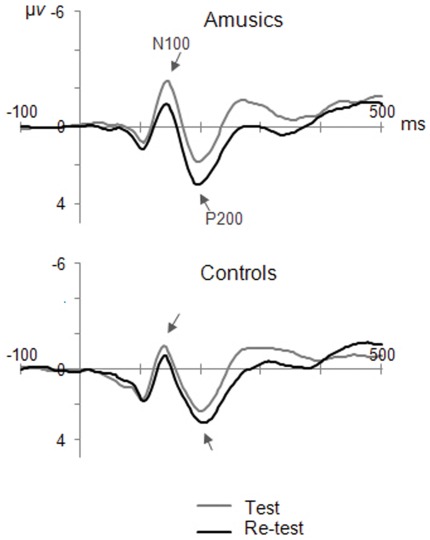
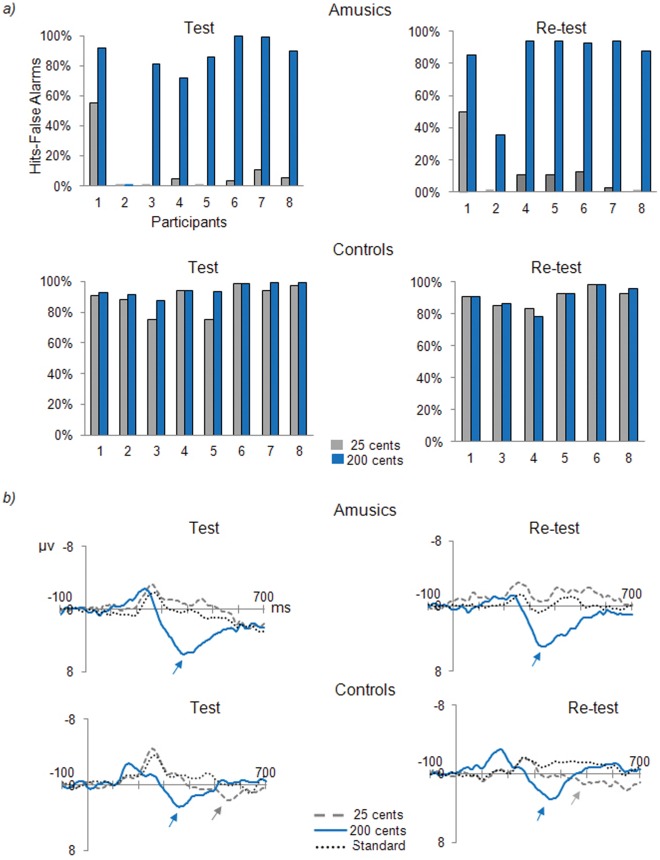
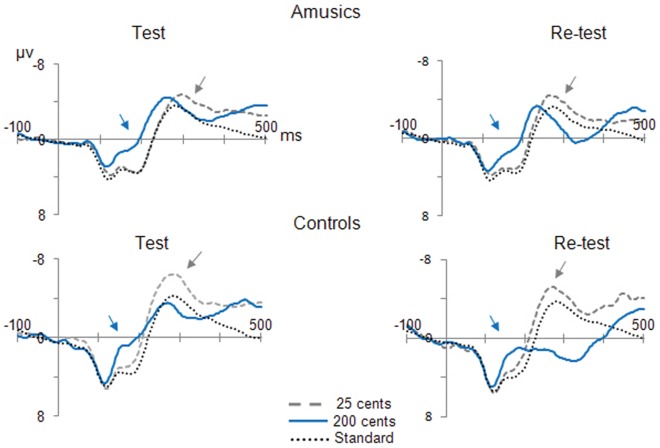
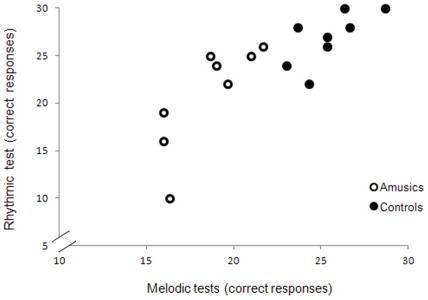
Congenital amusia is a neurodevelopmental disorder that affects about 3% of the adult population. Adults experiencing this musical disorder in the absence of macroscopically visible brain injury are described as cases of congenital amusia under the assumption that the musical deficits have been present from birth. Here, we show that this disorder can be expressed in the developing brain. We found that (10-13 year-old) children exhibit a marked deficit in the detection of fine-grained pitch differences in both musical and acoustical context in comparison to their normally developing peers comparable in age and general intelligence. This behavioral deficit could be traced down to their abnormal P300 brain responses to the detection of subtle pitch changes. The altered pattern of electrical activity does not seem to arise from an anomalous functioning of the auditory cortex, because all early components of the brain potentials, the N100, the MMN, and the P200 appear normal. Rather, the brain and behavioral measures point to disrupted information propagation from the auditory cortex to other cortical regions. Furthermore, the behavioral and neural manifestations of the disorder remained unchanged after 4 weeks of daily musical listening. These results show that congenital amusia can be detected in childhood despite regular musical exposure and normal intellectual functioning.

摘要

先天性失乐症是一种神经发育障碍,影响约 3%的成年人口。在没有明显可见的大脑损伤的情况下,患有这种音乐障碍的成年人被描述为先天性失乐症病例,假设音乐缺陷从出生就存在。在这里,我们表明这种障碍可以在发育中的大脑中表达。我们发现,与年龄和一般智力相当的正常发育的同龄人相比,(10-13 岁)儿童在音乐和声学环境中对细微音高差异的检测存在明显缺陷。这种行为缺陷可以追溯到他们对细微音高变化检测的异常 P300 脑反应。电活动的改变模式似乎不是由于听觉皮层的异常功能引起的,因为大脑电位的所有早期成分,即 N100、MMN 和 P200 都正常。相反,大脑和行为测量结果表明,从听觉皮层到其他皮层区域的信息传递受到干扰。此外,在进行为期 4 周的日常音乐聆听后,该障碍的行为和神经表现保持不变。这些结果表明,尽管有规律的音乐接触和正常的智力功能,先天性失乐症仍可在儿童期检测到。
https://cdn.ncbi.nlm.nih.gov/pmc/blobs/2a4f/3350472/7c7f1394a4e7/pone.0036860.g004.jpg
https://cdn.ncbi.nlm.nih.gov/pmc/blobs/2a4f/3350472/9dd0d64bb8c8/pone.0036860.g001.jpg
https://cdn.ncbi.nlm.nih.gov/pmc/blobs/2a4f/3350472/f27eba3d8c79/pone.0036860.g002.jpg
https://cdn.ncbi.nlm.nih.gov/pmc/blobs/2a4f/3350472/b9d7e23d6644/pone.0036860.g003.jpg
https://cdn.ncbi.nlm.nih.gov/pmc/blobs/2a4f/3350472/7c7f1394a4e7/pone.0036860.g004.jpg
https://cdn.ncbi.nlm.nih.gov/pmc/blobs/2a4f/3350472/9dd0d64bb8c8/pone.0036860.g001.jpg
https://cdn.ncbi.nlm.nih.gov/pmc/blobs/2a4f/3350472/f27eba3d8c79/pone.0036860.g002.jpg
https://cdn.ncbi.nlm.nih.gov/pmc/blobs/2a4f/3350472/b9d7e23d6644/pone.0036860.g003.jpg
https://cdn.ncbi.nlm.nih.gov/pmc/blobs/2a4f/3350472/7c7f1394a4e7/pone.0036860.g004.jpg

相似文献

1
Congenital amusia persists in the developing brain after daily music listening.先天性失乐症在每天听音乐后仍存在于发育中的大脑中。
PLoS One. 2012;7(5):e36860. doi: 10.1371/journal.pone.0036860. Epub 2012 May 11.
2
Impaired pitch perception and memory in congenital amusia: the deficit starts in the auditory cortex.先天性失歌症患者的音高知觉和记忆受损:缺陷始于听觉皮层。
Brain. 2013 May;136(Pt 5):1639-61. doi: 10.1093/brain/awt082.
3
Pitch discrimination without awareness in congenital amusia: evidence from event-related potentials.先天性失歌症患者无意识的音高辨别:来自事件相关电位的证据。
Brain Cogn. 2013 Apr;81(3):337-44. doi: 10.1016/j.bandc.2013.01.004. Epub 2013 Feb 28.
4
Auditory cortex and beyond: Deficits in congenital amusia.听觉皮层及其他:先天性失歌症的缺陷。
Hear Res. 2023 Sep 15;437:108855. doi: 10.1016/j.heares.2023.108855. Epub 2023 Jul 23.
5
Neurobiology of Congenital Amusia.先天性失乐症的神经生物学
Trends Cogn Sci. 2016 Nov;20(11):857-867. doi: 10.1016/j.tics.2016.09.002. Epub 2016 Sep 29.
6
Functional MRI evidence of an abnormal neural network for pitch processing in congenital amusia.先天性失歌症患者音高加工异常神经网络的功能磁共振成像证据。
Cereb Cortex. 2011 Feb;21(2):292-9. doi: 10.1093/cercor/bhq094. Epub 2010 May 21.
7
Impairments in musical abilities reflected in the auditory brainstem: evidence from congenital amusia.听觉脑干所反映的音乐能力损伤:来自先天性失歌症的证据。
Eur J Neurosci. 2015 Jul;42(1):1644-50. doi: 10.1111/ejn.12931. Epub 2015 Jun 18.
8
Fine-grained pitch processing of music and speech in congenital amusia.先天性失歌症中音乐和语音的精细音高加工。
J Acoust Soc Am. 2011 Dec;130(6):4089-96. doi: 10.1121/1.3658447.
9
Congenital amusia: a disorder of fine-grained pitch discrimination.先天性失歌症:一种精细音高辨别障碍。
Neuron. 2002 Jan 17;33(2):185-91. doi: 10.1016/s0896-6273(01)00580-3.
10
Auditory deficits in amusia extend beyond poor pitch perception.失歌症患者的听觉缺陷不仅仅局限于音高感知能力差。
Neuropsychologia. 2017 May;99:213-224. doi: 10.1016/j.neuropsychologia.2017.03.018. Epub 2017 Mar 16.

引用本文的文献

1
Pitch and Rhythm Perception and Verbal Short-Term Memory in Acute Traumatic Brain Injury.急性创伤性脑损伤中的音高和节奏感知与言语短期记忆
Brain Sci. 2021 Sep 3;11(9):1173. doi: 10.3390/brainsci11091173.
2
Congenital amusia-pathology of musical disorder.先天性失乐症-音乐障碍的病理学。
J Appl Genet. 2022 Feb;63(1):127-131. doi: 10.1007/s13353-021-00662-z. Epub 2021 Sep 21.
3
Altered functional connectivity during speech perception in congenital amusia.先天性失歌症患者在感知言语时功能连接的改变。

本文引用的文献

1
Tone language fluency impairs pitch discrimination.语调语言流畅性会损害音高辨别能力。
Front Psychol. 2011 Jul 4;2:145. doi: 10.3389/fpsyg.2011.00145. eCollection 2011.
2
Relating pitch awareness to phonemic awareness in children: implications for tone-deafness and dyslexia.儿童音高意识与音素意识的关联:对先天性失音症和诵读困难症的启示。
Front Psychol. 2011 May 30;2:111. doi: 10.3389/fpsyg.2011.00111. eCollection 2011.
3
Congenital amusia in childhood: a case study.儿童先天性失乐症:病例研究。
Elife. 2020 Aug 7;9:e53539. doi: 10.7554/eLife.53539.
4
Tailored perception: Individuals' speech and music perception strategies fit their perceptual abilities.定制感知:个体的言语和音乐感知策略与其感知能力相匹配。
J Exp Psychol Gen. 2020 May;149(5):914-934. doi: 10.1037/xge0000688. Epub 2019 Oct 7.
5
Syntactic processing in music and language: Parallel abnormalities observed in congenital amusia.音乐和语言中的句法加工:先天性失歌症中观察到的平行异常。
Neuroimage Clin. 2018 May 24;19:640-651. doi: 10.1016/j.nicl.2018.05.032. eCollection 2018.
6
Learning for pitch and melody discrimination in congenital amusia.先天性失歌症的音高和旋律辨别学习。
Cortex. 2018 Jun;103:164-178. doi: 10.1016/j.cortex.2018.03.012. Epub 2018 Mar 23.
7
Deficits of congenital amusia beyond pitch: Evidence from impaired categorical perception of vowels in Cantonese-speaking congenital amusics.先天性失歌症在音高之外的缺陷:来自粤语先天性失歌症患者元音范畴知觉受损的证据。
PLoS One. 2017 Aug 22;12(8):e0183151. doi: 10.1371/journal.pone.0183151. eCollection 2017.
8
Auditory deficits in amusia extend beyond poor pitch perception.失歌症患者的听觉缺陷不仅仅局限于音高感知能力差。
Neuropsychologia. 2017 May;99:213-224. doi: 10.1016/j.neuropsychologia.2017.03.018. Epub 2017 Mar 16.
9
Neural Mechanisms Underlying Musical Pitch Perception and Clinical Applications Including Developmental Dyslexia.音乐音高感知的神经机制及其临床应用,包括发展性阅读障碍
Curr Neurol Neurosci Rep. 2015 Aug;15(8):51. doi: 10.1007/s11910-015-0574-9.
10
Singing abilities in children with Specific Language Impairment (SLI).特定语言障碍(SLI)儿童的歌唱能力
Front Psychol. 2015 Apr 13;6:420. doi: 10.3389/fpsyg.2015.00420. eCollection 2015.
Cortex. 2012 Jun;48(6):683-8. doi: 10.1016/j.cortex.2011.02.018. Epub 2011 Mar 4.
4
Memory for pitch in congenital amusia: beyond a fine-grained pitch discrimination problem.先天性失歌症的音高记忆:不仅仅是一个精细音高辨别问题。
Memory. 2010 Aug;18(6):657-69. doi: 10.1080/09658211.2010.501339.
5
Congenital amusia in speakers of a tone language: association with lexical tone agnosia.先天性失乐症患者对声调语言的感知:与词汇声调识别障碍有关。
Brain. 2010 Sep;133(9):2635-42. doi: 10.1093/brain/awq178. Epub 2010 Aug 4.
6
Functional MRI evidence of an abnormal neural network for pitch processing in congenital amusia.先天性失歌症患者音高加工异常神经网络的功能磁共振成像证据。
Cereb Cortex. 2011 Feb;21(2):292-9. doi: 10.1093/cercor/bhq094. Epub 2010 May 21.
7
Intonation processing in congenital amusia: discrimination, identification and imitation.先天性失乐症患者的语调处理:辨别、识别和模仿。
Brain. 2010 Jun;133(Pt 6):1682-93. doi: 10.1093/brain/awq089. Epub 2010 Apr 23.
8
Music and speech listening enhance the recovery of early sensory processing after stroke.音乐和言语聆听可促进脑卒中后早期感觉处理的恢复。
J Cogn Neurosci. 2010 Dec;22(12):2716-27. doi: 10.1162/jocn.2009.21376.
9
Tone deafness: a new disconnection syndrome?音盲:一种新的分离综合征?
J Neurosci. 2009 Aug 19;29(33):10215-20. doi: 10.1523/JNEUROSCI.1701-09.2009.
10
Automatic brain responses to pitch changes in congenital amusia.先天性失歌症患者对音高变化的大脑自动反应。
Ann N Y Acad Sci. 2009 Jul;1169:191-4. doi: 10.1111/j.1749-6632.2009.04775.x.