Clément Sylvain, Planchou Clément, Béland Renée, Motte Jacques, Samson Séverine
Neuropsychology: Auditory, Cognition, Action Team, Laboratoire PSITEC, UFR de Psychologie, Université de Lille Villeneuve d'Ascq, France.
Neuropsychology: Auditory, Cognition, Action Team, Laboratoire PSITEC, UFR de Psychologie, Université de Lille Villeneuve d'Ascq, France ; Neurologie Pédiatrique, Pôle Femme-Mère-Enfant, American Memorial Hospital Reims, France.
Front Psychol. 2015 Apr 13;6:420. doi: 10.3389/fpsyg.2015.00420. eCollection 2015.
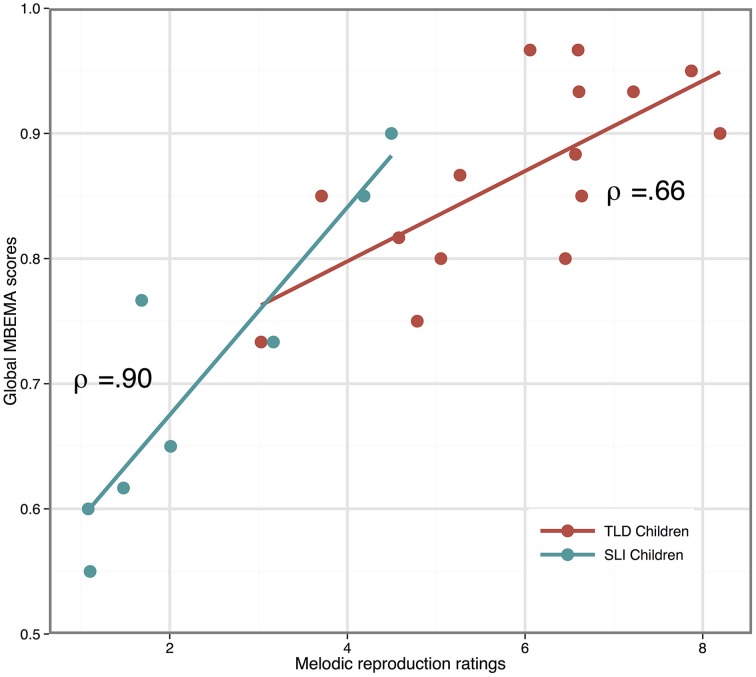
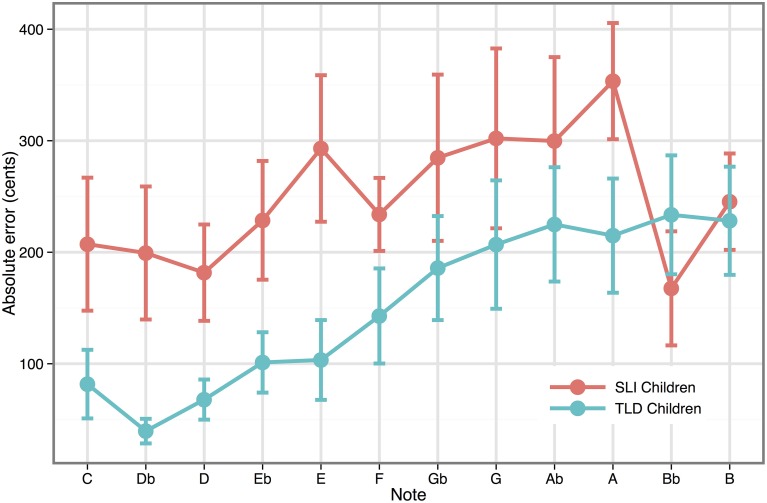
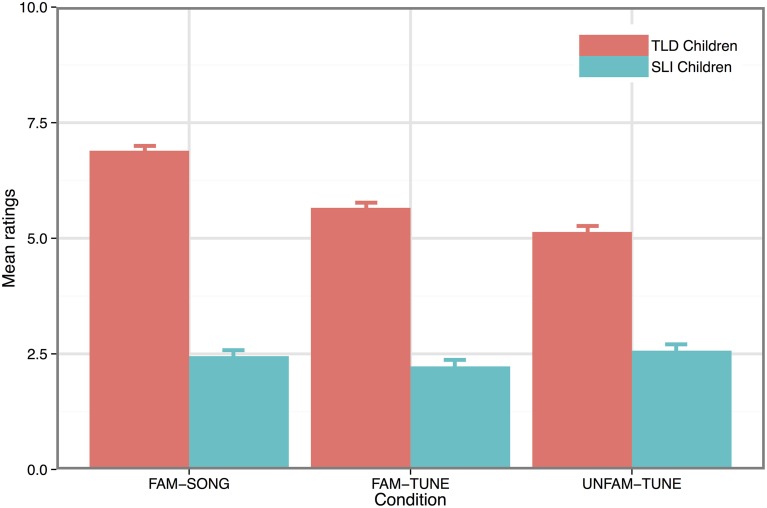
Specific Language Impairment (SLI) is a heritable neurodevelopmental disorder diagnosed when a child has difficulties learning to produce and/or understand speech for no apparent reason (Bishop et al., 2012). The verbal difficulties of children with SLI have been largely documented, and a growing number of studies suggest that these children may also have difficulties in processing non-verbal complex auditory stimuli (Corriveau et al., 2007; Brandt et al., 2012). In a recent study, we reported that a large proportion of children with SLI present deficits in music perception (Planchou et al., under revision). Little is known, however, about the singing abilities of children with SLI. In order to investigate whether or not the impairments in expressive language extend to the musical domain, we assessed singing abilities in eight children with SLI and 15 children with Typical Language Development (TLD) matched for age and non-verbal intelligence. To this aim, we designed a ludic activity consisting of two singing tasks: a pitch-matching and a melodic reproduction task. In the pitch-matching task, the children were requested to sing single notes. In the melodic reproduction task, children were asked to sing short melodies that were either familiar (FAM-SONG and FAM-TUNE conditions) or unfamiliar (UNFAM-TUNE condition). The analysis showed that children with SLI were impaired in the pitch-matching task, with a mean pitch error of 250 cents (mean pitch error for children with TLD: 154 cents). In the melodic reproduction task, we asked 30 healthy adults to rate the quality of the sung productions of the children on a continuous rating scale. The results revealed that singing of children with SLI received lower mean ratings than the children with TLD. Our findings thus indicate that children with SLI showed impairments in musical production and are discussed in light of a general auditory-motor dysfunction in children with SLI.
特定语言障碍(SLI)是一种遗传性神经发育障碍,当儿童在没有明显原因的情况下学习发声和/或理解语言存在困难时被诊断出来(毕晓普等人,2012年)。患有SLI的儿童的语言困难已得到大量记录,并且越来越多的研究表明,这些儿童在处理非语言复杂听觉刺激方面也可能存在困难(科里沃等人,2007年;布兰特等人,2012年)。在最近的一项研究中,我们报告说,很大一部分患有SLI的儿童在音乐感知方面存在缺陷(普兰舒等人,正在修订中)。然而,对于患有SLI的儿童的歌唱能力知之甚少。为了研究表达性语言障碍是否会扩展到音乐领域,我们评估了8名患有SLI的儿童和15名年龄及非语言智力相匹配的典型语言发展(TLD)儿童的歌唱能力。为此,我们设计了一项游戏活动,包括两项歌唱任务:音高匹配和旋律再现任务。在音高匹配任务中,要求儿童唱出单个音符。在旋律再现任务中,要求儿童唱出熟悉(FAM - SONG和FAM - TUNE条件)或不熟悉(UNFAM - TUNE条件)的短旋律。分析表明,患有SLI的儿童在音高匹配任务中表现受损,平均音高误差为250音分(TLD儿童的平均音高误差:154音分)。在旋律再现任务中,我们让30名健康成年人在连续评分量表上对儿童演唱作品的质量进行评分。结果显示,患有SLI的儿童的演唱平均评分低于TLD儿童。因此,我们的研究结果表明,患有SLI的儿童在音乐表演方面存在障碍,并根据患有SLI的儿童普遍存在的听觉 - 运动功能障碍进行了讨论。