Kocher O, Kennedy S P, Madri J A
Department of Pathology, Yale University School of Medicine, New Haven, Connecticut 06510.
Am J Pathol. 1990 Dec;137(6):1509-24.
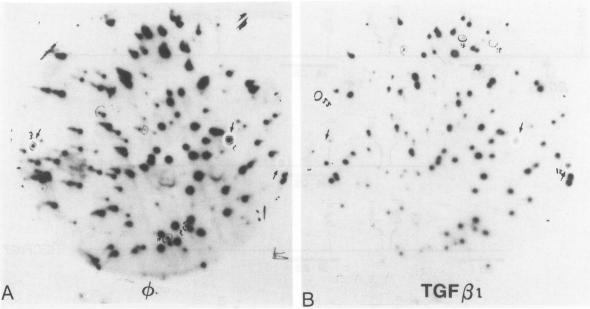
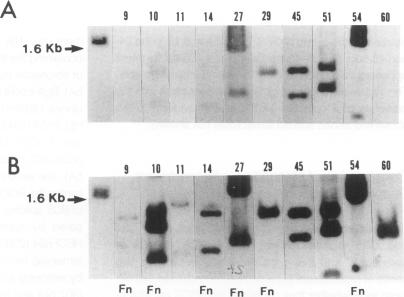
Transforming growth factor-beta 1 (TGF-beta 1) is thought to play a role in modulating vascular cell function in vivo. In vitro, it decreases endothelial cell proliferation and migration. We postulated that these biologic activities could be mediated through TGF-beta 1 modulation of specific gene expression. Therefore we differentially screened a human umbilical vein endothelial cell cDNA library with cDNAs prepared from both untreated and TGF-beta 1-treated bovine aortic endothelial cells. Using this technique, we isolated many TGF-beta 1-induced cDNA clones. Sequence analysis of these cDNAs showed that many of them corresponded to alternatively spliced fibronectin mRNAs. These fibronectin clones all contained the extradomain I (ED I) but three different forms of the type III connecting segment (IIICS). These different fibronectin cDNAs were expressed in bacteria and the recombinant proteins used to study the effects of IIICS alternative splicing on cell attachment, spreading, and migration in bovine aortic endothelial and smooth muscle cells and B16F10 melanoma cells. The results of these experiments show that attachment and spreading of bovine aortic endothelial and smooth muscle cells depend primarily on the presence of the Arg-Gly-Asp-Ser (RGDS) sequence in the recombinant fibronectin proteins. However attachment and spreading of bovine aortic endothelial cells are modulated by alternative splicing in the IIICS region. Specifically splicing of the IIICS region decreases spreading and increases migration rates of the endothelial cells. On the contrary, using a cell line (B16F10 melanoma cells) that is known not to require the RGDS sequence for adhesion confirmed previous findings that B16F10 melanoma cells do not require the presence of the RGDS sequence for attachment and spreading. Indeed B16F10 cells were able to attach and spread on two recombinant proteins that did not contain the RGDS sequence. However attachment and spreading of B16F10 were dramatically inhibited when a 75-base pair DNA fragment was removed from the 5' end of the IIICS region. These results suggest that various regions of the fibronectin molecule may be able to interact with different cell populations to promote cell attachment and spreading, and that alternative splicing may modulate this process.
转化生长因子-β1(TGF-β1)被认为在体内调节血管细胞功能中发挥作用。在体外,它会降低内皮细胞的增殖和迁移。我们推测这些生物学活性可能是通过TGF-β1对特定基因表达的调节来介导的。因此,我们用从未经处理和经TGF-β1处理的牛主动脉内皮细胞制备的cDNA对人脐静脉内皮细胞cDNA文库进行了差异筛选。利用这项技术,我们分离出了许多TGF-β1诱导的cDNA克隆。对这些cDNA的序列分析表明,其中许多对应于可变剪接的纤连蛋白mRNA。这些纤连蛋白克隆都包含额外结构域I(ED I),但有三种不同形式的III型连接段(IIICS)。这些不同的纤连蛋白cDNA在细菌中表达,并使用重组蛋白来研究IIICS可变剪接对牛主动脉内皮细胞、平滑肌细胞和B16F10黑色素瘤细胞的细胞附着、铺展和迁移的影响。这些实验结果表明,牛主动脉内皮细胞和平滑肌细胞的附着和铺展主要取决于重组纤连蛋白中精氨酸-甘氨酸-天冬氨酸-丝氨酸(RGDS)序列的存在。然而,牛主动脉内皮细胞的附着和铺展受到IIICS区域可变剪接的调节。具体而言,IIICS区域的剪接会降低内皮细胞的铺展并提高其迁移率。相反,使用一种已知在黏附中不需要RGDS序列的细胞系(B16F10黑色素瘤细胞)证实了先前的发现,即B16F10黑色素瘤细胞在附着和铺展时不需要RGDS序列的存在。事实上,B16F10细胞能够在两种不含RGDS序列的重组蛋白上附着和铺展。然而,当从IIICS区域的5'端去除一个75个碱基对的DNA片段时,B16F10细胞的附着和铺展受到显著抑制。这些结果表明,纤连蛋白分子的不同区域可能能够与不同的细胞群体相互作用以促进细胞附着和铺展,并且可变剪接可能会调节这一过程。