Department of Integrative Medicine of Traditional Chinese Medicine and Western Medicine, Xiangya Hospital, Central South University, Changsha, Hunan 410008, China.
J Transl Med. 2012 May 21;10:101. doi: 10.1186/1479-5876-10-101.
Oncolytic adenoviruses are promising as anticancer agents but have limited clinical responses. Our previous study showed that heat shock transcription factor 1 (HSF1) overexpression could increase the anti-tumor efficacy of E1B55kD deleted oncolytic adenovirus through increasing the viral burst. Due to the important roles of heat shock proteins (HSPs) in eliciting innate and adaptive immunity, we reasoned that besides increasing the viral burst, HSF1 may also play a role in increasing tumor specific immune response.
In the present study, intra-dermal murine models of melanoma (B16) and colorectal carcinoma (CT26) were treated with E1B55kD deleted oncolytic adenovirus Adel55 or Adel55 incorporated with cHSF1, HSF1i, HSP70, or HSP90 by intra-tumoral injection. Tumors were surgically excised 72 h post injection and animals were analyzed for tumor resistance and survival rate.
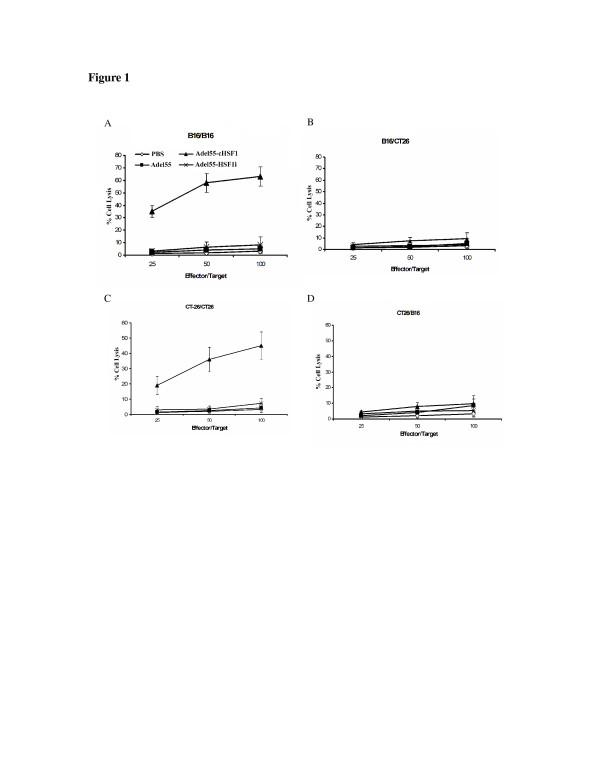
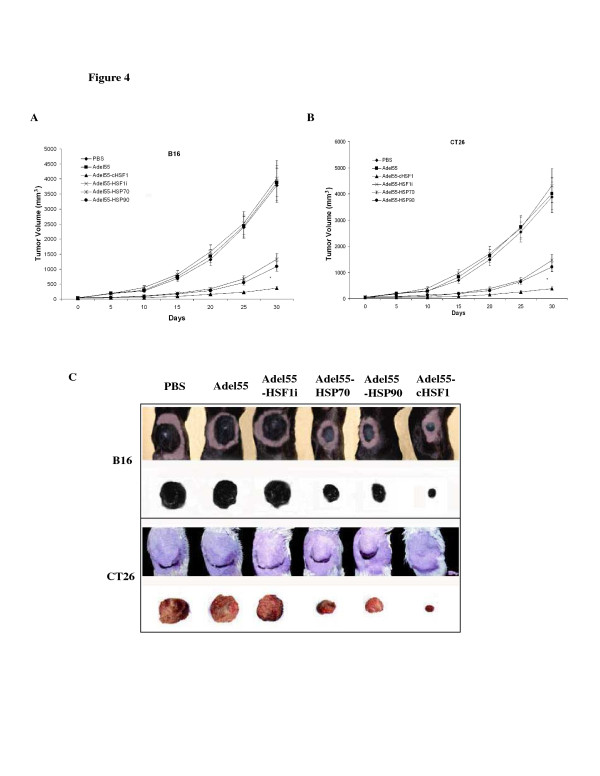
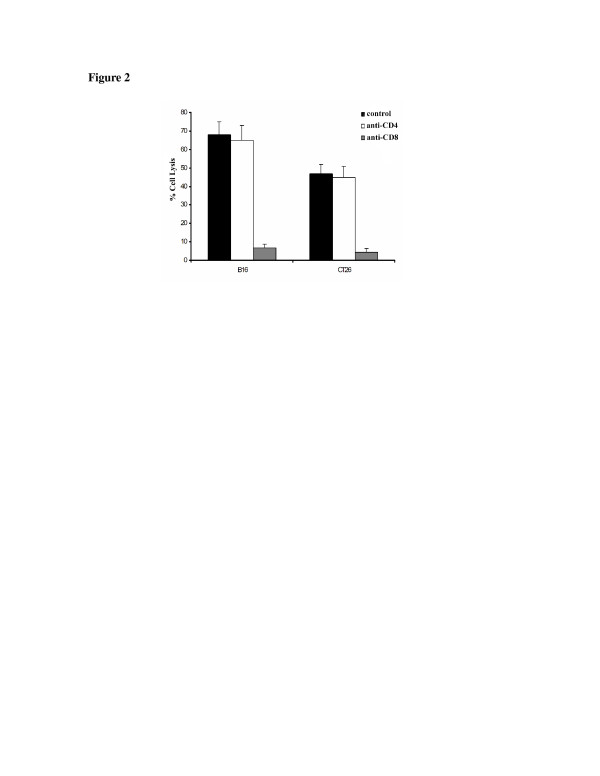
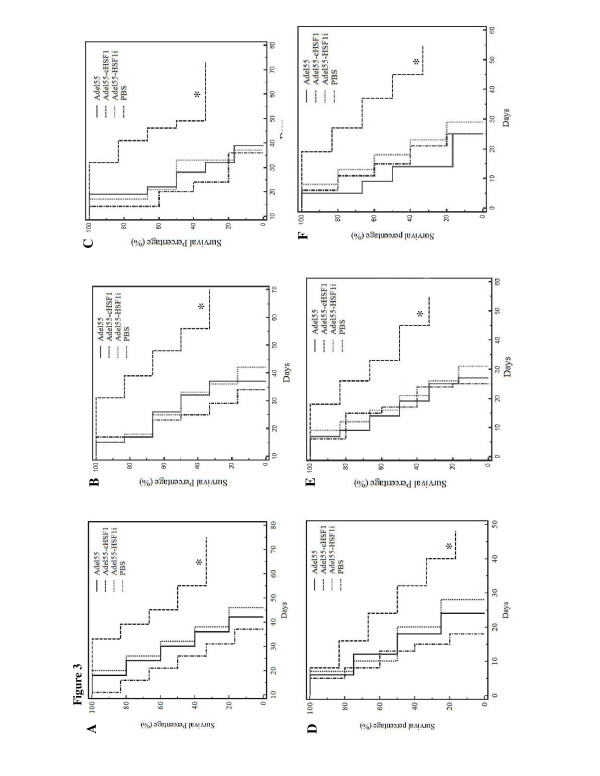
Approximately 95% of animals in the Adel55-cHSF1 treated group showed sustained resistance upon re-challenge with autologous tumor cells, but not in PBS, Adel55, or Adel55-HSF1i treated groups. Only 50-65% animals in the Adel55-HSP70 and Adel55-HSP90 treated group showed tumor resistance. Tumor resistance was associated with development of tumor type specific cellular immune responses. Adel55-cHSF1 treatment also showed higher efficacy in diminishing progression of the secondary tumor focus than Adel55-HSP70 or Adel55-HSP90 treatment.
Besides by increasing its burst in tumor cells, cHSF1 could also augment the potential of E1B55kD deleted oncolytic adenovirus by increasing the tumor-specific immune response, which is beneficial to prevent tumor recurrence. cHSF1 is a better gene for neoadjuvant immunotherapy than other heat shock protein genes.
溶瘤腺病毒作为抗癌药物具有很大的潜力,但临床反应有限。我们之前的研究表明,热休克转录因子 1(HSF1)过表达可以通过增加病毒爆发来提高 E1B55kD 缺失的溶瘤腺病毒的抗肿瘤疗效。由于热休克蛋白(HSPs)在引发先天和适应性免疫方面的重要作用,我们推断除了增加病毒爆发外,HSF1 还可能在增加肿瘤特异性免疫反应方面发挥作用。
在本研究中,通过瘤内注射,用 E1B55kD 缺失的溶瘤腺病毒 Adel55 或 Adel55 与 cHSF1、HSF1i、HSP70 或 HSP90 处理黑色素瘤(B16)和结直肠癌(CT26)的皮内鼠模型。注射后 72 小时将肿瘤切除,并分析动物的肿瘤耐药性和存活率。
在 Adel55-cHSF1 处理组中,约 95%的动物在再次用自体肿瘤细胞进行重挑战时表现出持续的耐药性,但在 PBS、Adel55 或 Adel55-HSF1i 处理组中没有。在 Adel55-HSP70 和 Adel55-HSP90 处理组中,只有 50-65%的动物表现出肿瘤耐药性。肿瘤耐药性与肿瘤类型特异性细胞免疫反应的发展有关。与 Adel55-HSP70 或 Adel55-HSP90 治疗相比,Adel55-cHSF1 治疗在减少继发性肿瘤焦点进展方面也更有效。
除了增加肿瘤细胞中的爆发外,cHSF1 还可以通过增加肿瘤特异性免疫反应来增强 E1B55kD 缺失的溶瘤腺病毒的潜力,这有利于预防肿瘤复发。cHSF1 是一种比其他热休克蛋白基因更好的新辅助免疫治疗基因。