Organization of Advanced Science and Technology, Kobe University, 1-1 Rokkodai, Nada, Kobe, Japan.
PLoS One. 2012;7(5):e37136. doi: 10.1371/journal.pone.0037136. Epub 2012 May 18.
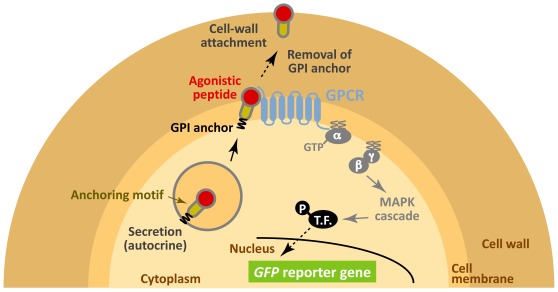
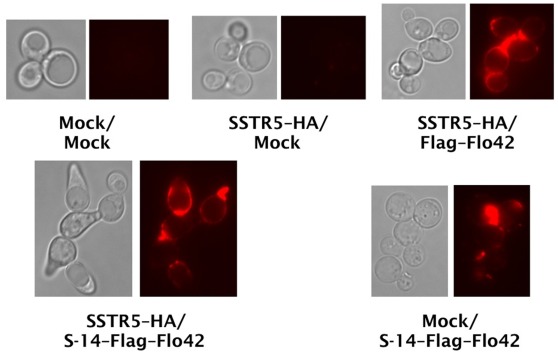
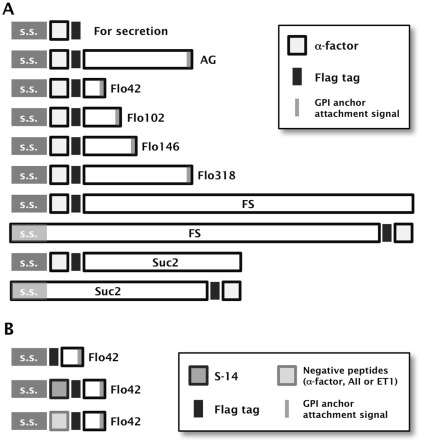
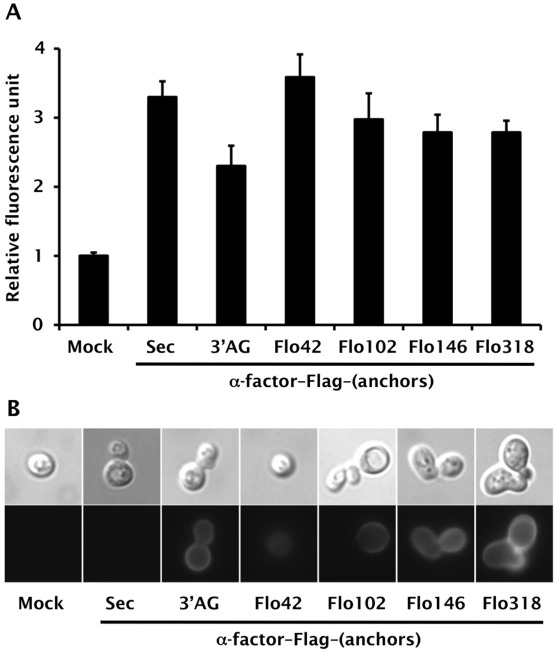
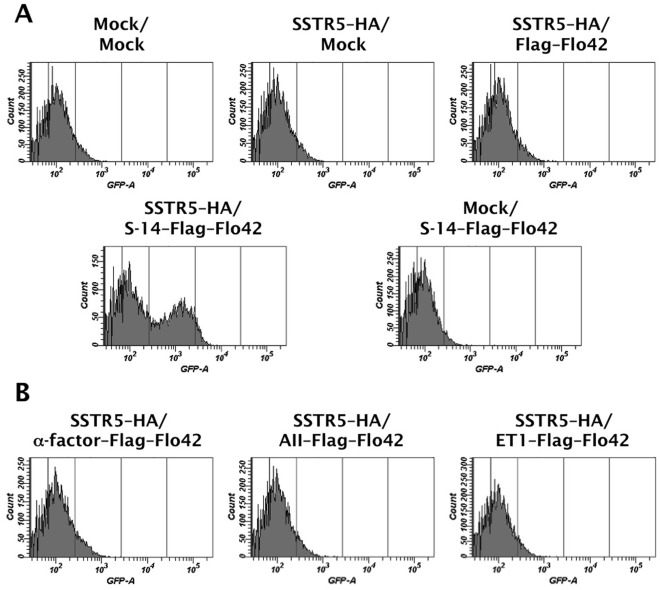
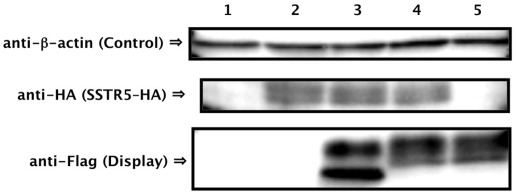
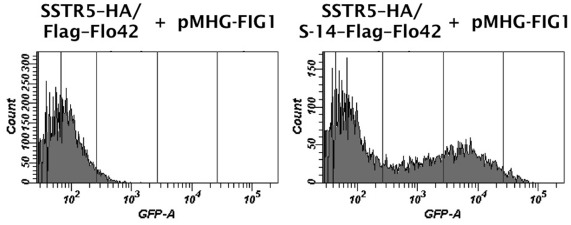
G-protein-coupled receptors (GPCRs) regulate a wide variety of physiological processes and are important pharmaceutical targets for drug discovery. Here, we describe a unique concept based on yeast cell-surface display technology to selectively track eligible peptides with agonistic activity for human GPCRs (Cell Wall Trapping of Autocrine Peptides (CWTrAP) strategy). In our strategy, individual recombinant yeast cells are able to report autocrine-positive activity for human GPCRs by expressing a candidate peptide fused to an anchoring motif. Following expression and activation, yeast cells trap autocrine peptides onto their cell walls. Because captured peptides are incapable of diffusion, they have no impact on surrounding yeast cells that express the target human GPCR and non-signaling peptides. Therefore, individual yeast cells can assemble the autonomous signaling complex and allow single-cell screening of a yeast population. Our strategy may be applied to identify eligible peptides with agonistic activity for target human GPCRs.
G 蛋白偶联受体(GPCRs)调节多种生理过程,是药物发现中重要的药物靶点。在这里,我们描述了一种基于酵母细胞表面展示技术的独特概念,用于选择性地跟踪具有人类 GPCR 激动活性的合格肽(自分泌肽的细胞壁捕获(CWTrAP)策略)。在我们的策略中,单个重组酵母细胞能够通过表达融合到锚定基序的候选肽来报告人 GPCR 的自分泌阳性活性。表达和激活后,酵母细胞将自分泌肽捕获到细胞壁上。由于捕获的肽不能扩散,它们对表达靶标人类 GPCR 和非信号肽的周围酵母细胞没有影响。因此,单个酵母细胞可以组装自主信号复合物,并允许对酵母群体进行单细胞筛选。我们的策略可用于鉴定具有靶标人类 GPCR 激动活性的合格肽。