Department of Biology, Centre for Applied Synthetic Biology, Concordia University, Montréal, QC, H4B1R6, Canada.
Department of Molecular Biosciences, Center for Systems and Synthetic Biology, The University of Texas at Austin, Austin, TX, 78712, USA.
Nat Commun. 2022 May 24;13(1):2882. doi: 10.1038/s41467-022-30570-7.
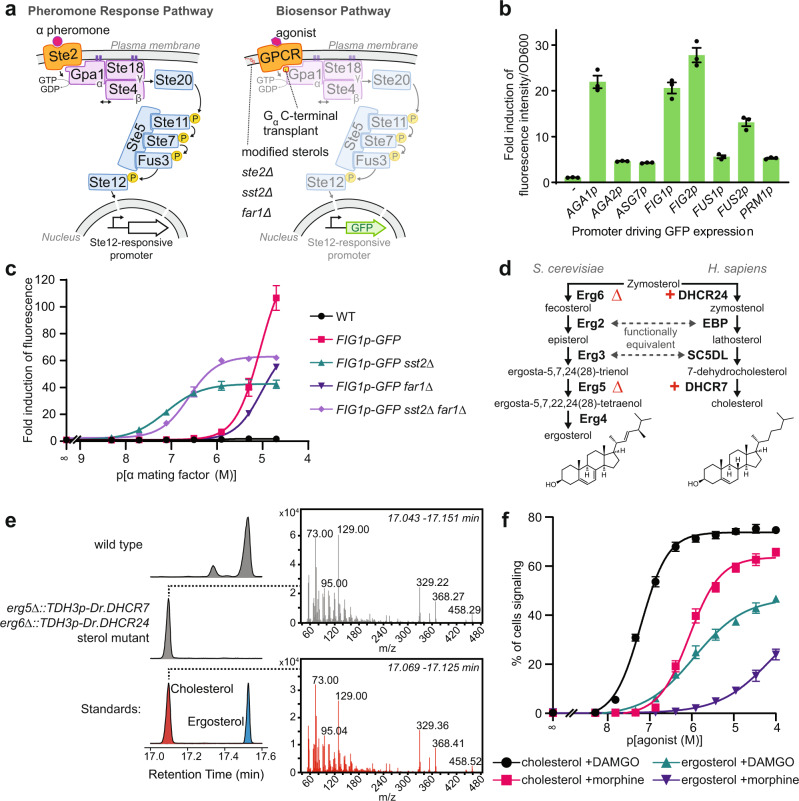
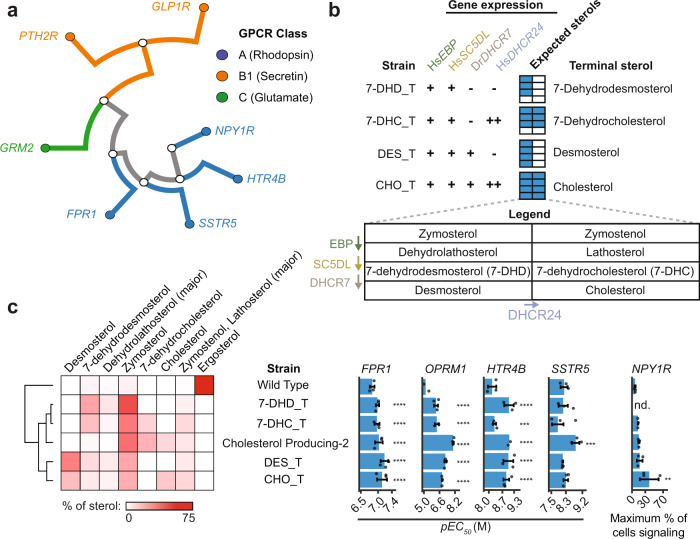
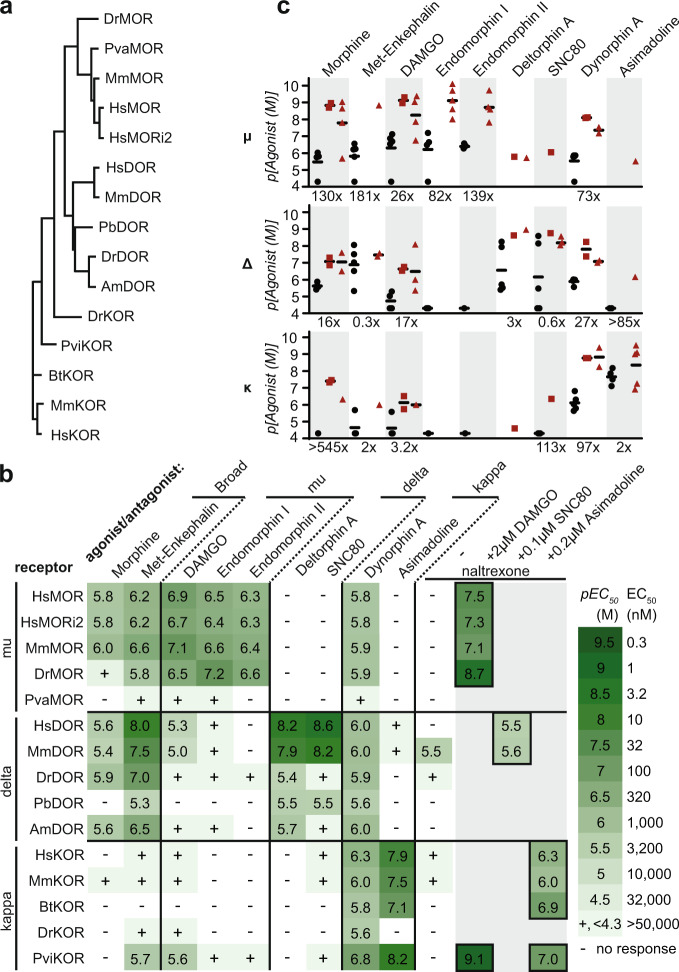
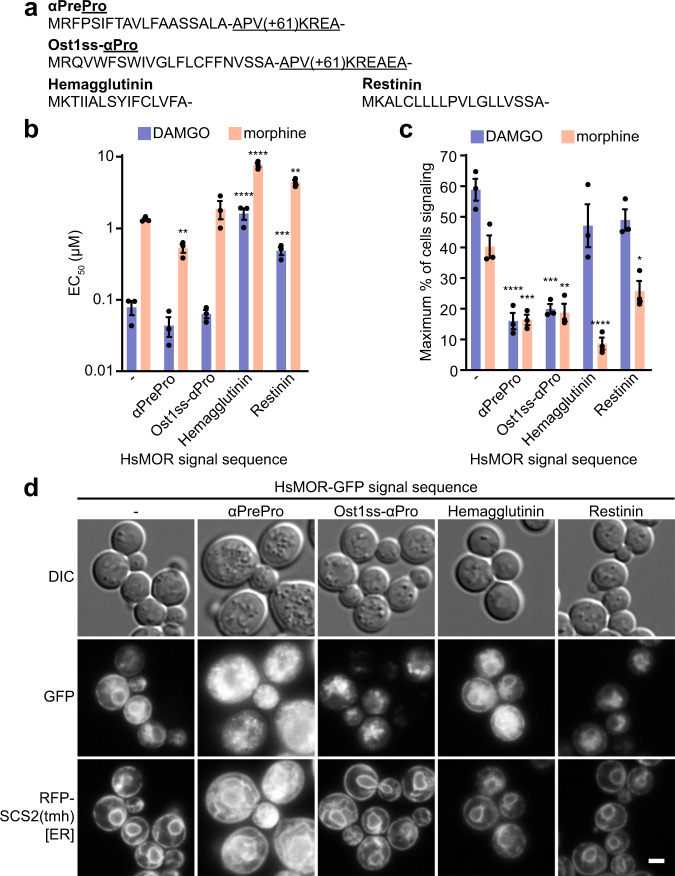
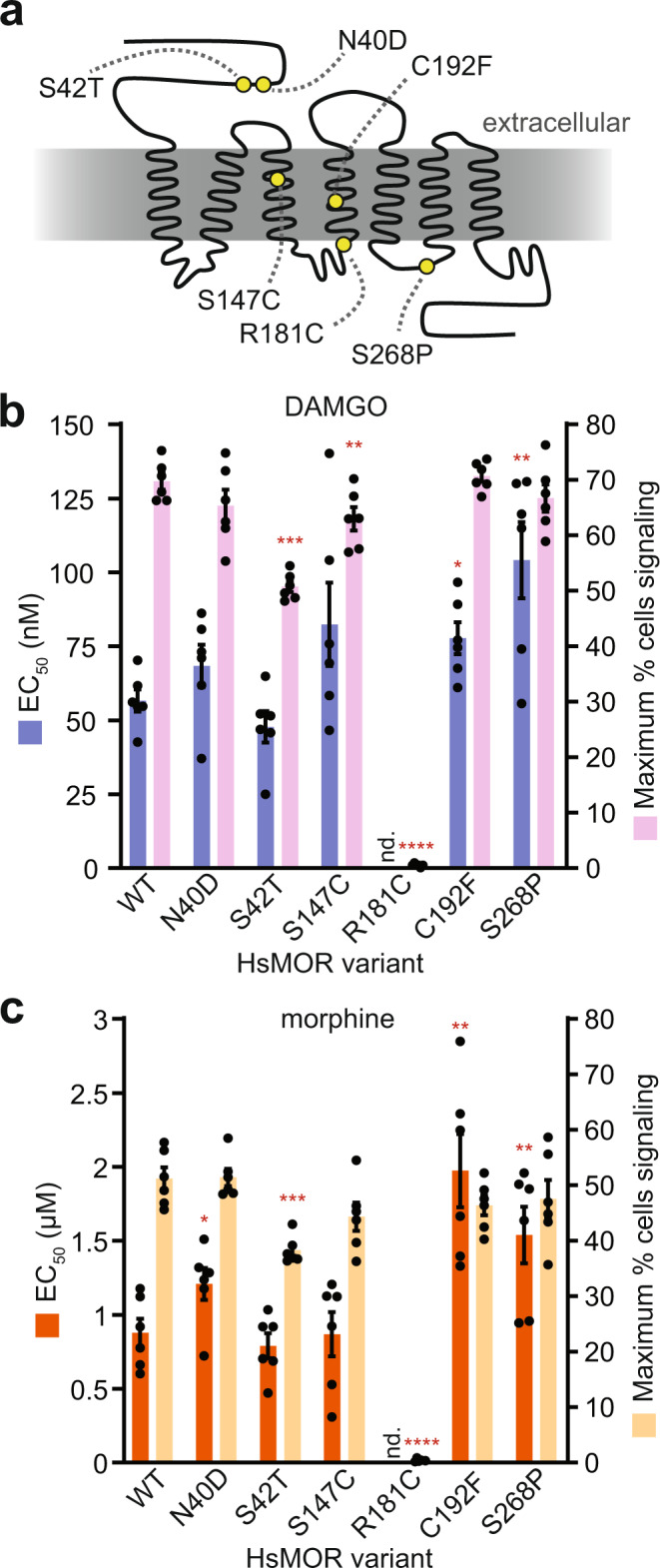
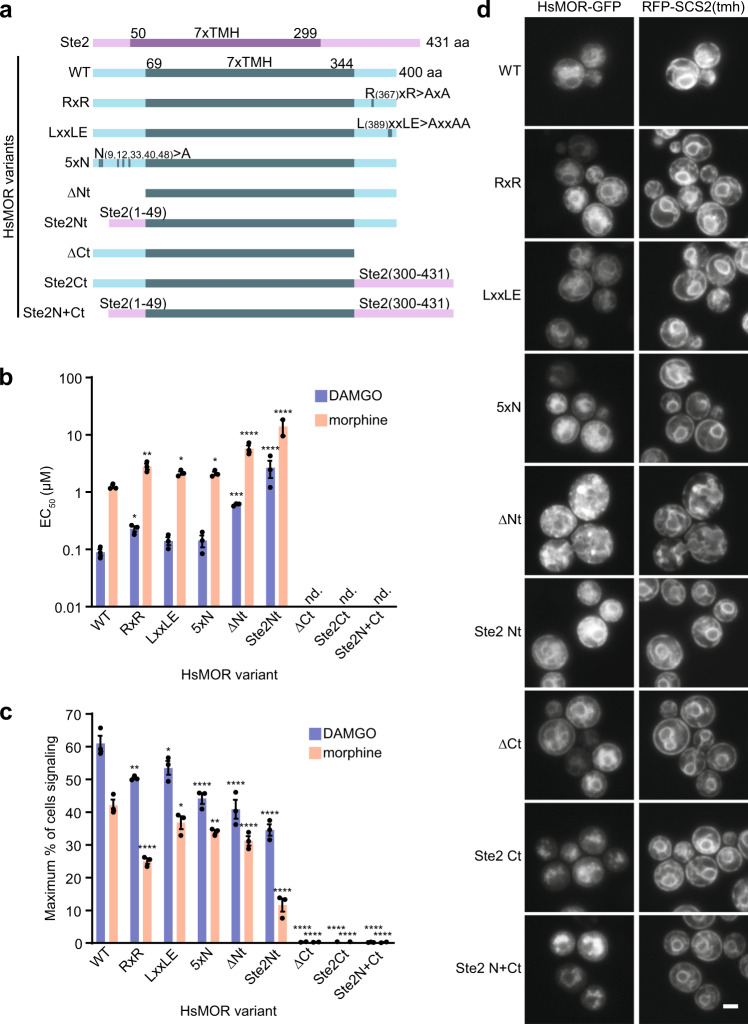
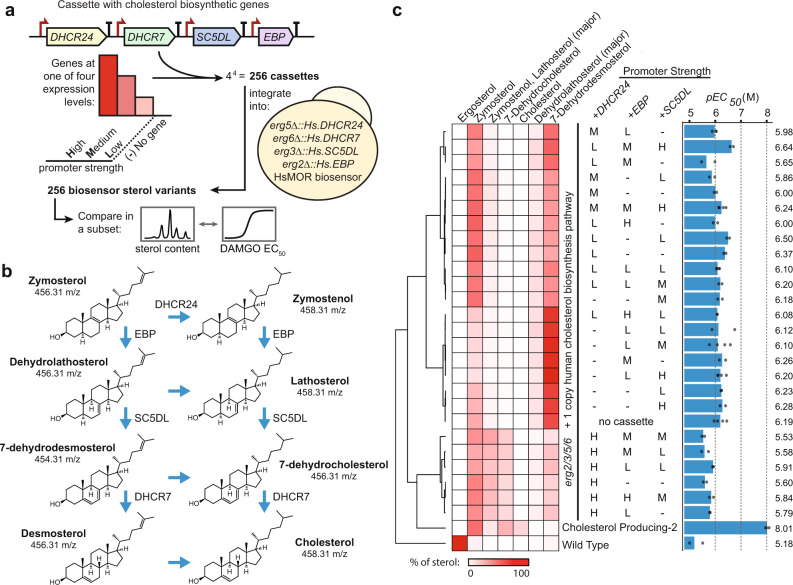
The yeast Saccharomyces cerevisiae is powerful for studying human G protein-coupled receptors as they can be coupled to its mating pathway. However, some receptors, including the mu opioid receptor, are non-functional, which may be due to the presence of the fungal sterol ergosterol instead of cholesterol. Here we engineer yeast to produce cholesterol and introduce diverse mu, delta, and kappa opioid receptors to create sensitive opioid biosensors that recapitulate agonist binding profiles and antagonist inhibition. Additionally, human mu opioid receptor variants, including those with clinical relevance, largely display expected phenotypes. By testing mu opioid receptor-based biosensors with systematically adjusted cholesterol biosynthetic intermediates, we relate sterol profiles to biosensor sensitivity. Finally, we apply sterol-modified backgrounds to other human receptors revealing sterol influence in SSTR5, 5-HTR4, FPR1, and NPY1R signaling. This work provides a platform for generating human G protein-coupled receptor-based biosensors, facilitating receptor deorphanization and high-throughput screening of receptors and effectors.
酿酒酵母是研究人类 G 蛋白偶联受体的有力工具,因为它们可以与酵母的交配途径偶联。然而,一些受体,包括μ阿片受体,是非功能性的,这可能是由于真菌固醇麦角固醇的存在而不是胆固醇。在这里,我们通过工程酵母来产生胆固醇,并引入不同的μ、δ和κ阿片受体,以创建敏感的阿片生物传感器,重现激动剂结合谱和拮抗剂抑制。此外,人类μ阿片受体变体,包括具有临床相关性的变体,在很大程度上表现出预期的表型。通过用系统调整的胆固醇生物合成中间体测试基于μ阿片受体的生物传感器,我们将甾醇谱与生物传感器的敏感性联系起来。最后,我们将固醇修饰的背景应用于其他人类受体,揭示固醇对 SSTR5、5-HTR4、FPR1 和 NPY1R 信号的影响。这项工作为生成基于人类 G 蛋白偶联受体的生物传感器提供了一个平台,有助于受体的去孤儿化和受体及效应物的高通量筛选。