Department of Biology, Friedrich-Alexander-University Erlangen-Nuremberg Erlangen, Germany.
Front Plant Sci. 2011 Aug 27;2:42. doi: 10.3389/fpls.2011.00042. eCollection 2011.
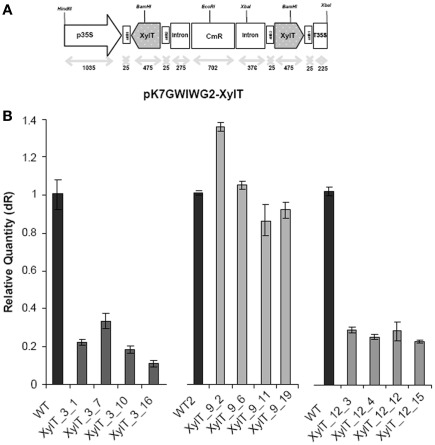
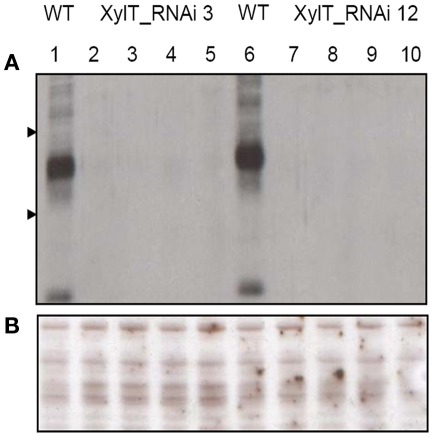
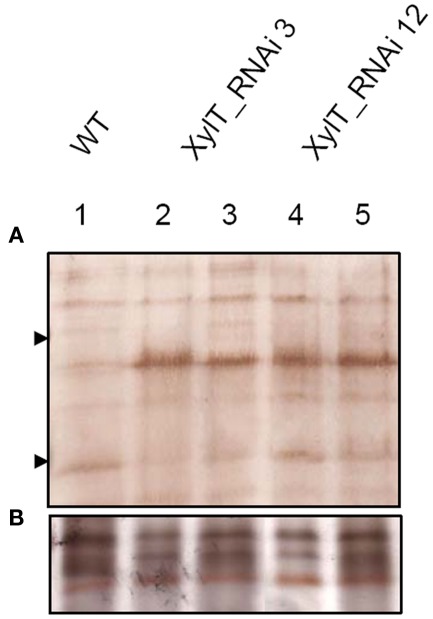
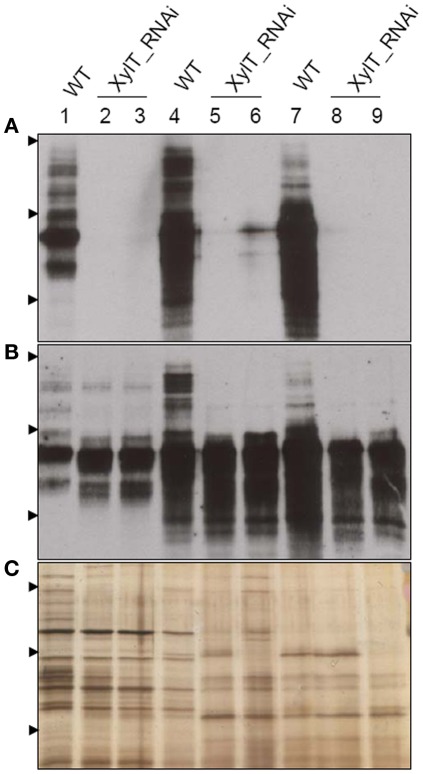
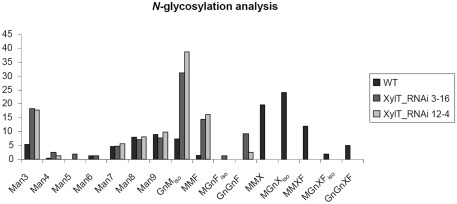
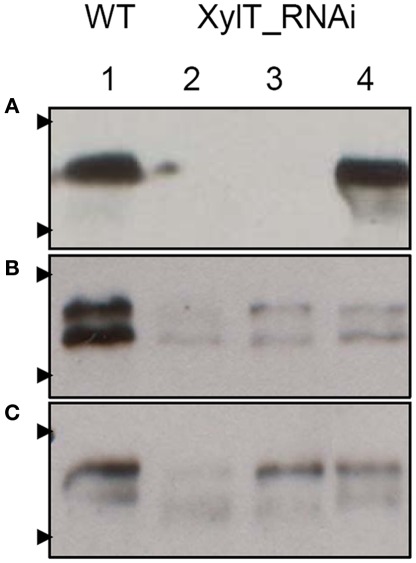
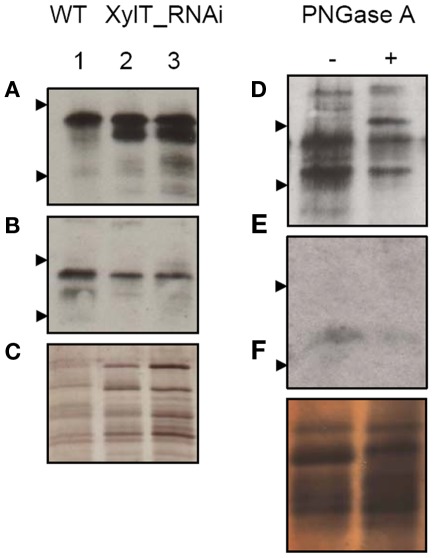
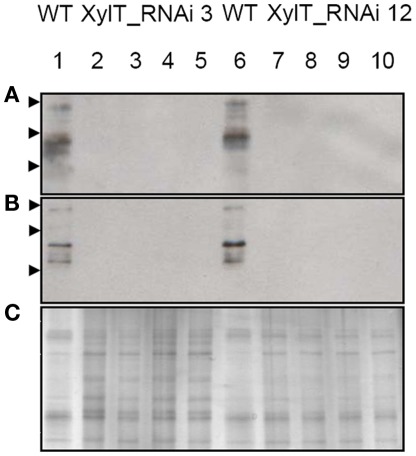
Complex plant N-glycans containing β1,2-xylose and core α1,3-fucose are regarded as the major class of the so-called "carbohydrate cross-reactive determinants" reactive with IgE antibodies in sera of many allergic patients, but their clinical relevance is still under debate. Plant glycosyltransferases, β1,2-xylosyltransferase (XylT), and core α1,3-fucosyltransferase (FucT) are responsible for the transfer of β1,2-linked xylose and core α1,3-linked fucose residues to N-glycans of glycoproteins, respectively. To test the clinical relevance of β1,2-xylose-containing epitopes, expression of the tomato β1,2-xylosyltransferase was down-regulated by RNA interference (RNAi) in transgenic plants. Fruits harvested from these transgenic plants were analyzed for accumulation of XylT mRNA, abundance of β1,2-xylose epitopes and their allergenic potential. Based on quantitative real-time PCR analysis XylT mRNA levels were reduced up to 10-fold in independent transgenic lines as compared to untransformed control, whereas no xylosylated N-glycans could be revealed by MS analysis. Immunoblotting using anti-xylose-specific IgG antibodies revealed a strong reduction of β1,2-xylose-containing epitopes. Incubating protein extracts from untransformed controls and XylT_RNAi plants with sera from tomato allergic patients showed a patient-specific reduction in IgE-binding, indicating a reduced allergenic potential of XylT_RNAi tomato fruits, in vitro. To elucidate the clinical relevance of β1,2-xylose-containing complex N-glycans skin prick tests were performed demonstrating a reduced responsiveness of tomato allergic patients, in vivo. This study provides strong evidence for the clinical relevance of β1,2-xylose-containing epitopes in vivo.
含有β1,2-木糖和核心α1,3-岩藻糖的复杂植物 N-聚糖被认为是所谓的“碳水化合物交叉反应决定簇”的主要类别,这些决定簇与许多过敏患者血清中的 IgE 抗体反应,但它们的临床相关性仍存在争议。植物糖基转移酶,β1,2-木糖基转移酶(XylT)和核心α1,3-岩藻糖基转移酶(FucT)分别负责将β1,2-连接的木糖和核心α1,3-连接的岩藻糖残基转移到糖蛋白的 N-聚糖上。为了测试含β1,2-木糖表位的临床相关性,通过 RNA 干扰(RNAi)下调番茄β1,2-木糖基转移酶在转基因植物中的表达。从这些转基因植物中收获的果实用于分析 XylT mRNA 的积累、β1,2-木糖表位的丰度及其变应原性。基于定量实时 PCR 分析,与未转化的对照相比,在独立的转基因株系中,XylT mRNA 的水平降低了高达 10 倍,而 MS 分析未揭示出任何带有木糖的 N-聚糖。使用抗木糖特异性 IgG 抗体的免疫印迹显示β1,2-木糖含有表位的强烈减少。用来自番茄过敏患者的血清孵育未转化对照和 XylT_RNAi 植物的蛋白质提取物显示 IgE 结合的患者特异性减少,表明 XylT_RNAi 番茄果实的变应原性降低,体外。为了阐明含β1,2-木糖的复杂 N-聚糖的临床相关性,进行了皮肤点刺试验,结果表明番茄过敏患者的反应性降低,体内。这项研究为体内含β1,2-木糖表位的临床相关性提供了有力证据。