Energy Biosciences Institute, University of California Berkeley, CA, USA.
Front Plant Sci. 2012 May 7;3:85. doi: 10.3389/fpls.2012.00085. eCollection 2012.
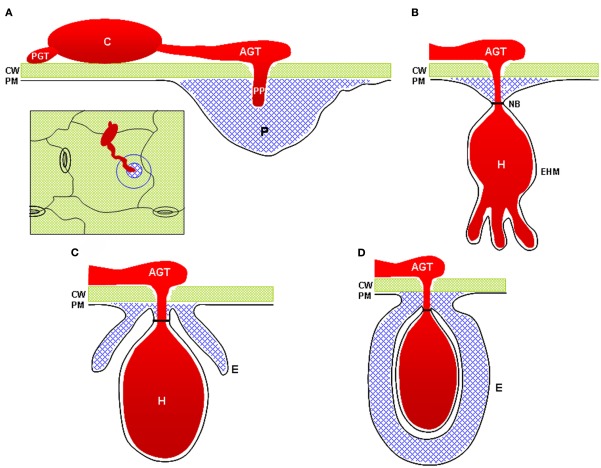
Prospective plant pathogens must overcome the physical barrier presented by the plant cell wall. In addition to being a preformed, passive barrier limiting access of pathogens to plant cells, the cell wall is actively remodeled and reinforced specifically at discrete sites of interaction with potentially pathogenic microbes. Active reinforcement of the cell wall through the deposition of cell wall appositions, referred to as papillae, is an early response to perception of numerous categories of pathogens including fungi and bacteria. Rapid deposition of papillae is generally correlated with resistance to fungal pathogens that attempt to penetrate plant cell walls for the establishment of feeding structures. Despite the ubiquity and apparent importance of this early defense response, relatively little is known about the underlying molecular mechanisms and cellular processes involved in the targeting and assembly of papillae. This review summarizes recent advances in our understanding of cell wall-associated defenses induced by pathogen perception as well as the impact of changes in cell wall polymers on interactions with pathogens and highlights significant unanswered questions driving future research in the area.
潜在的植物病原体必须克服植物细胞壁带来的物理障碍。细胞壁不仅是一个预先形成的、被动的屏障,限制病原体进入植物细胞,而且还会在与潜在致病微生物相互作用的离散部位主动重塑和加强。通过细胞壁附加物(称为乳突)的沉积来主动加强细胞壁,这是对包括真菌和细菌在内的众多类病原体感知的早期反应。乳突的快速沉积通常与对试图穿透植物细胞壁以建立取食结构的真菌病原体的抗性相关。尽管这种早期防御反应普遍存在且显然很重要,但对于涉及乳突靶向和组装的潜在分子机制和细胞过程,我们知之甚少。这篇综述总结了我们对病原体感知诱导的细胞壁相关防御的理解的最新进展,以及细胞壁聚合物变化对与病原体相互作用的影响,并强调了推动该领域未来研究的重要未解决问题。