Aberystwyth University, Institute of Biological, Environmental and Rural Sciences, Aberystwyth, Wales, SY23 3DA, UK.
J Exp Bot. 2012 Jul;63(12):4375-87. doi: 10.1093/jxb/ers116. Epub 2012 May 28.
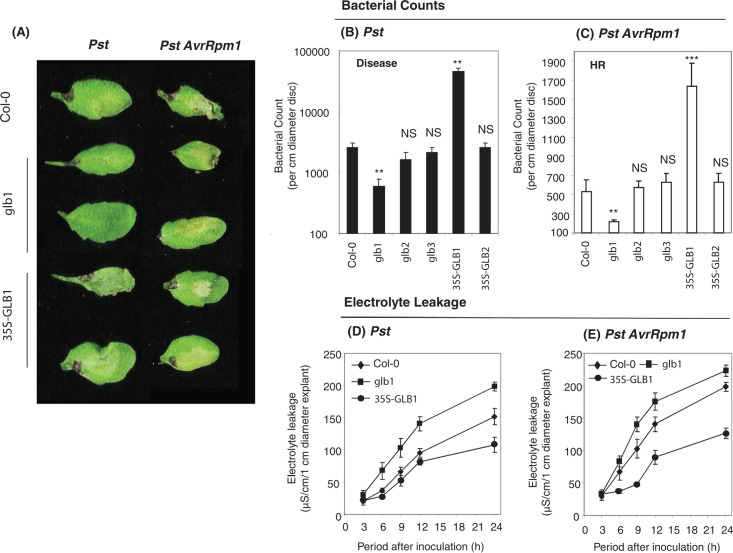
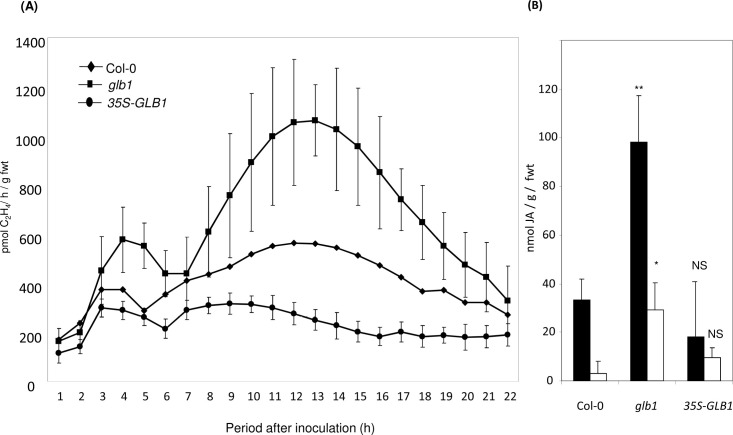
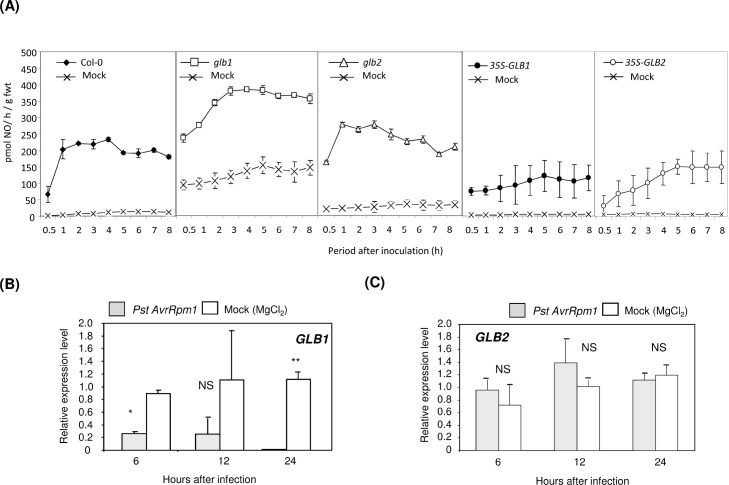
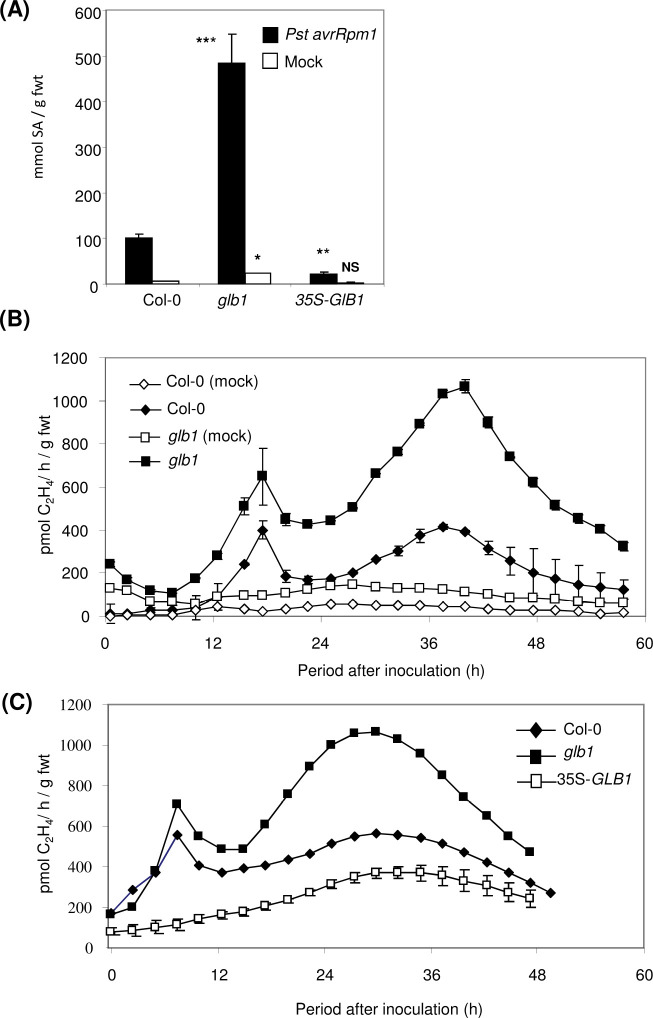
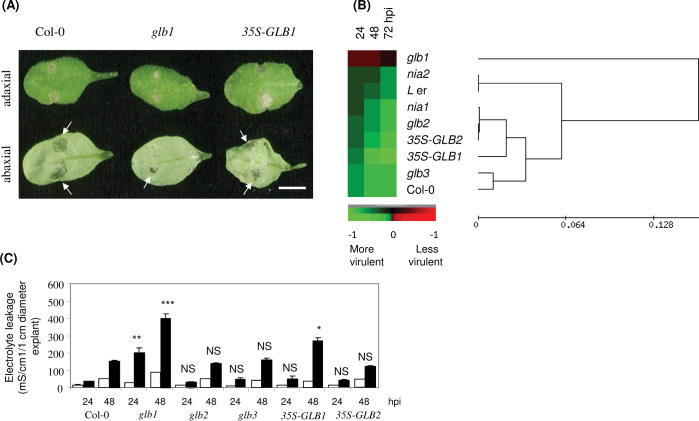
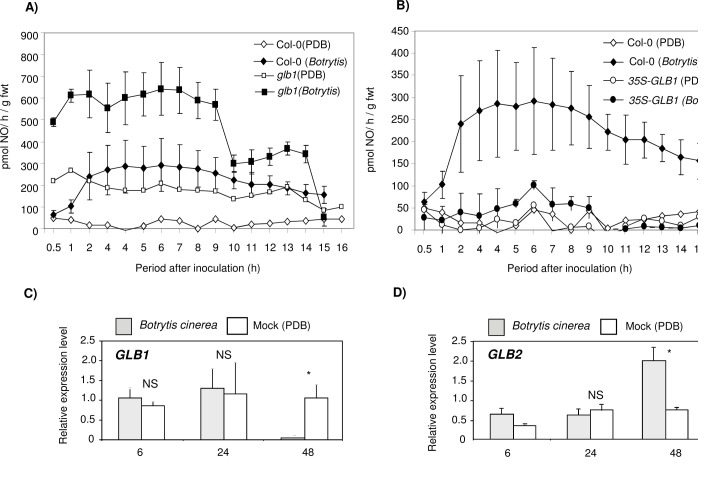
Nitric oxide (NO) plays a role in defence against hemibiotrophic pathogens mediated by salicylate (SA) and also necrotrophic pathogens influenced by jasmonate/ethylene (JA/Et). This study examined how NO-oxidizing haemoglobins (Hb) encoded by GLB1, GLB2, and GLB3 in Arabidopsis could influence both defence pathways. The impact of Hb on responses to the hemibiotrophic Pseudomonas syringae pathovar tomato (Pst) AvrRpm1 and the necrotrophic Botrytis cinerea were investigated using glb1, glb2, and glb3 mutant lines and also CaMV 35S GLB1 and GLB2 overexpression lines. In glb1, but not glb2 and glb3, increased resistance was observed to both pathogens but was compromised in the 35S-GLB1. A quantum cascade laser-based sensor measured elevated NO production in glb1 infected with Pst AvrRpm1 and B. cinerea, which was reduced in 35S-GLB1 compared to Col-0. SA accumulation was increased in glb1 and reduced in 35S-GLB1 compared to controls following attack by Pst AvrRpm1. Similarly, JA and Et levels were increased in glb1 but decreased in 35S-GLB1 in response to attack by B. cinerea. Quantitative PCR assays indicated reduced GLB1 expression during challenge with either pathogen, thus this may elevate NO concentration and promote a wide-ranging defence against pathogens.
一氧化氮(NO)在水杨酸(SA)介导的半生物病原体防御和茉莉酸/乙烯(JA/Et)影响的坏死病原体防御中发挥作用。本研究探讨了拟南芥 GLB1、GLB2 和 GLB3 编码的 NO 氧化血红蛋白(Hb)如何影响这两种防御途径。使用 glb1、glb2 和 glb3 突变体系以及 CaMV 35S GLB1 和 GLB2 过表达系,研究了 Hb 对半生物假单胞菌番茄亚种(Pst)AvrRpm1 和坏死病原菌 Botrytis cinerea 的响应的影响。在 glb1 中,但不在 glb2 和 glb3 中,观察到对两种病原体的抗性增加,但在 35S-GLB1 中受到损害。基于量子级联激光的传感器测量了 glb1 感染 Pst AvrRpm1 和 B. cinerea 时 NO 产量的升高,而与 Col-0 相比,35S-GLB1 中的 NO 产量降低。与对照相比,glb1 中 SA 积累增加,而 35S-GLB1 中 SA 积累减少,这是由于 glb1 受到 Pst AvrRpm1 的攻击。同样,glb1 中 JA 和 Et 水平升高,而 35S-GLB1 中 JA 和 Et 水平降低,这是由于 glb1 受到 B. cinerea 的攻击。定量 PCR 检测表明,在受到任何一种病原体的攻击时,GLB1 的表达都会减少,因此这可能会提高 NO 浓度并促进对病原体的广泛防御。