Dipartimento di Biotecnologie, Università degli Studi di Siena, Via Fiorentina 1, 53100 Siena, Italy.
Histochem Cell Biol. 2012 Sep;138(3):419-33. doi: 10.1007/s00418-012-0965-9. Epub 2012 May 29.
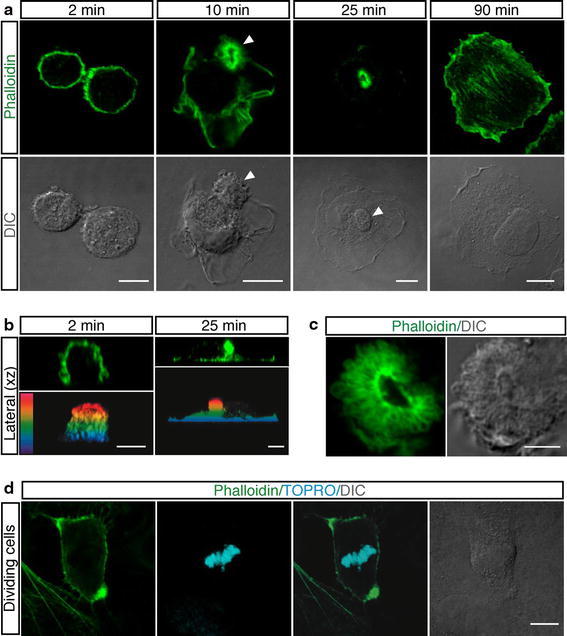
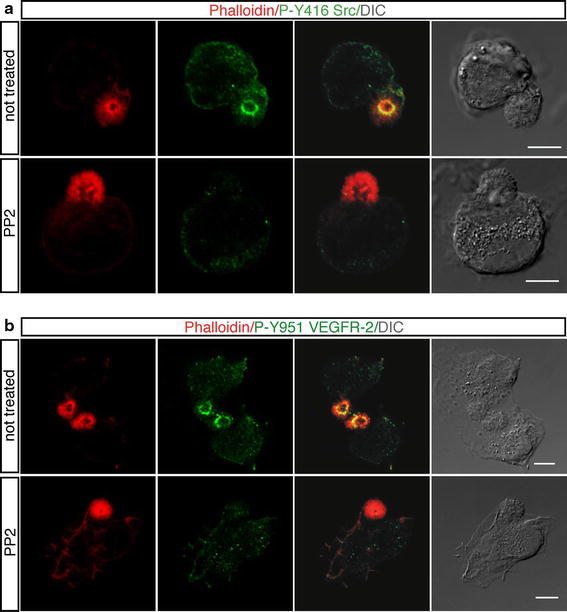
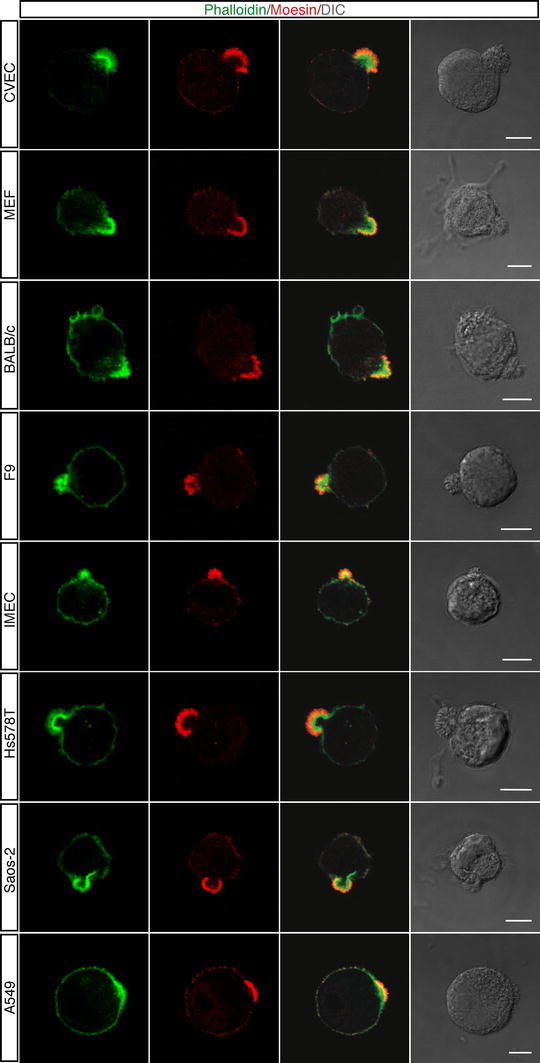
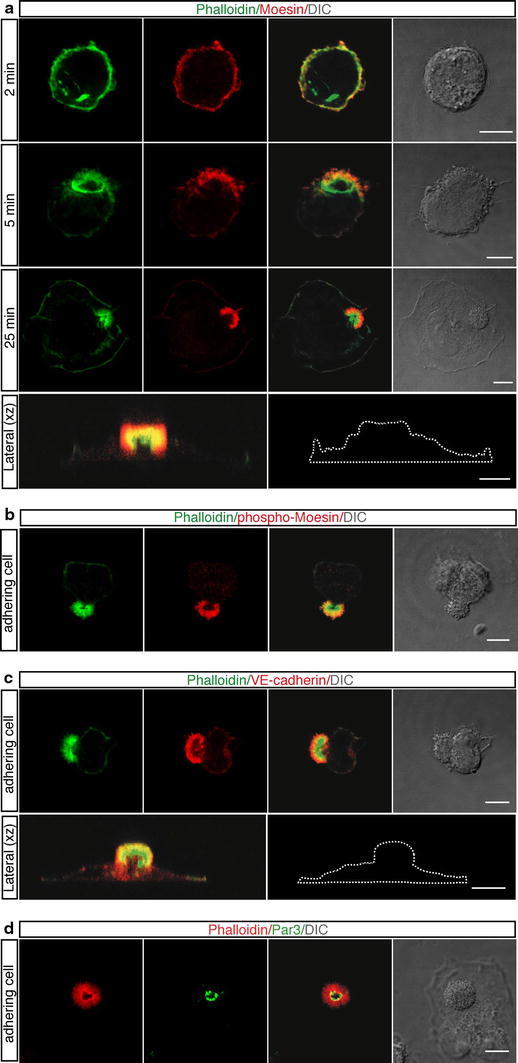
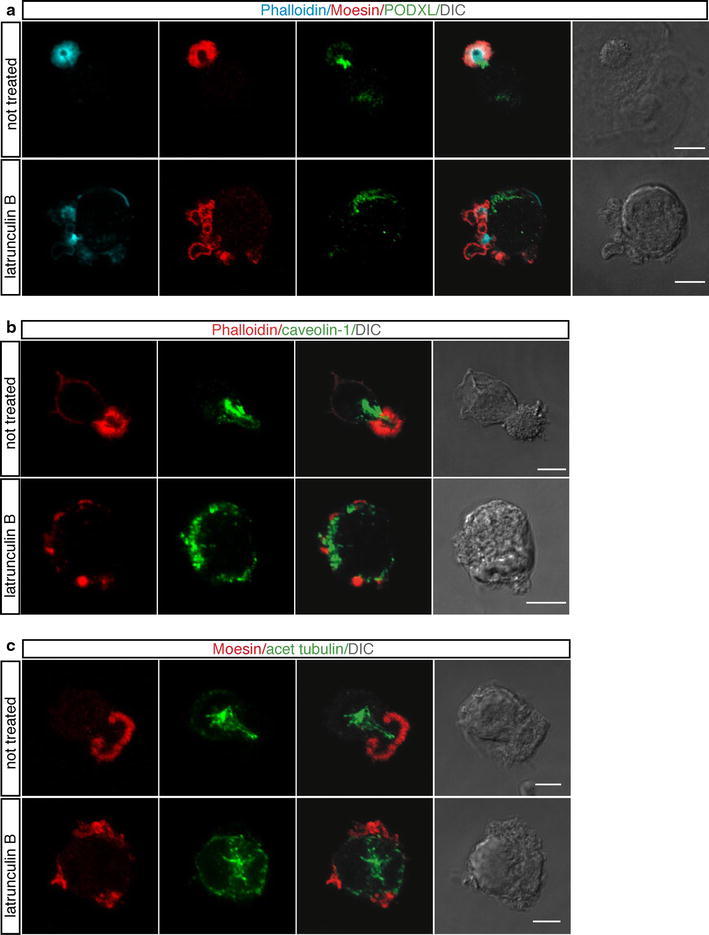
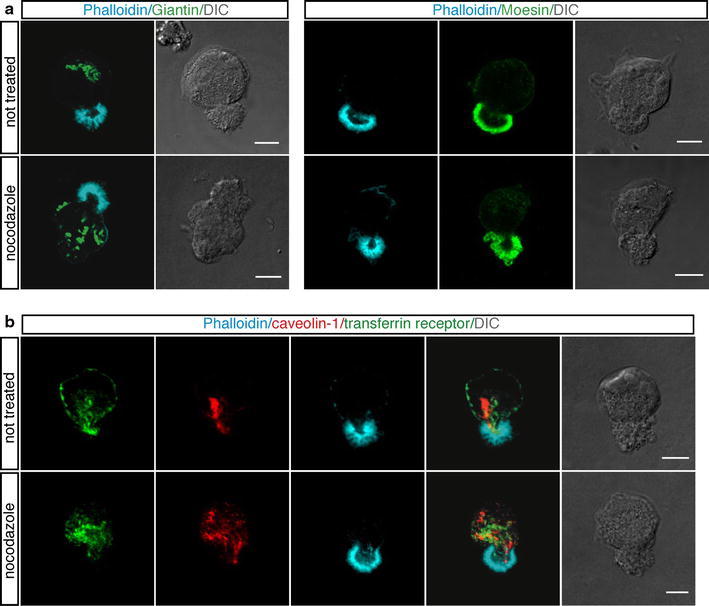
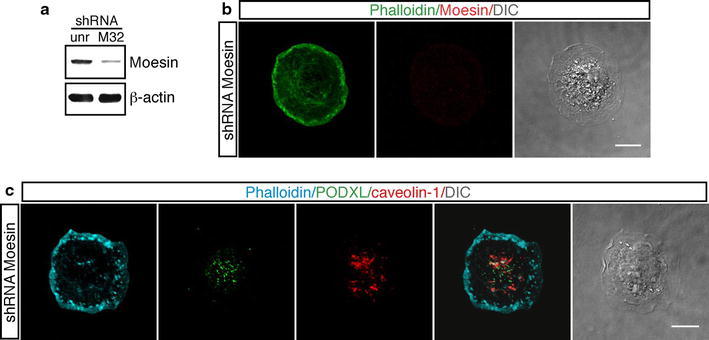
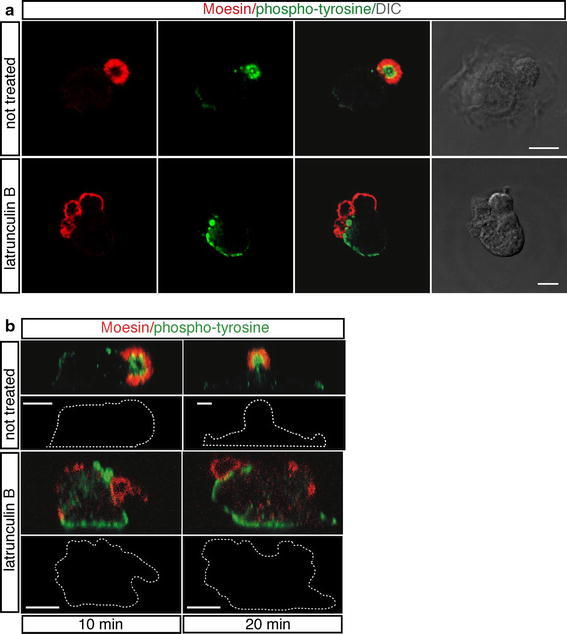
One of the most important questions in cell biology concerns how cells reorganize after sensing polarity cues. In the present study, we describe the formation of an actin-rich domain on the apical surface of human primary endothelial cells adhering to the substrate and investigate its role in cell polarity. We used confocal immunofluorescence procedures to follow the redistribution of proteins required for endothelial cell polarity during spreading initiation. Activated Moesin, vascular endothelial cadherin and partitioning defective 3 were found to be localized in the apical domain, whereas podocalyxin and caveolin-1 were distributed along the microtubule cytoskeleton axis, oriented from the centrosome to the cortical actin-rich domain. Moreover, activated signaling molecules were localized in the core of the apical domain in tight association with filamentous actin. During cell attachment, loss of the apical domain by Moesin silencing or drug disruption of the actin cytoskeleton caused irregular cell spreading and mislocalization of polarity markers. In conclusion, our results suggest that the apical domain that forms during the spreading process is a structural organizer of cell polarity by regulating trafficking and activation of signaling proteins.
细胞生物学中最重要的问题之一是细胞在感知极性线索后如何重新组织。在本研究中,我们描述了人原代内皮细胞在附着于底物时在顶端表面形成富含肌动蛋白的域,并研究了其在细胞极性中的作用。我们使用共聚焦免疫荧光程序来跟踪在起始扩展过程中内皮细胞极性所需的蛋白质的重分布。发现活化的 Moesin、血管内皮钙黏蛋白和分配缺陷 3 定位于顶端域,而足细胞蛋白和窖蛋白 1 沿微管细胞骨架轴分布,从中心体到富含肌动蛋白的皮质域定向。此外,活化的信号分子与丝状肌动蛋白紧密结合定位于顶端域的核心。在细胞附着过程中,通过 Moesin 沉默或药物破坏肌动蛋白细胞骨架损失顶端域导致不规则的细胞扩展和极性标记物的定位错误。总之,我们的结果表明,在扩展过程中形成的顶端域通过调节信号蛋白的运输和激活来充当细胞极性的结构组织者。