Faculty of Life Sciences, University of Manchester Manchester, UK.
Front Plant Sci. 2012 Jan 13;3:1. doi: 10.3389/fpls.2012.00001. eCollection 2012.
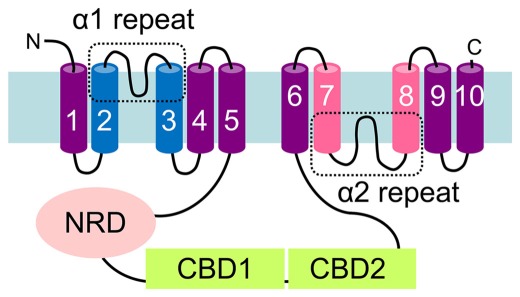
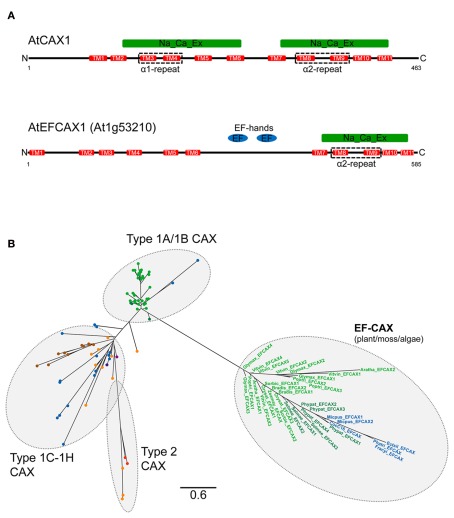
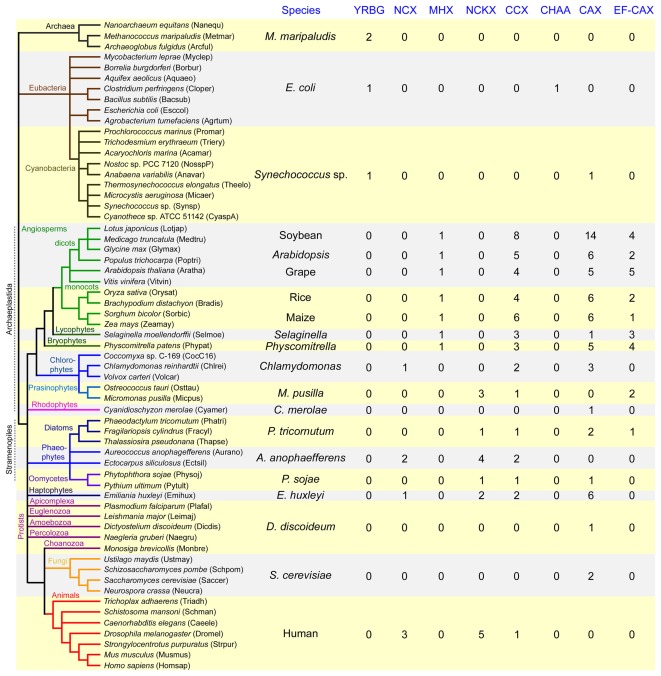
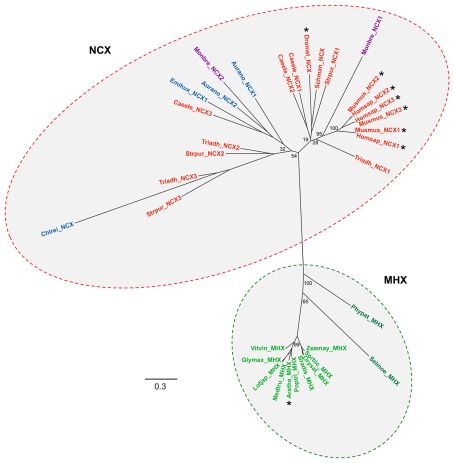
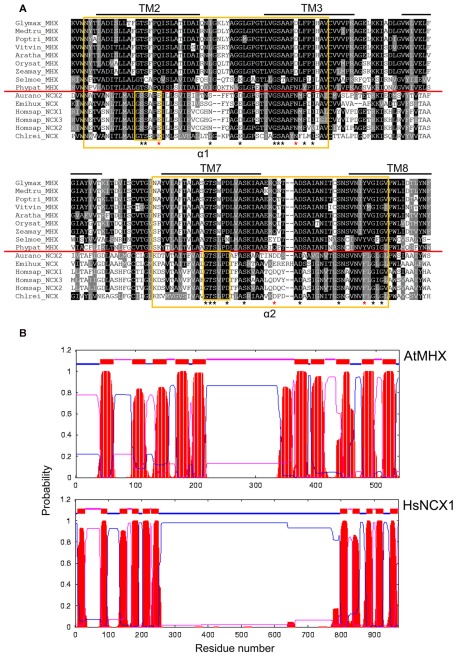
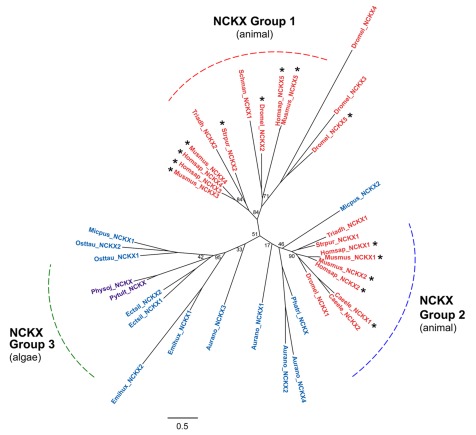
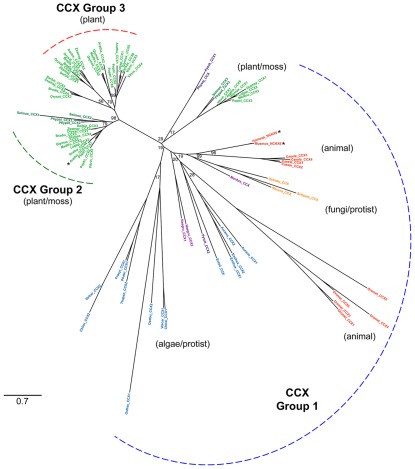
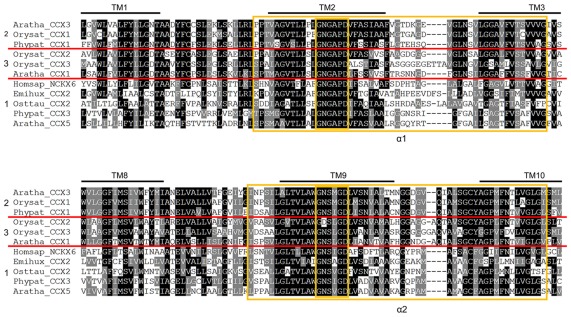
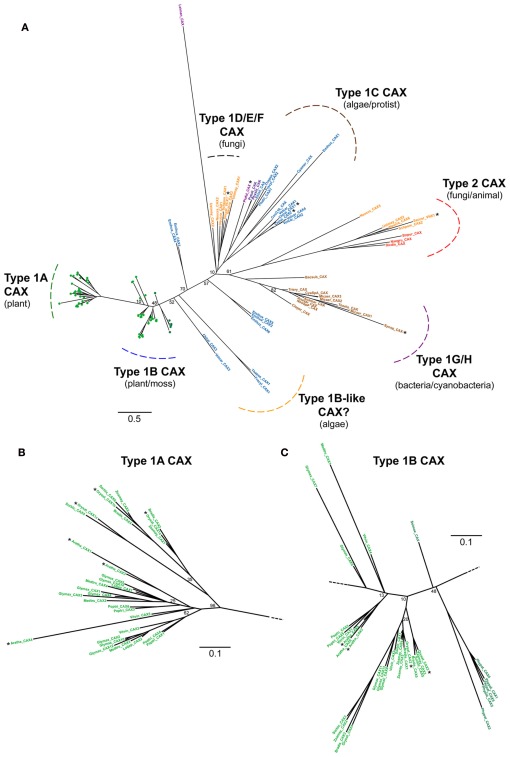
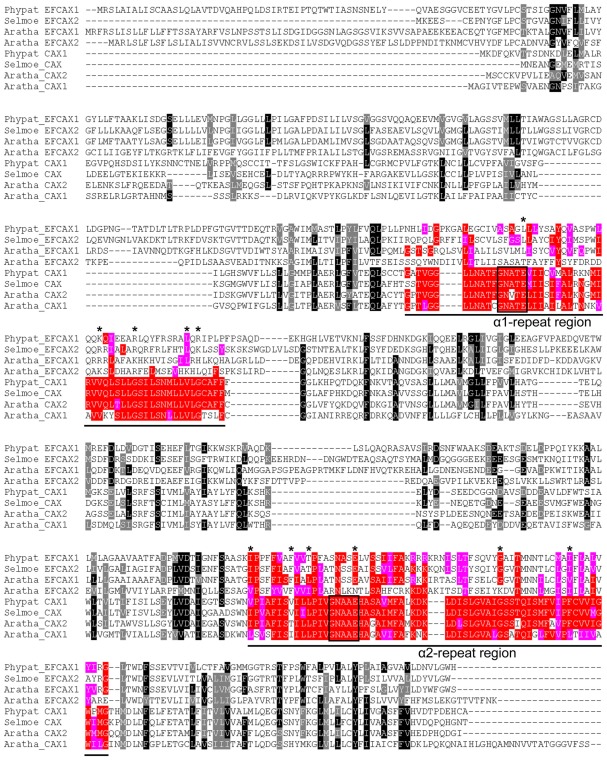
Cation transport is a critical process in all organisms and is essential for mineral nutrition, ion stress tolerance, and signal transduction. Transporters that are members of the Ca(2+)/cation antiporter (CaCA) superfamily are involved in the transport of Ca(2+) and/or other cations using the counter exchange of another ion such as H(+) or Na(+). The CaCA superfamily has been previously divided into five transporter families: the YRBG, Na(+)/Ca(2+) exchanger (NCX), Na(+)/Ca(2+), K(+) exchanger (NCKX), H(+)/cation exchanger (CAX), and cation/Ca(2+) exchanger (CCX) families, which include the well-characterized NCX and CAX transporters. To examine the evolution of CaCA transporters within higher plants and the green plant lineage, CaCA genes were identified from the genomes of sequenced flowering plants, a bryophyte, lycophyte, and freshwater and marine algae, and compared with those from non-plant species. We found evidence of the expansion and increased diversity of flowering plant genes within the CAX and CCX families. Genes related to the NCX family are present in land plant though they encode distinct MHX homologs which probably have an altered transport function. In contrast, the NCX and NCKX genes which are absent in land plants have been retained in many species of algae, especially the marine algae, indicating that these organisms may share "animal-like" characteristics of Ca(2+) homeostasis and signaling. A group of genes encoding novel CAX-like proteins containing an EF-hand domain were identified from plants and selected algae but appeared to be lacking in any other species. Lack of functional data for most of the CaCA proteins make it impossible to reliably predict substrate specificity and function for many of the groups or individual proteins. The abundance and diversity of CaCA genes throughout all branches of life indicates the importance of this class of cation transporter, and that many transporters with novel functions are waiting to be discovered.
阳离子转运是所有生物体中的一个关键过程,对于矿物质营养、离子胁迫耐受和信号转导至关重要。属于 Ca(2+) /阳离子反向转运体 (CaCA) 超家族的转运体参与使用另一种离子(如 H(+) 或 Na(+) )的反向交换来转运 Ca(2+) 和/或其他阳离子。CaCA 超家族此前被分为五个转运体家族:YRBG、Na(+) / Ca(2+) 交换体 (NCX)、Na(+) / Ca(2+) 、K(+) 交换体 (NCKX)、H(+) /阳离子交换体 (CAX) 和阳离子/ Ca(2+) 交换体 (CCX) 家族,其中包括特征明确的 NCX 和 CAX 转运体。为了研究 CaCA 转运体在高等植物和绿色植物谱系中的进化,我们从已测序的开花植物、苔藓植物、石松植物、淡水和海洋藻类的基因组中鉴定了 CaCA 基因,并与非植物物种的基因进行了比较。我们发现 CAX 和 CCX 家族中开花植物基因的扩张和多样性增加。尽管陆地植物中的 NCX 家族基因编码的是不同的 MHX 同源物,但它们可能具有改变的转运功能。相反,陆地植物中不存在的 NCX 和 NCKX 基因在许多藻类物种中保留下来,特别是海洋藻类,这表明这些生物可能具有“动物样”的 Ca(2+) 稳态和信号特征。我们从植物和选定的藻类中鉴定出一组编码含有 EF 手结构域的新型 CAX 样蛋白的基因,但这些基因似乎在其他物种中缺失。由于大多数 CaCA 蛋白缺乏功能数据,因此无法可靠地预测许多组或单个蛋白的底物特异性和功能。CaCA 基因在所有生命分支中的丰富度和多样性表明了这类阳离子转运体的重要性,并且许多具有新功能的转运体有待发现。