Mishra Pallavi, Samanta Luna
Department of Zoology, Utkal University, Odisha, Bhubaneswar 751004, India.
ScientificWorldJournal. 2012;2012:741861. doi: 10.1100/2012/741861. Epub 2012 May 2.
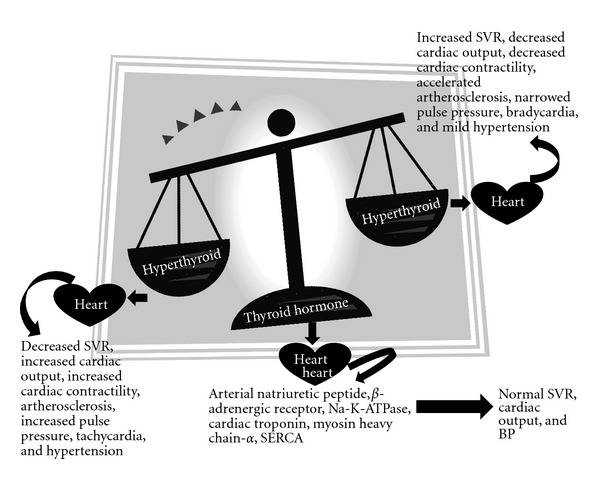
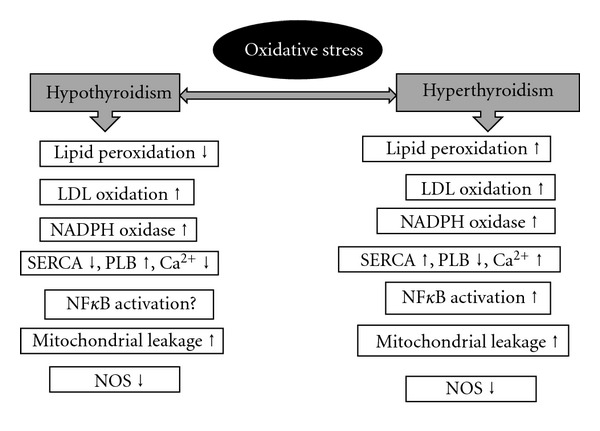
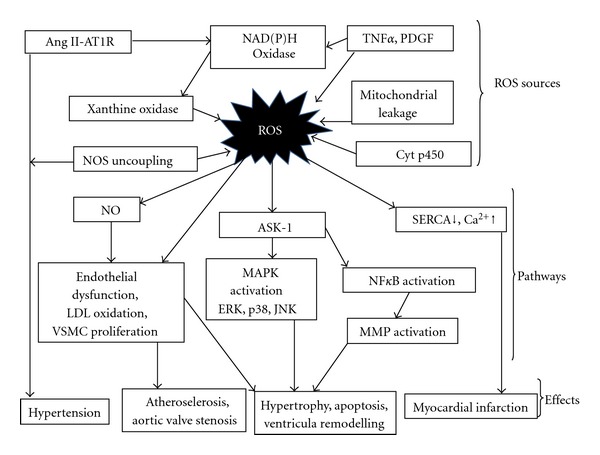
Increased or reduced action of thyroid hormone on certain molecular pathways in the heart and vasculature causes relevant cardiovascular derangements. It is well established that hyperthyroidism induces a hyperdynamic cardiovascular state, which is associated with a faster heart rate, enhanced left ventricular systolic and diastolic function whereas hypothyroidism is characterized by the opposite changes. Hyperthyroidism and hypothyroidism represent opposite clinical conditions, albeit not mirror images. Recent experimental and clinical studies have suggested the involvement of ROS tissue damage under altered thyroid status. Altered-thyroid state-linked changes in heart modify their susceptibility to oxidants and the extent of the oxidative damage they suffer following oxidative challenge. Chronic increase in the cellular levels of ROS can lead to a catastrophic cycle of DNA damage, mitochondrial dysfunction, further ROS generation and cellular injury. Thus, these cellular events might play an important role in the development and progression of myocardial remodeling and heart failure in altered thyroid states (hypo- and hyper-thyroidism). The present review aims at elucidating the various signaling pathways mediated via ROS and their modulation under altered thyroid state and the possibility of antioxidant therapy.
甲状腺激素对心脏和血管某些分子途径的作用增强或减弱会导致相关的心血管紊乱。众所周知,甲状腺功能亢进会诱发高动力性心血管状态,这与心率加快、左心室收缩和舒张功能增强有关,而甲状腺功能减退则表现为相反的变化。甲状腺功能亢进和减退代表了相反的临床状况,尽管并非镜像关系。最近的实验和临床研究表明,甲状腺状态改变时会发生活性氧(ROS)介导的组织损伤。甲状腺状态改变导致的心脏变化会改变其对氧化剂的敏感性以及氧化应激挑战后所遭受的氧化损伤程度。细胞内ROS水平的长期升高会导致DNA损伤、线粒体功能障碍、进一步的ROS生成和细胞损伤的灾难性循环。因此,这些细胞事件可能在甲状腺状态改变(甲状腺功能减退和亢进)时心肌重塑和心力衰竭的发生及发展中起重要作用。本综述旨在阐明ROS介导的各种信号通路及其在甲状腺状态改变时的调节作用以及抗氧化治疗的可能性。