Malaghan Institute of Medical Research, Wellington, New Zealand.
PLoS One. 2012;7(5):e37481. doi: 10.1371/journal.pone.0037481. Epub 2012 May 23.
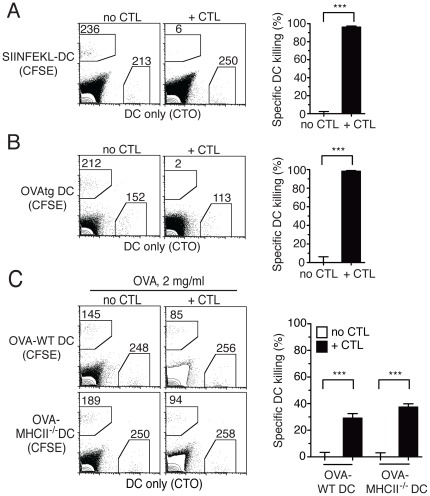
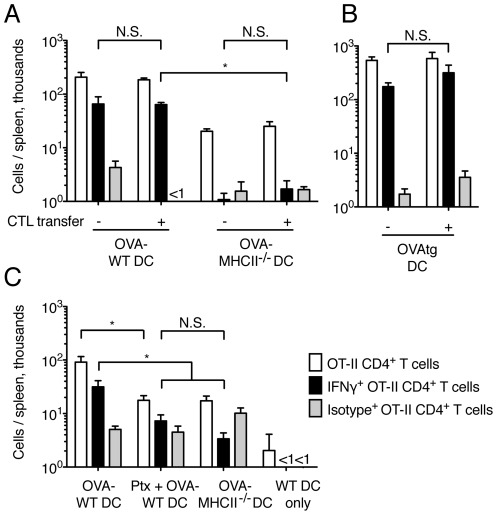
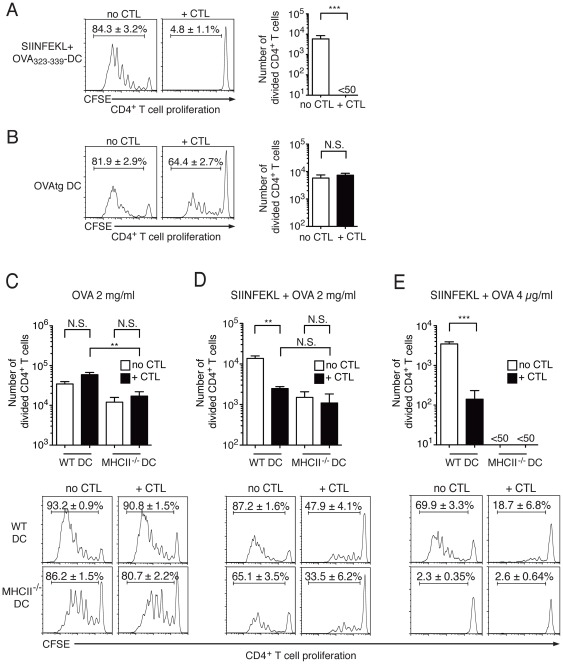
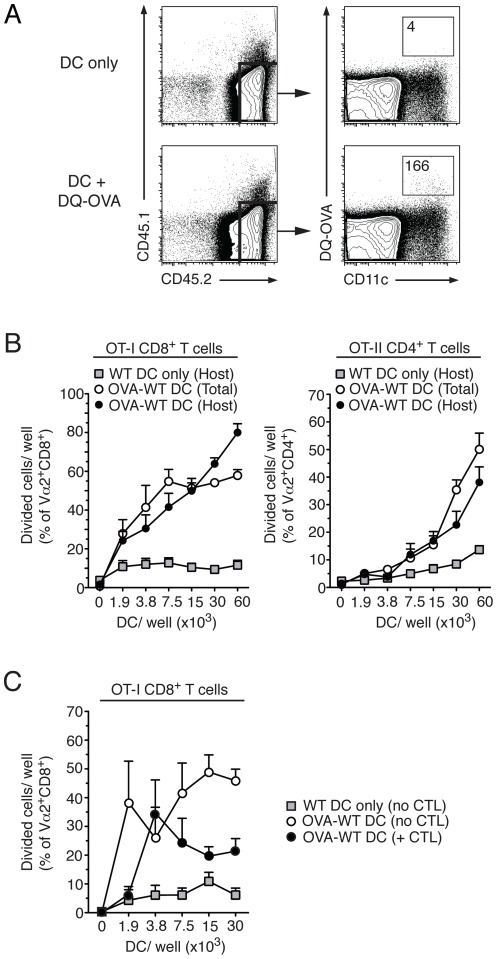
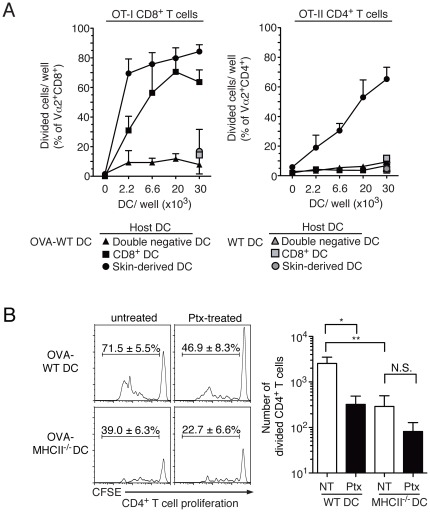
Cytotoxic T lymphocytes (CTL) provide protection against pathogens and tumors. In addition, experiments in mouse models have shown that CTL can also kill antigen-presenting dendritic cells (DC), reducing their ability to activate primary and secondary CD8(+) T cell responses. In contrast, the effects of CTL-mediated killing on CD4(+) T cell responses have not been fully investigated. Here we use adoptive transfer of TCR transgenic T cells and DC immunization to show that specific CTL significantly inhibited CD4(+) T cell proliferation induced by DC loaded with peptide or low concentrations of protein antigen. In contrast, CTL had little effect on CD4(+) T cell proliferation induced by DC loaded with high protein concentrations or expressing antigen endogenously, even if these DC were efficiently killed and failed to accumulate in the lymph node (LN). Residual CD4(+) T cell proliferation was due to the transfer of antigen from carrier DC to host APC, and predominantly involved skin DC populations. Importantly, the proliferating CD4(+) T cells also developed into IFN-γ producing memory cells, a property normally requiring direct presentation by activated DC. Thus, CTL-mediated DC killing can inhibit CD4(+) T cell proliferation, with the extent of inhibition being determined by the form and amount of antigen used to load DC. In the presence of high antigen concentrations, antigen transfer to host DC enables the generation of CD4(+) T cell responses regardless of DC killing, and suggests mechanisms whereby CD4(+) T cell responses can be amplified.
细胞毒性 T 淋巴细胞 (CTL) 提供针对病原体和肿瘤的保护。此外,在小鼠模型中的实验表明,CTL 还可以杀死抗原呈递树突状细胞 (DC),降低其激活原发性和次级 CD8(+) T 细胞反应的能力。相比之下,CTL 介导的杀伤对 CD4(+) T 细胞反应的影响尚未得到充分研究。在这里,我们使用 TCR 转基因 T 细胞的过继转移和 DC 免疫来表明,特异性 CTL 显著抑制了由肽或低浓度蛋白抗原负载的 DC 诱导的 CD4(+) T 细胞增殖。相比之下,CTL 对高浓度蛋白负载或内源性表达抗原的 DC 诱导的 CD4(+) T 细胞增殖几乎没有影响,即使这些 DC 被有效杀死并且未能在淋巴结 (LN) 中积累。残留的 CD4(+) T 细胞增殖归因于载体 DC 向宿主 APC 转移抗原,并且主要涉及皮肤 DC 群体。重要的是,增殖的 CD4(+) T 细胞也发育成 IFN-γ 产生的记忆细胞,这种特性通常需要激活的 DC 进行直接呈递。因此,CTL 介导的 DC 杀伤可以抑制 CD4(+) T 细胞增殖,抑制程度取决于用于负载 DC 的抗原的形式和数量。在高抗原浓度存在下,抗原向宿主 DC 的转移使得 CD4(+) T 细胞反应得以产生,而不管 DC 杀伤如何,并且提出了 CD4(+) T 细胞反应可以被放大的机制。