• 文献检索
  • 文档翻译
  • 深度研究
  • 学术资讯
  • Suppr Zotero 插件Zotero 插件
  • 邀请有礼
  • 套餐&价格
  • 历史记录
应用&插件
Suppr Zotero 插件Zotero 插件浏览器插件Mac 客户端Windows 客户端微信小程序
定价
高级版会员购买积分包购买API积分包
服务
文献检索文档翻译深度研究API 文档MCP 服务
关于我们
关于 Suppr公司介绍联系我们用户协议隐私条款
关注我们

Suppr 超能文献

核心技术专利:CN118964589B侵权必究
粤ICP备2023148730 号-1Suppr @ 2026

文献检索

告别复杂PubMed语法,用中文像聊天一样搜索,搜遍4000万医学文献。AI智能推荐,让科研检索更轻松。

立即免费搜索

文件翻译

保留排版,准确专业,支持PDF/Word/PPT等文件格式,支持 12+语言互译。

免费翻译文档

深度研究

AI帮你快速写综述,25分钟生成高质量综述,智能提取关键信息,辅助科研写作。

立即免费体验

热休克因子 1 通过调节骨髓干细胞/祖细胞的动员和募集促进缺血诱导的血管生成。

Heat shock factor 1 contributes to ischemia-induced angiogenesis by regulating the mobilization and recruitment of bone marrow stem/progenitor cells.

机构信息

Department of Surgery and Clinical Science, Yamaguchi University Graduate School of Medicine, Ube, Yamaguchi, Japan.

出版信息

PLoS One. 2012;7(5):e37934. doi: 10.1371/journal.pone.0037934. Epub 2012 May 24.

DOI:10.1371/journal.pone.0037934
PMID:22655083
原文链接:https://pmc.ncbi.nlm.nih.gov/articles/PMC3360019/
Abstract

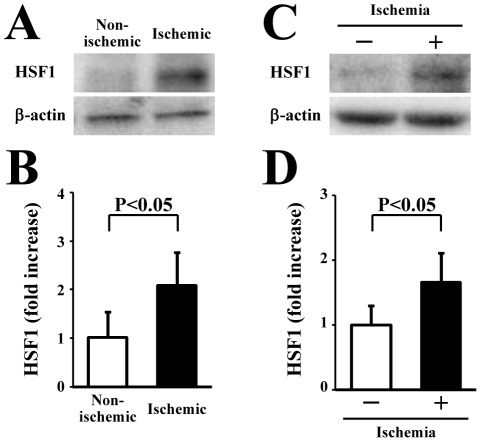
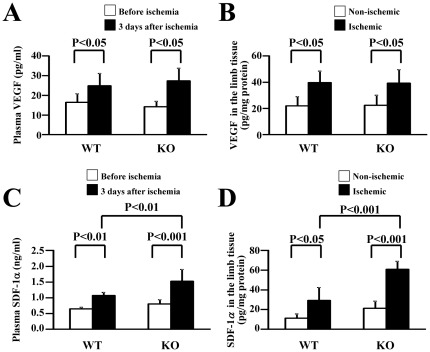
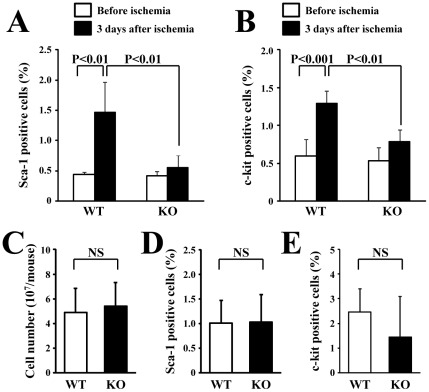
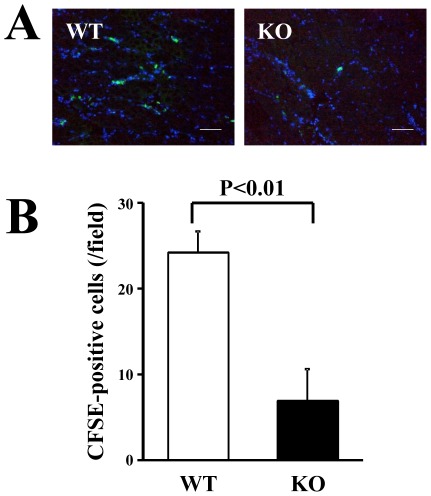
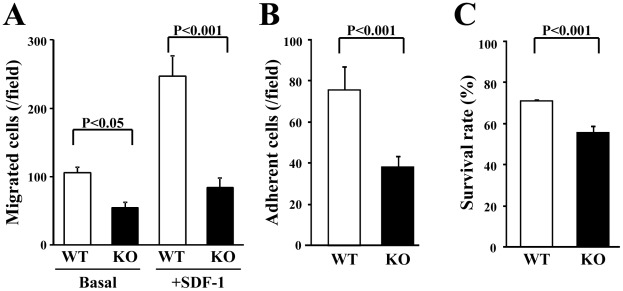
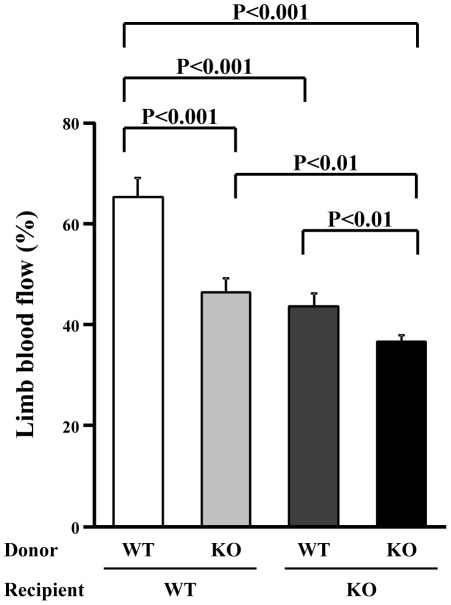
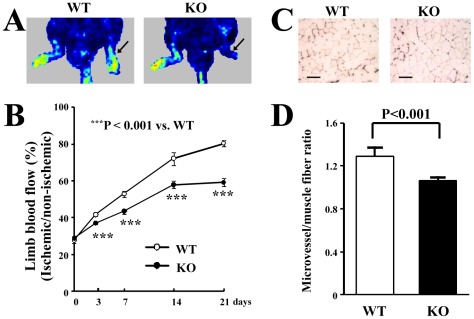
Bone marrow (BM)-derived stem/progenitor cells play an important role in ischemia-induced angiogenesis in cardiovascular diseases. Heat shock factor 1 (HSF1) is known to be induced in response to hypoxia and ischemia. We examined whether HSF1 contributes to ischemia-induced angiogenesis through the mobilization and recruitment of BM-derived stem/progenitor cells using HSF1-knockout (KO) mice. After the induction of ischemia, blood flow and microvessel density in the ischemic hindlimb were significantly lower in the HSF1-KO mice than in the wild-type (WT) mice. The mobilization of BM-derived Sca-1- and c-kit-positive cells in peripheral blood after ischemia was significantly lower in the HSF1-KO mice than in the WT mice. BM stem/progenitor cells from HSF1-KO mice showed a significant decrease in their recruitment to ischemic tissue and in migration, adhesion, and survival when compared with WT mice. Blood flow recovery in the ischemic hindlimb significantly decreased in WT mice receiving BM reconstitution with donor cells from HSF1-KO mice. Conversely, blood flow recovery in the ischemic hindlimb significantly increased in HSF1-KO mice receiving BM reconstitution with donor cells from WT mice. These findings suggest that HSF1 contributes to ischemia-induced angiogenesis by regulating the mobilization and recruitment of BM-derived stem/progenitor cells.

摘要

骨髓(BM)衍生的干细胞/祖细胞在心血管疾病中的缺血诱导血管生成中发挥重要作用。热休克因子 1(HSF1)已知可响应缺氧和缺血而被诱导。我们使用 HSF1 敲除(KO)小鼠检查 HSF1 是否通过动员和募集 BM 衍生的干细胞/祖细胞来促进缺血诱导的血管生成。在诱导缺血后,与野生型(WT)小鼠相比,HSF1-KO 小鼠缺血后肢的血流量和微血管密度明显降低。缺血后外周血中 BM 衍生的 Sca-1 和 c-kit 阳性细胞的动员在 HSF1-KO 小鼠中明显低于 WT 小鼠。与 WT 小鼠相比,HSF1-KO 小鼠的 BM 干细胞/祖细胞向缺血组织的募集以及迁移、黏附和存活能力明显下降。接受来自 HSF1-KO 小鼠供体细胞的 BM 再植入的 WT 小鼠的缺血后肢血流量恢复显著降低。相反,接受来自 WT 小鼠供体细胞的 BM 再植入的 HSF1-KO 小鼠的缺血后肢血流量恢复显著增加。这些发现表明 HSF1 通过调节 BM 衍生的干细胞/祖细胞的动员和募集来促进缺血诱导的血管生成。
https://cdn.ncbi.nlm.nih.gov/pmc/blobs/24c4/3360019/5d2a577407e7/pone.0037934.g007.jpg
https://cdn.ncbi.nlm.nih.gov/pmc/blobs/24c4/3360019/0e33700b47ea/pone.0037934.g001.jpg
https://cdn.ncbi.nlm.nih.gov/pmc/blobs/24c4/3360019/a8e1ebe74fc5/pone.0037934.g002.jpg
https://cdn.ncbi.nlm.nih.gov/pmc/blobs/24c4/3360019/df0e02ceef51/pone.0037934.g003.jpg
https://cdn.ncbi.nlm.nih.gov/pmc/blobs/24c4/3360019/8c7aec866657/pone.0037934.g004.jpg
https://cdn.ncbi.nlm.nih.gov/pmc/blobs/24c4/3360019/fe0ad8c5c8de/pone.0037934.g005.jpg
https://cdn.ncbi.nlm.nih.gov/pmc/blobs/24c4/3360019/7600f41fa602/pone.0037934.g006.jpg
https://cdn.ncbi.nlm.nih.gov/pmc/blobs/24c4/3360019/5d2a577407e7/pone.0037934.g007.jpg
https://cdn.ncbi.nlm.nih.gov/pmc/blobs/24c4/3360019/0e33700b47ea/pone.0037934.g001.jpg
https://cdn.ncbi.nlm.nih.gov/pmc/blobs/24c4/3360019/a8e1ebe74fc5/pone.0037934.g002.jpg
https://cdn.ncbi.nlm.nih.gov/pmc/blobs/24c4/3360019/df0e02ceef51/pone.0037934.g003.jpg
https://cdn.ncbi.nlm.nih.gov/pmc/blobs/24c4/3360019/8c7aec866657/pone.0037934.g004.jpg
https://cdn.ncbi.nlm.nih.gov/pmc/blobs/24c4/3360019/fe0ad8c5c8de/pone.0037934.g005.jpg
https://cdn.ncbi.nlm.nih.gov/pmc/blobs/24c4/3360019/7600f41fa602/pone.0037934.g006.jpg
https://cdn.ncbi.nlm.nih.gov/pmc/blobs/24c4/3360019/5d2a577407e7/pone.0037934.g007.jpg

相似文献

1
Heat shock factor 1 contributes to ischemia-induced angiogenesis by regulating the mobilization and recruitment of bone marrow stem/progenitor cells.热休克因子 1 通过调节骨髓干细胞/祖细胞的动员和募集促进缺血诱导的血管生成。
PLoS One. 2012;7(5):e37934. doi: 10.1371/journal.pone.0037934. Epub 2012 May 24.
2
Role of nox2-based NADPH oxidase in bone marrow and progenitor cell function involved in neovascularization induced by hindlimb ischemia.基于Nox2的NADPH氧化酶在参与后肢缺血诱导的新生血管形成的骨髓和祖细胞功能中的作用。
Circ Res. 2008 Jul 18;103(2):212-20. doi: 10.1161/CIRCRESAHA.108.176230. Epub 2008 Jun 26.
3
Important role of erythropoietin receptor to promote VEGF expression and angiogenesis in peripheral ischemia in mice.促红细胞生成素受体在促进小鼠外周缺血中血管内皮生长因子表达及血管生成方面的重要作用。
Circ Res. 2007 Mar 16;100(5):662-9. doi: 10.1161/01.RES.0000260179.43672.fe. Epub 2007 Feb 9.
4
Androgen Receptor-Mediated Genomic Androgen Action Augments Ischemia-Induced Neovascularization.雄激素受体介导的基因组雄激素作用增强缺血诱导的新生血管形成。
Endocrinology. 2016 Dec;157(12):4853-4864. doi: 10.1210/en.2016-1301. Epub 2016 Oct 18.
5
Deletion of FHL2 gene impaired ischemia-induced blood flow recovery by modulating circulating proangiogenic cells.FHL2 基因缺失通过调节循环促血管生成细胞损害缺血诱导的血流恢复。
Arterioscler Thromb Vasc Biol. 2013 Apr;33(4):709-17. doi: 10.1161/ATVBAHA.112.300318. Epub 2013 Feb 14.
6
Essential role of extracellular SOD in reparative neovascularization induced by hindlimb ischemia.细胞外超氧化物歧化酶在后肢缺血诱导的修复性新生血管形成中的重要作用。
Circ Res. 2007 Aug 17;101(4):409-19. doi: 10.1161/CIRCRESAHA.107.153791. Epub 2007 Jun 29.
7
NADPH oxidase 2 regulates bone marrow microenvironment following hindlimb ischemia: role in reparative mobilization of progenitor cells.NADPH 氧化酶 2 调节下肢缺血后的骨髓微环境:在祖细胞修复动员中的作用。
Stem Cells. 2012 May;30(5):923-34. doi: 10.1002/stem.1048.
8
Caveolin plays a central role in endothelial progenitor cell mobilization and homing in SDF-1-driven postischemic vasculogenesis.小窝蛋白在SDF-1驱动的缺血后血管生成过程中的内皮祖细胞动员和归巢中起核心作用。
Circ Res. 2006 May 12;98(9):1219-27. doi: 10.1161/01.RES.0000220648.80170.8b. Epub 2006 Apr 6.
9
Tumor necrosis factor-alpha receptor p75 is required in ischemia-induced neovascularization.肿瘤坏死因子-α受体p75在缺血诱导的新生血管形成中是必需的。
Circulation. 2007 Feb 13;115(6):752-62. doi: 10.1161/CIRCULATIONAHA.106.647255. Epub 2007 Jan 29.
10
Prostacyclin stimulated integrin-dependent angiogenic effects of endothelial progenitor cells and mediated potent circulation recovery in ischemic hind limb model.前列环素刺激内皮祖细胞整合素依赖性血管生成作用,并在缺血性后肢模型中介导有效的循环恢复。
Circ J. 2013;77(4):1053-62. doi: 10.1253/circj.cj-12-0897. Epub 2012 Dec 20.

引用本文的文献

1
Mild photothermal therapy assist in promoting bone repair: Related mechanism and materials.温和光热疗法助力促进骨修复:相关机制与材料
Mater Today Bio. 2023 Oct 20;23:100834. doi: 10.1016/j.mtbio.2023.100834. eCollection 2023 Dec.
2
Rat Model of Parkes Weber Syndrome.帕克斯·韦伯综合征大鼠模型
PLoS One. 2015 Jul 28;10(7):e0133752. doi: 10.1371/journal.pone.0133752. eCollection 2015.
3
Celastrol, an oral heat shock activator, ameliorates multiple animal disease models of cell death.雷公藤红素,一种口服热休克激活剂,可改善多种细胞死亡的动物疾病模型。

本文引用的文献

1
Hypoxic preconditioning enhances angiogenic potential of bone marrow cells with aging-related functional impairment.低氧预处理增强了与年龄相关功能障碍的骨髓细胞的血管生成潜能。
Circ J. 2012;76(4):986-94. doi: 10.1253/circj.cj-11-0605. Epub 2012 Feb 1.
2
The heat shock factor family and adaptation to proteotoxic stress.热休克因子家族与蛋白质毒性应激适应
FEBS J. 2010 Oct;277(20):4112-25. doi: 10.1111/j.1742-4658.2010.07827.x.
3
Heat shock factors: integrators of cell stress, development and lifespan.热休克因子:细胞应激、发育和寿命的整合者。
Cell Stress Chaperones. 2015 Jan;20(1):185-201. doi: 10.1007/s12192-014-0536-1. Epub 2014 Oct 11.
4
Pleiotropic role of HSF1 in neoplastic transformation.HSF1在肿瘤转化中的多效性作用。
Curr Cancer Drug Targets. 2014;14(2):144-55. doi: 10.2174/1568009614666140122155942.
Nat Rev Mol Cell Biol. 2010 Aug;11(8):545-55. doi: 10.1038/nrm2938. Epub 2010 Jul 14.
4
Hypoxia-inducible factor-1-dependent mechanisms of vascularization and vascular remodelling.缺氧诱导因子-1 依赖性血管生成和血管重构机制。
Cardiovasc Res. 2010 May 1;86(2):236-42. doi: 10.1093/cvr/cvq045. Epub 2010 Feb 17.
5
Heat shock transcription factors and sensory placode development.热休克转录因子与感觉基板发育。
BMB Rep. 2009 Oct 31;42(10):631-5. doi: 10.5483/bmbrep.2009.42.10.631.
6
Impaired angiogenic potency of bone marrow cells from patients with advanced age, anemia, and renal failure.高龄、贫血和肾衰竭患者骨髓细胞的血管生成能力受损。
J Thorac Cardiovasc Surg. 2010 Feb;139(2):459-65. doi: 10.1016/j.jtcvs.2009.07.053. Epub 2009 Sep 13.
7
Heme oxygenase-1 increases endothelial progenitor cells.血红素加氧酶-1可增加内皮祖细胞。
Arterioscler Thromb Vasc Biol. 2009 Oct;29(10):1537-42. doi: 10.1161/ATVBAHA.109.184713. Epub 2009 Jun 18.
8
Ischemic pre-conditioning enhances the mobilization and recruitment of bone marrow stem cells to protect against ischemia/reperfusion injury in the late phase.缺血预处理可增强骨髓干细胞的动员和募集,以在后期预防缺血/再灌注损伤。
J Am Coll Cardiol. 2009 May 12;53(19):1814-22. doi: 10.1016/j.jacc.2009.02.015.
9
Increased expression of CXCR4 and integrin alphaM in hypoxia-preconditioned cells contributes to improved cell retention and angiogenic potency.缺氧预处理细胞中CXCR4和整合素αM表达的增加有助于改善细胞滞留和血管生成能力。
J Cell Physiol. 2009 Aug;220(2):508-14. doi: 10.1002/jcp.21803.
10
Transient increase of cytokines in the acute ischemic tissue is beneficial to cell-based therapeutic angiogenesis.急性缺血组织中细胞因子的短暂增加有利于基于细胞的治疗性血管生成。
Circ J. 2008 Dec;72(12):2075-80. doi: 10.1253/circj.cj-08-0392. Epub 2008 Oct 29.