Committee on the Neurobiology of Addictive Disorders, The Scripps Research Institute, CA 92037, USA.
Drug Alcohol Depend. 2012 Nov 1;126(1-2):168-75. doi: 10.1016/j.drugalcdep.2012.05.011. Epub 2012 Jun 3.
Reports from U.S., U.K. and European drug policy entities, and ongoing media accounts, show increasing recreational use of 4-methylmethcathinone (4-MMC, mephedrone) and 3,4-methylenedioxypyrovalerone (MDPV). Severe sympathomimetic symptoms, hallucinations, psychoses, and even deaths have been reported, yet little scientific information is available on the effects of these compounds in laboratory models. Available studies on the neurochemistry of these drugs show that 4-MMC and MDPV enhance DA neurotransmission, while 4-MMC additionally enhances 5-HT neurotransmission--a pattern much like that reported for methamphetamine versus 3,4-methylenedioxymethamphetamine (MDMA). As is the case for designer amphetamines, these neurochemical distinctions may predict differential potential for repetitive versus episodic abuse and distinct lasting toxicities.
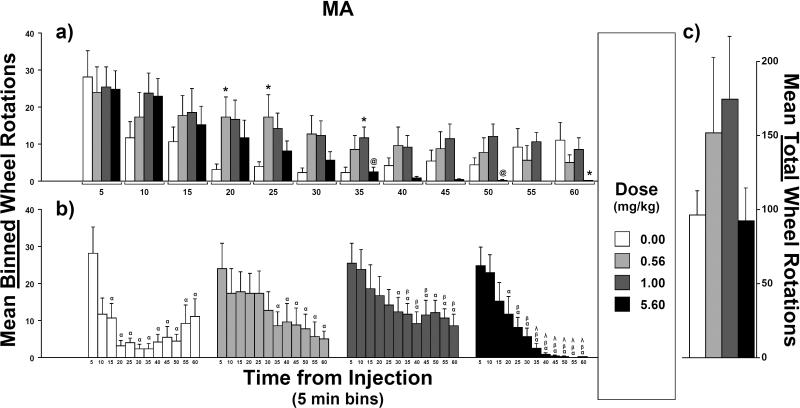
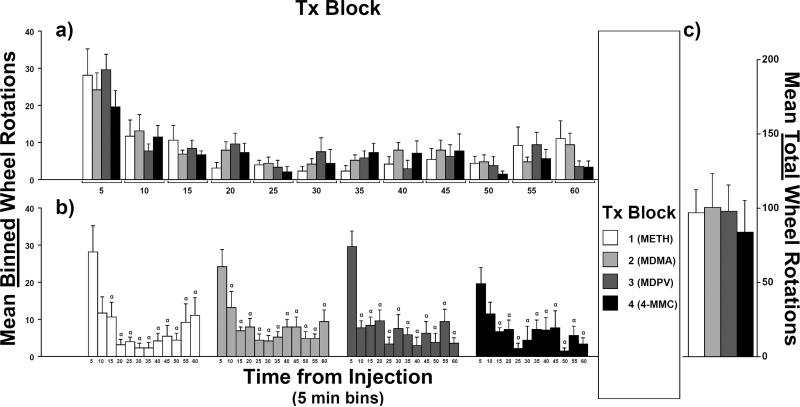
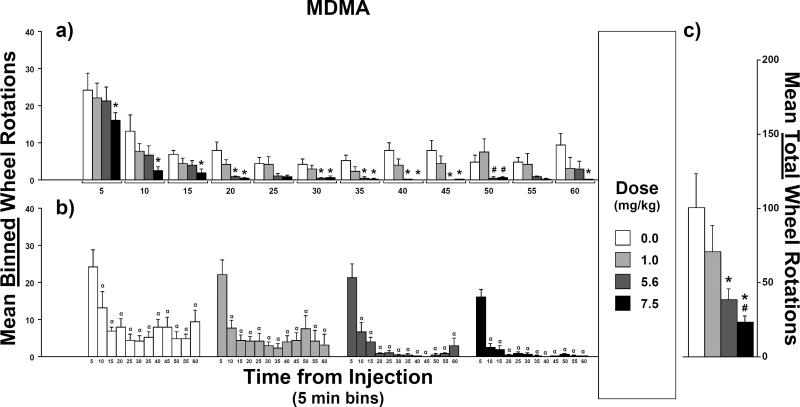
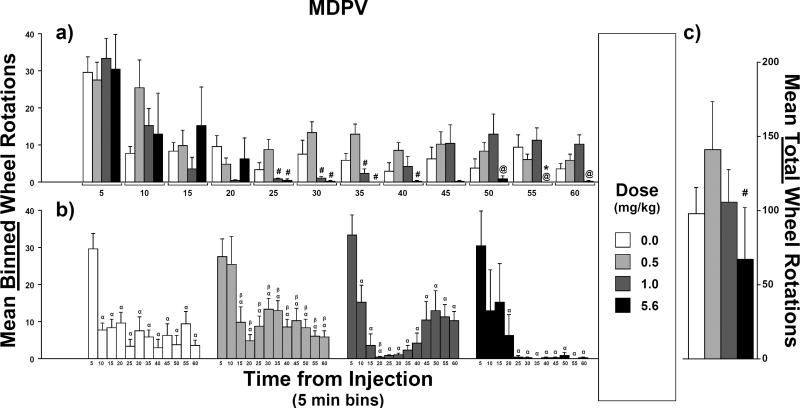
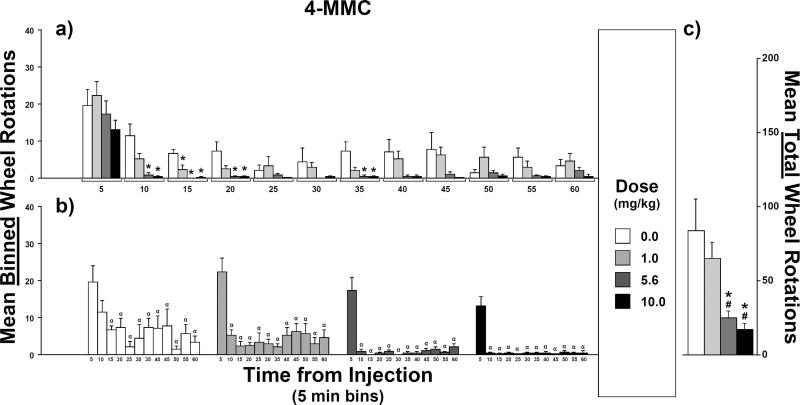
This study determined relative locomotor stimulant effects of 4-MMC (1-10 mg/kg, s.c.) and MDPV (0.5-5.6 mg/kg, s.c.), in comparison with d-methamphetamine (MA; 0.5-5.6 mg/kg, s.c.) and MDMA (1-7.5 mg/kg, s.c.) on a measure of locomotor activity--voluntary wheel running--in male Wistar rats (N=8).
Compared to counts of wheel rotations after saline, a biphasic change in the pattern of counts was observed after injections of MA and MDPV, with relatively higher counts following lower doses and lower counts following the highest dose. However, monophasic, dose-dependent reductions in counts were observed in response to injections of MDMA and 4-MMC.
Thus, voluntary wheel running yielded the same categorical distinctions for these drugs as did prior experiments testing the effects of these drugs on monoaminergic neurotransmission. These data indicate that MDPV produces prototypical locomotor stimulant effects whereas 4-MMC is more similar to the entactogen MDMA.
来自美国、英国和欧洲毒品政策机构的报告,以及正在进行的媒体报道,显示出 4-甲基甲卡西酮(4-MMC,苯丙胺)和 3,4-亚甲二氧基吡咯戊酮(MDPV)的娱乐性使用不断增加。已经报道了严重的拟交感神经症状、幻觉、精神病,甚至死亡,但关于这些化合物在实验室模型中的影响的科学信息很少。关于这些药物的神经化学研究表明,4-MMC 和 MDPV 增强了 DA 神经传递,而 4-MMC 还增强了 5-HT 神经传递——这种模式与报道的甲基苯丙胺与 3,4-亚甲二氧基甲基苯丙胺(MDMA)的情况非常相似。与设计类苯丙胺一样,这些神经化学差异可能预示着重复性与间歇性滥用的不同潜力,以及独特的持久毒性。
本研究确定了 4-MMC(1-10mg/kg,sc)和 MDPV(0.5-5.6mg/kg,sc)相对于 d-苯丙胺(MA;0.5-5.6mg/kg,sc)和 MDMA(1-7.5mg/kg,sc)在雄性 Wistar 大鼠(N=8)的一种运动活性测量——自愿轮跑中的相对运动刺激作用。
与生理盐水后的旋转次数相比,注射 MA 和 MDPV 后观察到旋转次数的双相变化,较低剂量后旋转次数较高,最高剂量后旋转次数较低。然而,注射 MDMA 和 4-MMC 后观察到的旋转次数呈单相、剂量依赖性减少。
因此,自愿轮跑对这些药物产生了与先前测试这些药物对单胺能神经传递影响的实验相同的分类区别。这些数据表明,MDPV 产生了典型的运动刺激作用,而 4-MMC 与致幻剂 MDMA 更为相似。