Department of Chemistry & Biochemistry and Biofrontiers Institute, University of Colorado, Boulder, Colorado 80309, USA.
Genome Res. 2012 Oct;22(10):1974-84. doi: 10.1101/gr.138198.112. Epub 2012 Jun 4.
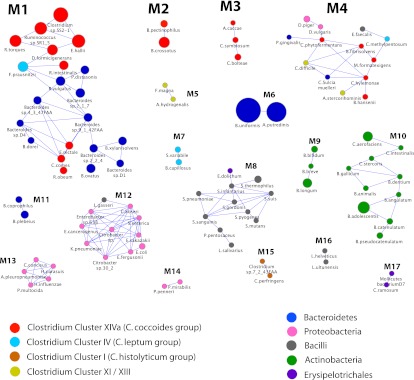
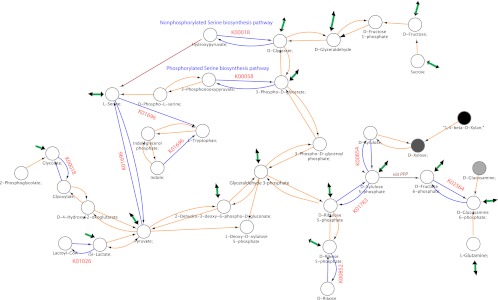
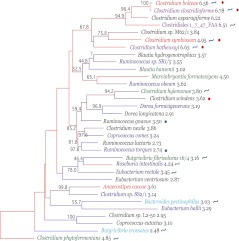
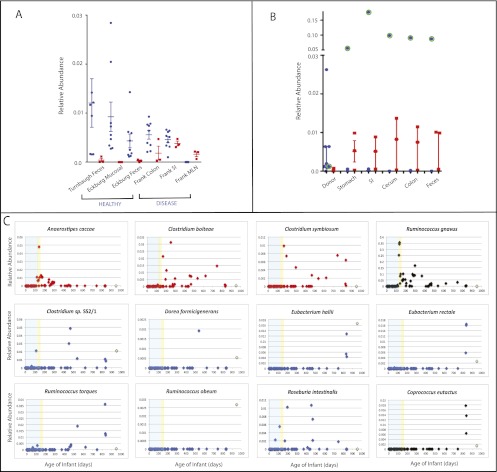
We lack a deep understanding of genetic and metabolic attributes specializing in microbial consortia for initial and subsequent waves of colonization of our body habitats. Here we show that phylogenetically interspersed bacteria in Clostridium cluster XIVa, an abundant group of bacteria in the adult human gut also known as the Clostridium coccoides or Eubacterium rectale group, contains species that have evolved distribution patterns consistent with either early successional or stable gut communities. The species that specialize to the infant gut are more likely to associate with systemic infections and can reach high abundances in individuals with Inflammatory Bowel Disease (IBD), indicating that a subset of the microbiota that have adapted to pioneer/opportunistic lifestyles may do well in both early development and with disease. We identified genes likely selected during adaptation to pioneer/opportunistic lifestyles as those for which early succession association and not phylogenetic relationships explain genomic abundance. These genes reveal potential mechanisms by which opportunistic gut bacteria tolerate osmotic and oxidative stress and potentially important aspects of their metabolism. These genes may not only be biomarkers of properties associated with adaptation to early succession and disturbance, but also leads for developing therapies aimed at promoting reestablishment of stable gut communities following physiologic or pathologic disturbances.
我们对微生物群落特有的遗传和代谢属性缺乏深入了解,而这些属性对于我们身体栖息地的初始和后续定植波至关重要。在这里,我们表明,在厚壁菌门梭菌 XIVa 簇中,丰度较高的细菌,即成人肠道中通常被称为梭菌 coccoides 或真杆菌属的细菌,其细菌在系统发育上交错分布,这些细菌具有与早期定殖或稳定肠道群落一致的分布模式。专门定植于婴儿肠道的物种更可能与全身感染有关,并且在炎症性肠病 (IBD) 个体中可以达到较高丰度,这表明已经适应先驱/机会主义生活方式的微生物组的一部分可能在早期发育和疾病中都表现良好。我们确定了可能在适应先驱/机会主义生活方式过程中被选择的基因,这些基因是那些与早期定殖关联而非系统发育关系解释基因组丰度的基因。这些基因揭示了机会性肠道细菌耐受渗透和氧化应激的潜在机制,以及它们代谢的重要方面。这些基因不仅可能是与适应早期定殖和干扰相关的特性的生物标志物,而且可能为开发旨在促进生理或病理干扰后稳定肠道群落重建的治疗方法提供线索。