Stem Cell and Microenvironment Laboratory, Weill Cornell Medical College in Qatar, Education City, Qatar Foundation, Doha, Qatar.
PLoS One. 2012;7(5):e38340. doi: 10.1371/journal.pone.0038340. Epub 2012 May 30.
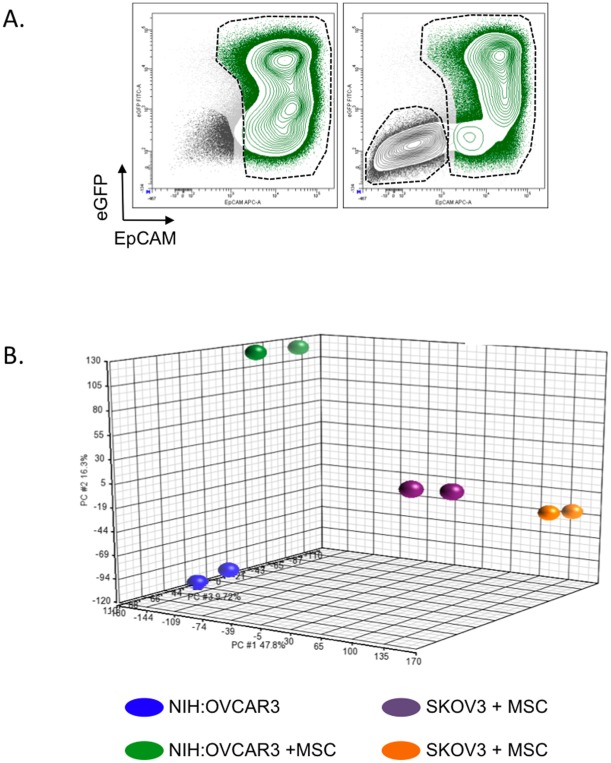
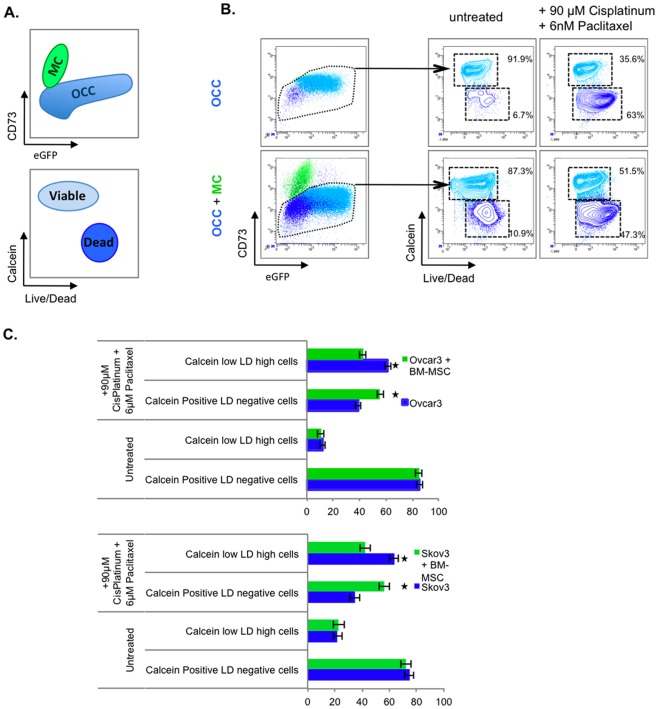
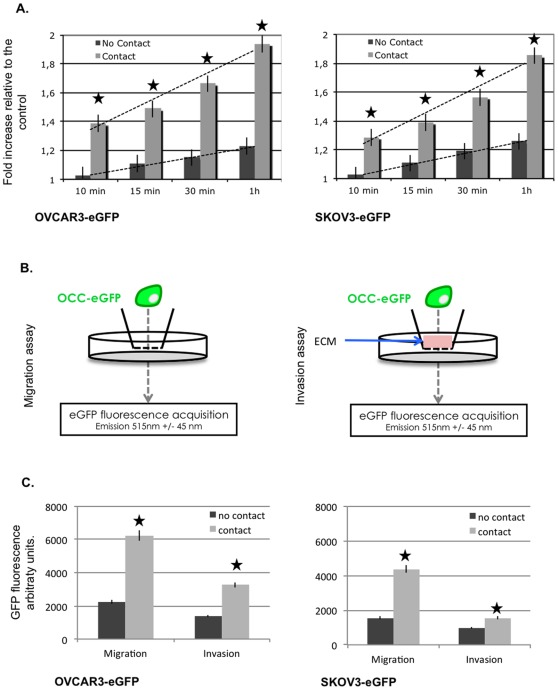
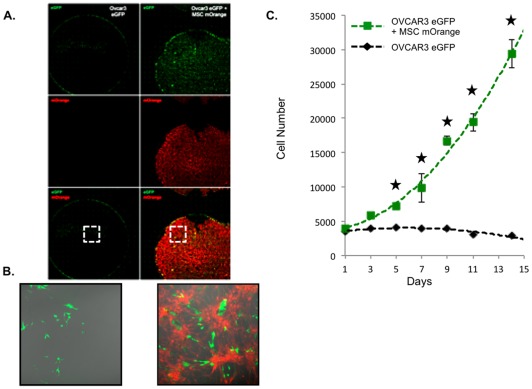
Tumor microenvironment is an important actor of ovarian cancer progression but the relations between mesenchymal cells and ovarian cancer cells remain unclear. The objective of this study was to determine the ovarian cancer cells' biological modifications induced by mesenchymal cells. To address this issue, we used two different ovarian cancer cell lines (NIH:OVCAR3 and SKOV3) and co-cultured them with mesenchymal cells. Upon co-culture the different cell populations were sorted to study their transcriptome and biological properties. Transcriptomic analysis revealed three biological-function gene clusters were enriched upon contact with mesenchymal cells. These were related to the increase of metastatic abilities (adhesion, migration and invasion), proliferation and chemoresistance in vitro. Therefore, contact with the mesenchymal cell niche could increase metastatic initiation and expansion through modification of cancer cells. Taken together these findings suggest that pathways involved in hetero-cellular interaction may be targeted to disrupt the acquired pro-metastatic profile.
肿瘤微环境是卵巢癌进展的重要因素,但间充质细胞与卵巢癌细胞之间的关系仍不清楚。本研究的目的是确定间充质细胞诱导的卵巢癌细胞的生物学改变。为了解决这个问题,我们使用了两种不同的卵巢癌细胞系(NIH:OVCAR3 和 SKOV3),并将它们与间充质细胞共培养。在共培养后,对不同的细胞群进行分选,以研究它们的转录组和生物学特性。转录组分析显示,与间充质细胞接触后富集了三个生物学功能基因簇。这些与体外转移能力(粘附、迁移和侵袭)、增殖和化疗耐药性的增加有关。因此,与间充质细胞龛的接触可能通过改变癌细胞来增加转移起始和扩张。总之,这些发现表明,涉及异细胞相互作用的途径可能成为靶向治疗以破坏获得的促转移表型的靶点。