Department of Biochemistry, Cardiovascular Research Institute Maastricht (CARIM), Maastricht University, Maastricht, The Netherlands.
Cell Mol Life Sci. 2012 Oct;69(20):3481-92. doi: 10.1007/s00018-012-1033-2. Epub 2012 Jun 6.
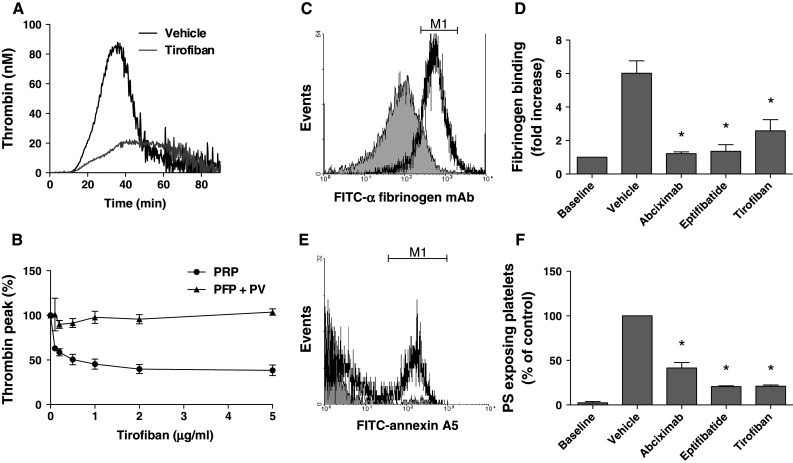
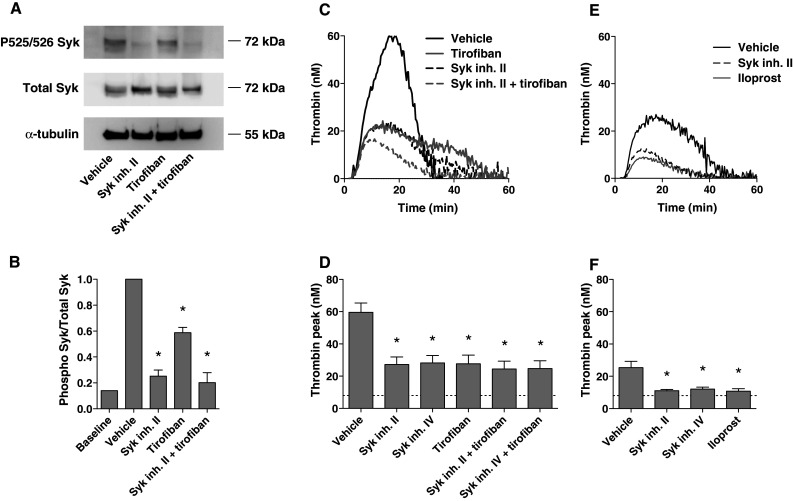
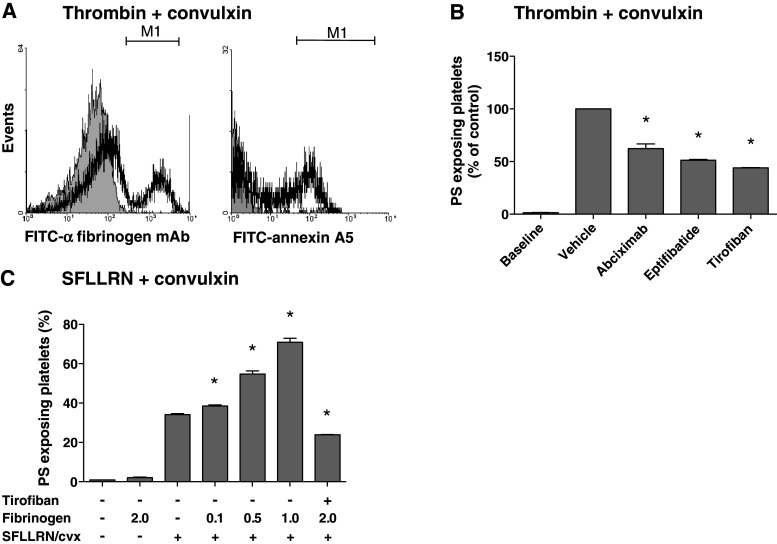
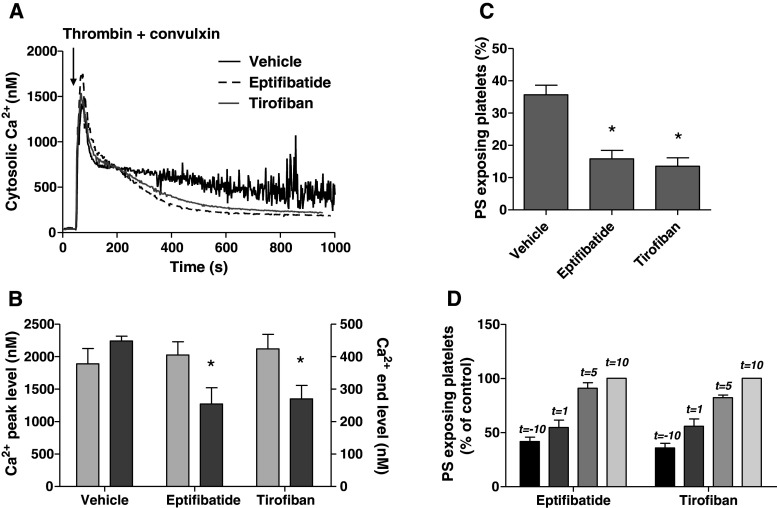
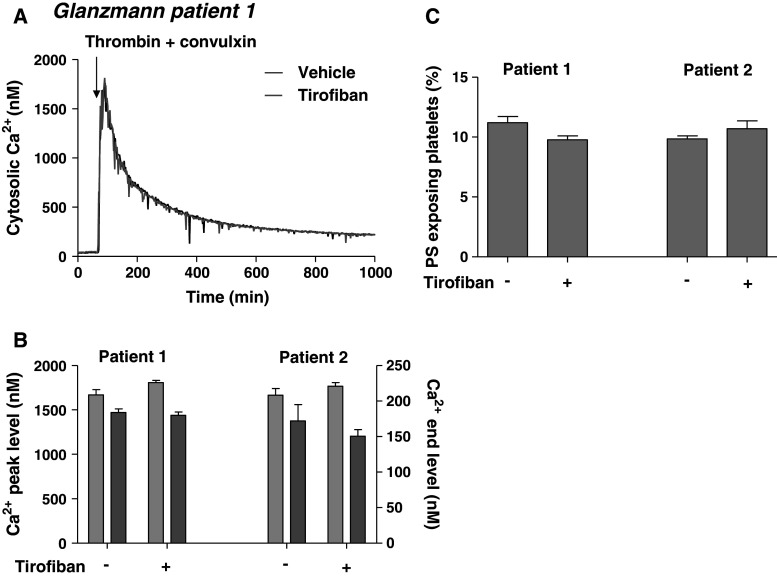
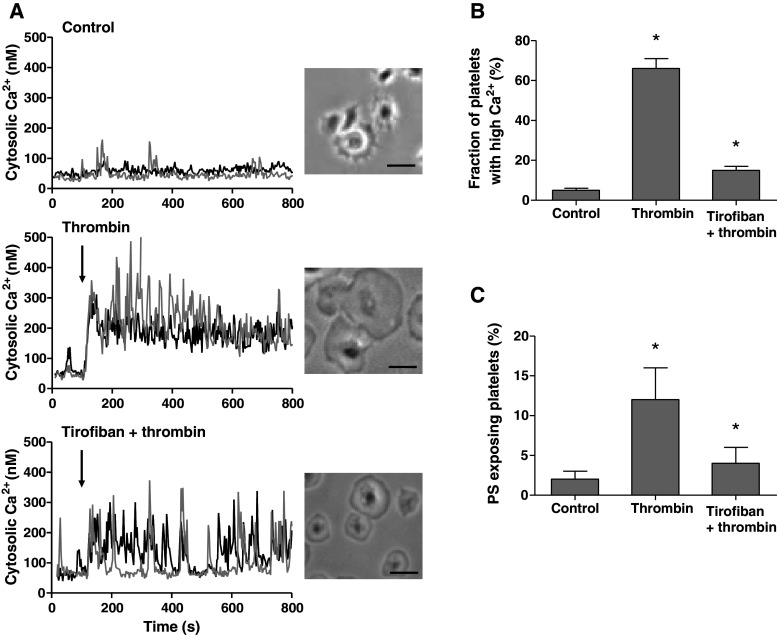
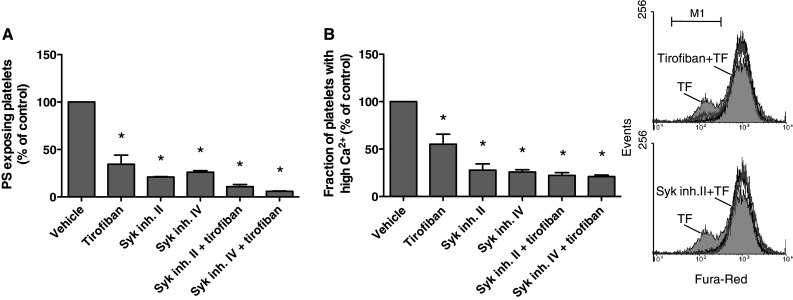
The fibrin(ogen) receptor, integrin α(IIb)β(3), has a well-established role in platelet spreading, aggregation and clot retraction. How α(IIb)β(3) contributes to platelet-dependent coagulation is less well resolved. Here, we demonstrate that the potent suppressing effect of clinically used α(IIb)β(3) blockers on tissue factor-induced thrombin generation is linked to diminished platelet Ca(2+) responses and phosphatidylserine (PS) exposure. The same blockers suppress these responses in platelets stimulated with collagen and thrombin receptor agonists, whereas added fibrinogen potentiates these responses. In platelets spreading on fibrinogen, outside-in α(IIb)β(3) signaling similarly enhances thrombin-induced Ca(2+) rises and PS exposure. These responses are reduced in α(IIb)β(3)-deficient platelets from patients with Glanzmann's thrombasthenia. Furthermore, the contribution of α(IIb)β(3) to tissue factor-induced platelet Ca(2+) rises, PS exposure and thrombin generation in plasma are fully dependent on Syk kinase activity. Tyrosine phosphorylation analysis confirms a key role of Syk activation, which is largely but not exclusively dependent on α(IIb)β(3) activation. It is concluded that the majority of tissue factor-induced procoagulant activity of platelets relies on Syk activation and ensuing Ca(2+) signal generation, and furthermore that a considerable part of Syk activation relies on α(IIb)β(3) signaling. These results hence point to a novel role of Syk in integrin-dependent thrombin generation.
纤维蛋白(原)受体整合素α(IIb)β(3)在血小板扩展、聚集和血栓收缩中具有明确的作用。α(IIb)β(3)如何促进血小板依赖的凝血过程尚未得到很好的解决。在这里,我们证明了临床使用的α(IIb)β(3)阻滞剂对组织因子诱导的凝血酶生成的强烈抑制作用与血小板 Ca(2+)反应和磷脂酰丝氨酸 (PS) 暴露减少有关。相同的阻滞剂可抑制胶原和凝血酶受体激动剂刺激的血小板产生这些反应,而添加纤维蛋白原则增强了这些反应。在纤维蛋白原上扩展的血小板中,外向型α(IIb)β(3)信号同样增强了凝血酶诱导的 Ca(2+)上升和 PS 暴露。在缺乏 Glanzmann 血小板无力症患者的血小板中,这些反应减少。此外,α(IIb)β(3)对组织因子诱导的血小板 Ca(2+)上升、PS 暴露和血浆中凝血酶生成的贡献完全依赖于Syk 激酶活性。酪氨酸磷酸化分析证实了 Syk 激活的关键作用,而 Syk 激活主要但不完全依赖于α(IIb)β(3)激活。结论是,大多数组织因子诱导的血小板促凝活性依赖于 Syk 激活和随之产生的 Ca(2+)信号生成,并且 Syk 激活的很大一部分依赖于α(IIb)β(3)信号。这些结果表明了 Syk 在整合素依赖性凝血酶生成中的新作用。