International Institute of Molecular and Cell Biology, 4 Ks. Trojdena Street, 02-109 Warsaw, Poland.
J Cell Sci. 2012 Sep 1;125(Pt 17):4090-102. doi: 10.1242/jcs.105171. Epub 2012 Jun 8.
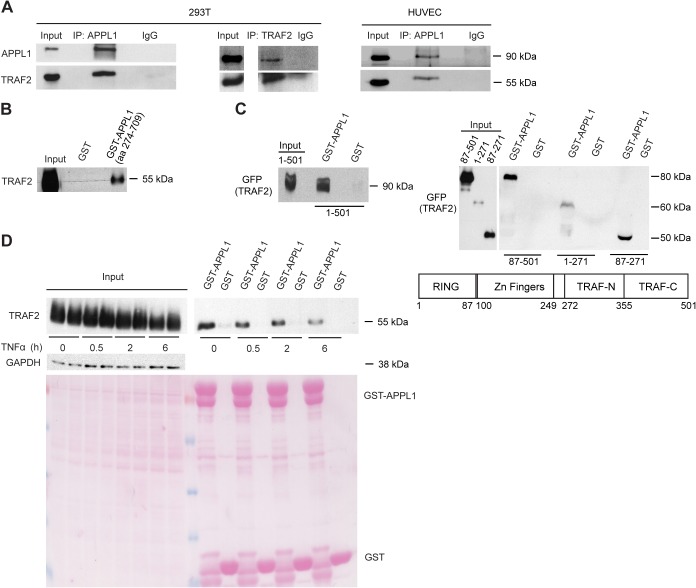
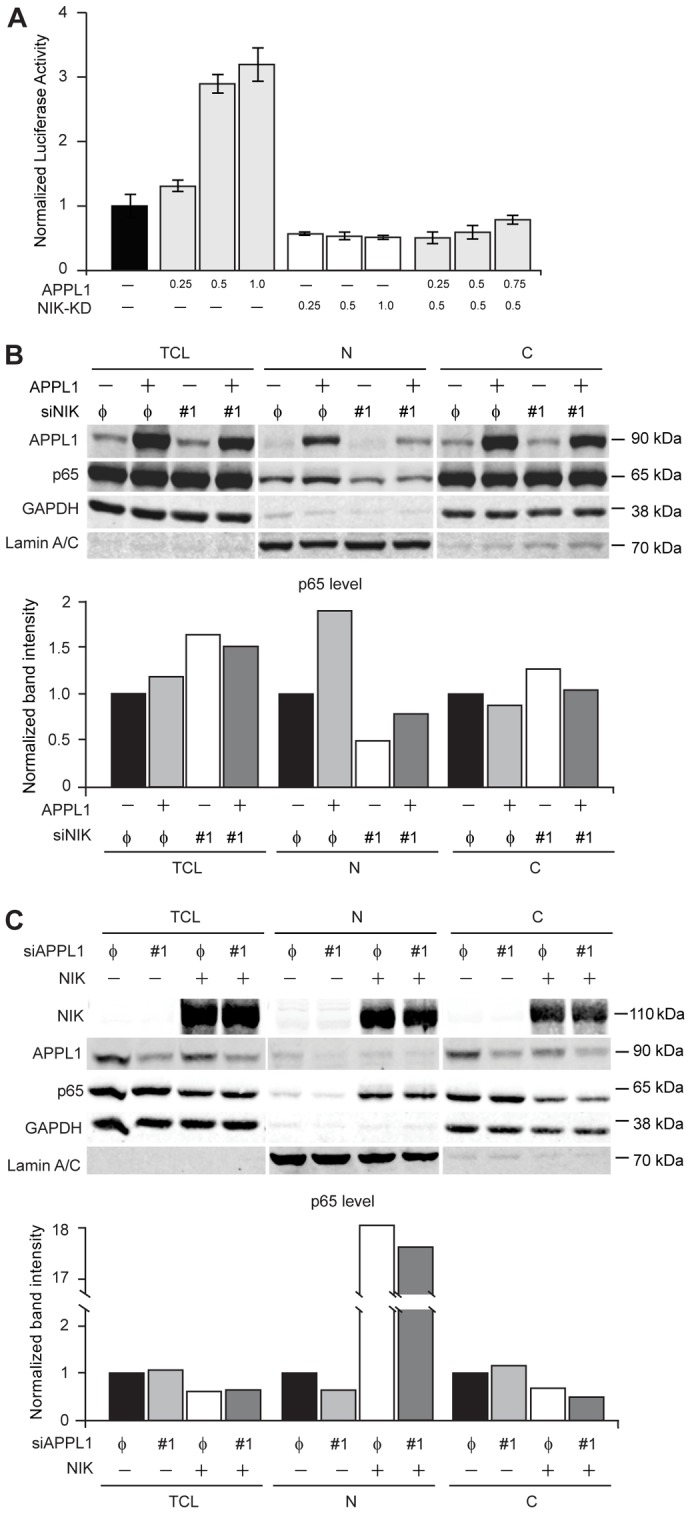
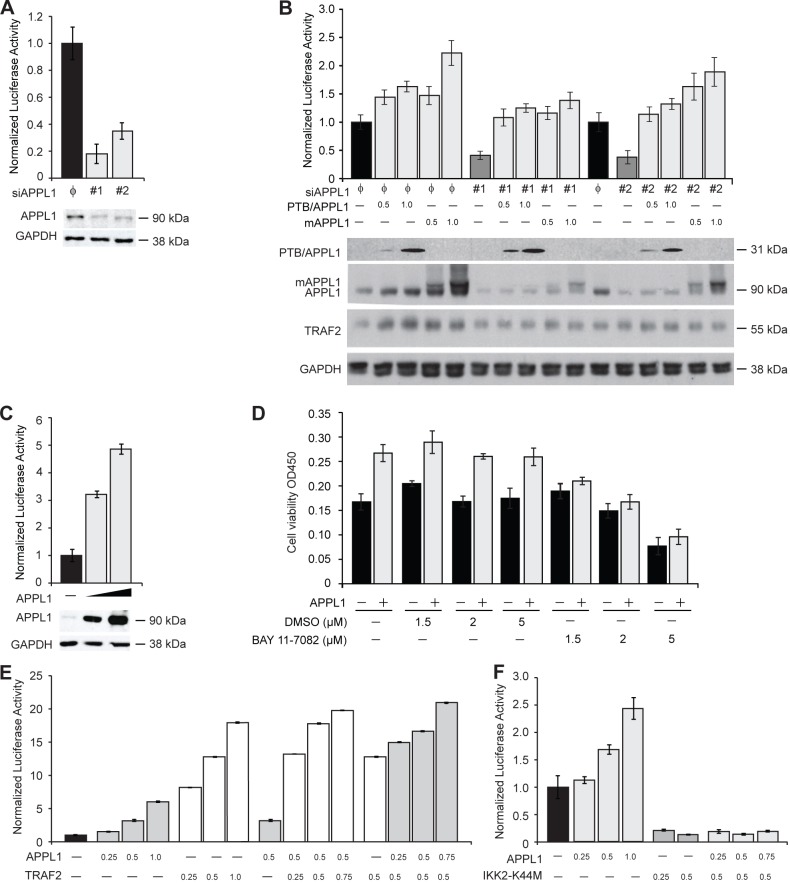
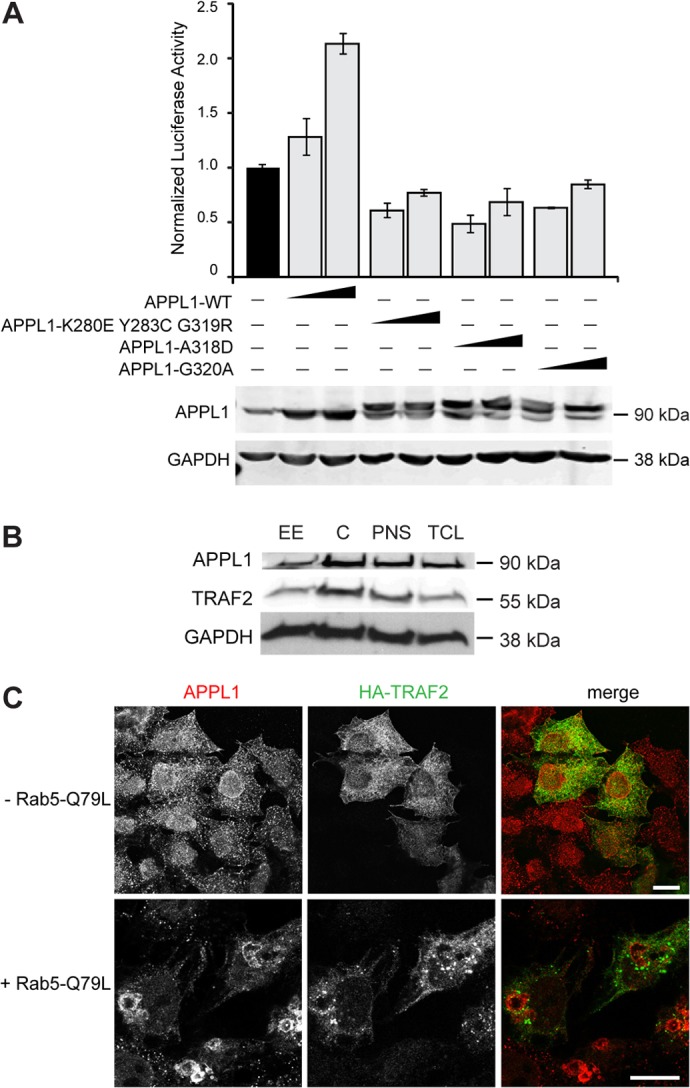
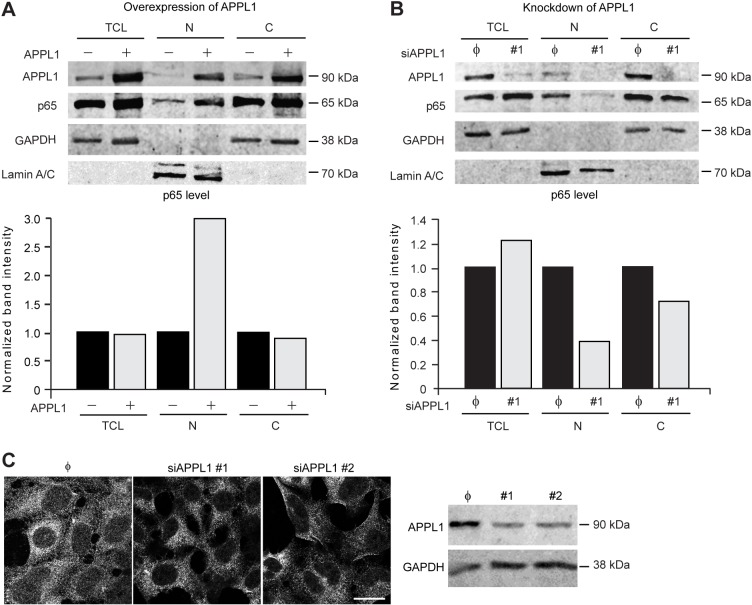
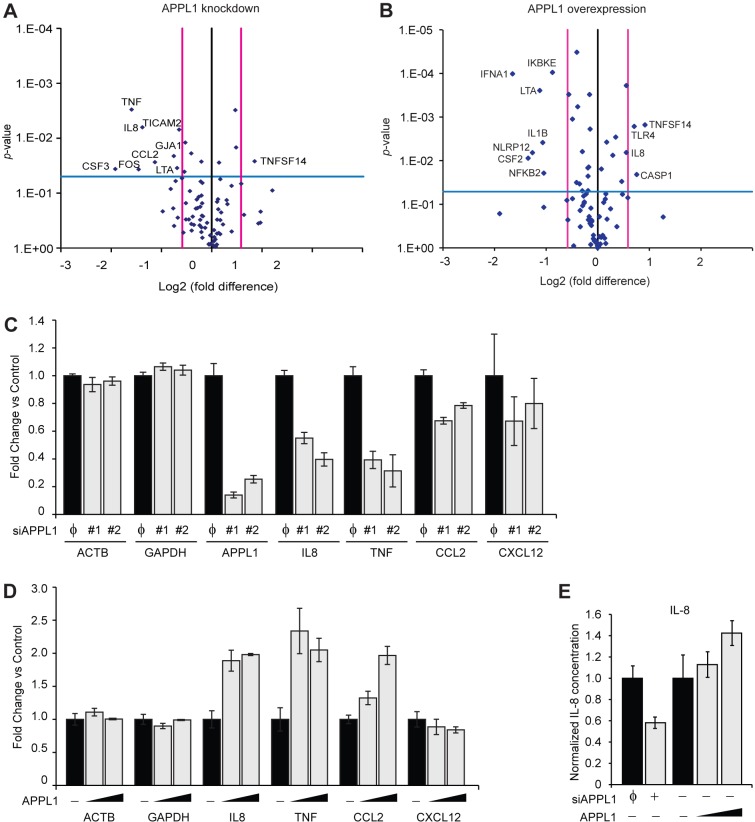
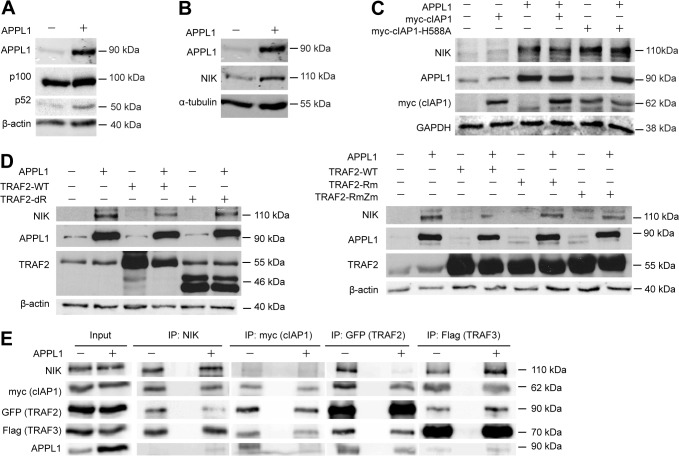
APPL1 is a multifunctional adaptor protein that binds membrane receptors, signaling proteins and nuclear factors, thereby acting in endosomal trafficking and in different signaling pathways. Here, we uncover a novel role of APPL1 as a positive regulator of transcriptional activity of NF-κB under basal but not TNFα-stimulated conditions. APPL1 was found to directly interact with TRAF2, an adaptor protein known to activate canonical NF-κB signaling. APPL1 synergized with TRAF2 to induce NF-κB activation, and both proteins were necessary for this process and function upstream of the IKK complex. Although TRAF2 was not detectable on APPL endosomes, endosomal recruitment of APPL1 was required for its function in the NF-κB pathway. Importantly, in the canonical pathway, APPL1 appeared to regulate the proper spatial distribution of the p65 subunit of NF-κB in the absence of cytokine stimulation, since its overexpression enhanced and its depletion reduced the nuclear accumulation of p65. By analyzing the patterns of gene transcription upon APPL1 overproduction or depletion we found altered expression of NF-κB target genes that encode cytokines. At the molecular level, overexpressed APPL1 markedly increased the level of NIK, the key component of the noncanonical NF-κB pathway, by reducing its association with the degradative complex containing TRAF2, TRAF3 and cIAP1. In turn, high levels of NIK triggered nuclear translocation of p65. Collectively, we propose that APPL1 regulates basal NF-κB activity by modulating the stability of NIK, which affects the activation of p65. This places APPL1 as a novel link between the canonical and noncanonical machineries of NF-κB activation.
APPL1 是一种多功能衔接蛋白,可结合膜受体、信号蛋白和核因子,从而作用于内体运输和不同的信号通路。在这里,我们揭示了 APPL1 的一个新作用,即在基础但非 TNFα 刺激条件下作为 NF-κB 转录活性的正调节剂。发现 APPL1 可直接与 TRAF2 相互作用,TRAF2 是一种已知激活经典 NF-κB 信号的衔接蛋白。APPL1 与 TRAF2 协同诱导 NF-κB 激活,并且这两种蛋白都是该过程所必需的,并且在 IKK 复合物的上游起作用。尽管 TRAF2 在 APPL 内体上不可检测到,但 APPL1 的内体募集是其在 NF-κB 途径中发挥作用所必需的。重要的是,在经典途径中,APPL1 似乎调节了 p65 亚基在没有细胞因子刺激时在 NF-κB 中的适当空间分布,因为其过表达增强了 p65 的核积累,而过表达则减少了 p65 的核积累。通过分析 APPL1 过表达或耗竭后基因转录的模式,我们发现 NF-κB 靶基因的表达发生了改变,这些基因编码细胞因子。在分子水平上,过表达的 APPL1 通过减少其与包含 TRAF2、TRAF3 和 cIAP1 的降解复合物的结合,显著增加了非经典 NF-κB 途径的关键组成部分 NIK 的水平。反过来,高水平的 NIK 触发了 p65 的核转位。总的来说,我们提出 APPL1 通过调节 NIK 的稳定性来调节基础 NF-κB 活性,这影响了 p65 的激活。这使 APPL1 成为 NF-κB 激活的经典和非经典机制之间的新联系。